If you’re searching for the best clamp meter for DC current, you want a tool that can safely measure DC current, voltage, and related electrical parameters with accuracy. This guide highlights five reliable options, explains who each is best for, and shows why they stand out for DC-focused diagnostics. Whether you’re a DIY homeowner, an automotive tech, or a professional electrician, these meters cover a range of budgets and features.
Summary table of selected products:
- KAIWEETS Digital Clamp Meter — Best for versatile AC/DC measurements with D-shaped jaw.
- KAIWEETS Round Jaw Clamp Meter — Best for round wires and tight spaces.
- Klein Tools CL390 — Best for a durable, all-around professional use with NCVT.
- Fluke 301D/ESP — Best for compact, slim design in limited-access areas.
- FNIRSI DMC-100 — Best for real-time curve recording and large display.
KAIWEETS Digital Clamp Meter With D-Shaped Jaw

Best for versatile AC/DC measurements and non-contact voltage testing in a single device. This meter offers true-RMS readings for current and voltage, temperature measurement with a thermocouple, capacitance, resistance, frequency, and diode checks. It also includes NCV detection and audible/visual alarms, which helps when you need quick voltage status without direct contact. Suitable for electricians, DIY enthusiasts, and field technicians who regularly troubleshoot solar systems, automotive wiring, or industrial circuits.
Who it’s best for: professionals who want a robust, all-in-one tool with a distinctive D-shaped jaw to accommodate diverse cable sizes. Why selected: combines broad measurement capability with safety features and a clear display. Caution: the D-shaped jaw opens to about 1.1 inches, which may limit use with extremely large cables.
KAIWEETS Round Jaw Clamp Meter

This model emphasizes round-jaw versatility for wires of varying diameters, including EV battery cables and HVAC lines, while maintaining accuracy for home and industrial tasks. Its design helps reduce magnetic leakage and improves readings for current testing, helping prevent misdiagnoses in electrical work. It weighs about a comfortable, light load for one-handed operation and easy use in tight spaces.
Who it’s best for: technicians dealing with mixed diameters or tight spaces, such as automotive or HVAC work. Why selected: the round jaw accommodates diverse wire sizes more reliably than flat jaws. Caution: data shows it prioritizes a balance of accuracy and convenience, which may not match higher-end clamp meters in extreme lab settings.
Klein Tools CL390 AC/DC Clamp Meter
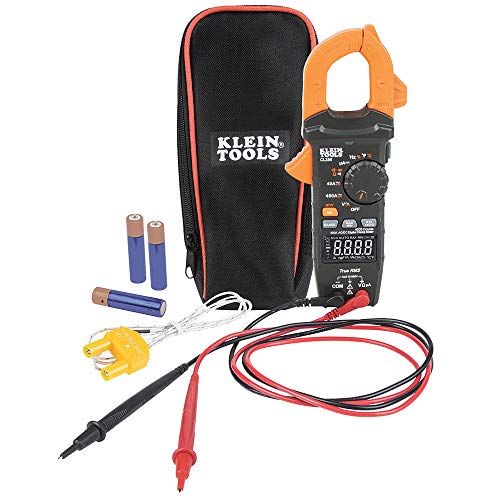
The Klein Tools CL390 stands out as a versatile professional-grade meter with true AC/DC current measurement, NCVT, and a range of testing options including resistance, continuity, temperature, and more. It features a high-contrast display for easy readings in varied lighting. This model is well-suited for electricians who need reliability in a busy work environment and compatibility with a broad set of testing tasks.
Who it’s best for: professional electricians and contractors who require a durable, multi-function tool with clear readings. Why selected: strong feature set that supports comprehensive diagnostics beyond just DC current. Caution: larger size may be less comfortable for very tight spaces compared to slim-line meters.
Fluke-301D/ESP 600A Clamp Meter

Fluke’s model provides a slim, narrow jaw design to fit into tight spaces while handling up to 600 A AC/DC. It is designed for residential and commercial use with a focus on safety and practical measurements. The slim body allows access to cramped panels and behind equipment, making it a good choice for service work where space is limited.
Who it’s best for: users who need a compact, professional-grade tool for everyday maintenance in tight quarters. Why selected: the slim jaw and reliable Fluke build quality elevate it for frequent field use. Caution: the 600 A rating is robust, but ensure suitability for the exact DC current ranges you encounter, as some tasks may require higher range meters.
AstroAI Digital Clamp Meter With NCV
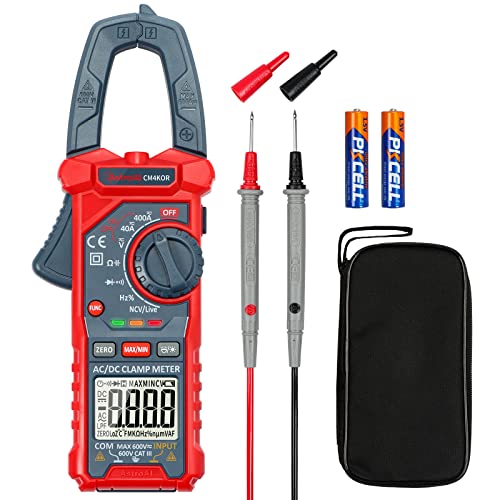
AstroAI’s clamp meter provides a broad set of measurements, including AC/DC current and voltage, capacitance, frequency, resistance, and live wire tests. It features non-contact voltage testing with audible and visual alarms, a backlit LCD, and a flashlight—useful for dim work areas or night jobs. It’s a flexible option for those who need a practical, feature-rich tool for multiple electrical tasks.
Who it’s best for: technicians and DIYers who value a feature-rich meter with convenient alarms and a backlit screen for low-light environments. Why selected: well-rounded capabilities and the NCV feature support safe, quick voltage detection. Caution: like many affordable meters, it may lack some advanced testing modes found on higher-end models.
MAYILON 6000Counts Clamp Meter

This clamp meter offers 6000 counts, measuring AC/DC current and voltage, capacitance, frequency, resistance, temperature, diode tests, and live wire checks. It includes NCV detection and safety features for environments rated up to 600V and CAT III. It aims to deliver robust performance for industrial and household tasks with a focus on durable design.
Who it’s best for: professionals who need a higher-count display and broad functionality in a single tool. Why selected: the 6000-count display supports finer measurement resolution. Caution: safety specifications should be verified for your specific job site requirements, especially in high-energy environments.
Buying Guide: How To Choose The Right DC Clamp Meter
What to prioritize when selecting a DC clamp meter:
- DC current range: Ensure the meter covers the maximum DC current you expect to measure. Higher-end meters handle 600 A or more with a robust jaw design.
- Jaw design: D-shaped or round jaws affect wiring compatibility and ease of clamping different cables. Round jaws can fit various wire sizes; D-shaped jaws often provide strong clamping on single cables.
- True-RMS vs. average-responding: True-RMS meters offer more accurate readings on non-sinusoidal signals common in real-world circuits (motors, power supplies).
- NCV detection: Non-contact voltage testing adds a quick safety feature for identifying live circuits without contact.
- Display readability: High-contrast and backlit displays improve readability in bright or dim environments; consider a meter with a large, clear LCD.
- Data logging and live curves: For troubleshooting intermittent faults, models with real-time recording or curve plotting help analyze behavior over time.
- Portability and build quality: Ergonomic design and solid construction matter for fieldwork and tight spaces.
- Additional functions: Capacitance, resistance, frequency, duty cycle, diode tests, temperature, and thermocouples expand the meter’s usefulness for varied tasks.
FAQ
- What is the difference between a clamp meter and a multimeter?
A clamp meter measures current with a clamp that goes around a conductor, while a multimeter typically uses test leads to measure voltage, current, and resistance. Many models combine both capabilities for broader use.
- Do I need NCV detection for home use?
NCV helps identify live wires safely, which is useful for DIY electrical work and quick checks before starting a project. It’s not a substitute for formal voltage testing where required by code.
- Is a higher count display better?
Yes. A higher count display (e.g., 6000+ counts) generally provides finer resolution and more precise readings, especially for small signals.
- Can clamp meters measure DC current accurately?
Yes. Many meters in this list offer true-RMS AC/DC current measurements, making them reliable for DC circuits as well as AC.
- Which features are most important for automotive use?
For auto work, prioritize DC current measurement, a compact slim jaw, one-hand operation, good jaw clearance, and a backlit display for dim environments.
- Are these meters safe for high-voltage work?
Always verifyCAT and safety ratings for each model. Use meters within their rated voltage and category to maintain safe operation.