If you’re shopping for a wireless thermostat, choose models designed to save energy, work with your existing HVAC, and integrate with your smart home. This guide showcases five top options and who they’re best for, from Alexa-friendly setups to energy-saving specialists. The included quick-reference table helps you compare core features at a glance.
| Product | Brand | Best For | Notes |
|---|---|---|---|
| Resideo YTH6320R1001 | Honeywell | Advanced systems with equipment interface needs | RedLink wireless tech; requires EIM hardware |
| Amazon Smart Thermostat | Amazon | Alexa users seeking easy rebates and zoning | Works with Alexa and Ring |
| Emerson Sensi ST55 | Sensi | DIY install, privacy focused | Energy Star certified |
| Honeywell Home RTH9600WF | Honeywell Home | Color touchscreen, energy rebates | Wi‑Fi, flexible programming |
| Google Nest Thermostat | Smart home with assistant integration | Energy Star certified |
Resideo YTH6320R1001 — Honeywell

The YTH6320R1001 uses Equipment Interface Module (EIM) wiring to manage all HVAC equipment. It supports a return air sensor for maintaining safe indoor temperatures if power is lost at the wireless unit. RedLink wireless technology helps avoid interference with other home devices. Best for homeowners with wired equipment seeking reliable, centralized control through a dedicated module. Caution: this model relies on the EIM setup, which can require additional installation steps and hardware beyond a standard wireless thermostat.
Amazon Smart Thermostat

Designed for Alexa ecosystems, this thermostat aims to simplify energy management through voice control and presence-based adjustments. It supports zoning routines via compatible Echo devices and offers potential rebates via energy providers after installation. Best for Alexa-centric homes and quick setup. Caution: Some advanced features depend on reliable Wi‑Fi and connected smart devices; ensure your system is compatible with a C-wire configuration if required.
Emerson Sensi ST55 — Sensi
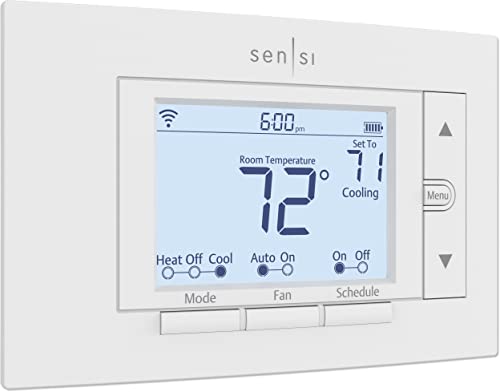
The Sensi ST55 emphasizes privacy and energy savings, with ENERGY STAR certification and DIY-friendly installation. It supports remote access and usage reports, enabling straightforward energy monitoring. Best for homeowners who want an easy install with clear energy data. Caution: In some homes, a common wire (C-wire) may be beneficial to ensure constant power for all features.
Honeywell Home RTH9585WF1004
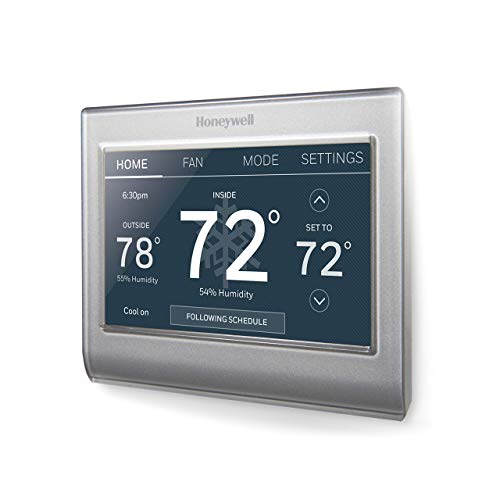
This 7-day programmable, color touchscreen thermostat emphasizes flexible scheduling and energy rebates. It integrates with major smart home assistants and supports energy-saving incentives offered by providers. Best for users seeking a color display and robust programming controls. Caution: The full feature set may require compatible energy programs or rebates from your provider, which can vary by location.
Google Nest Thermostat — Google
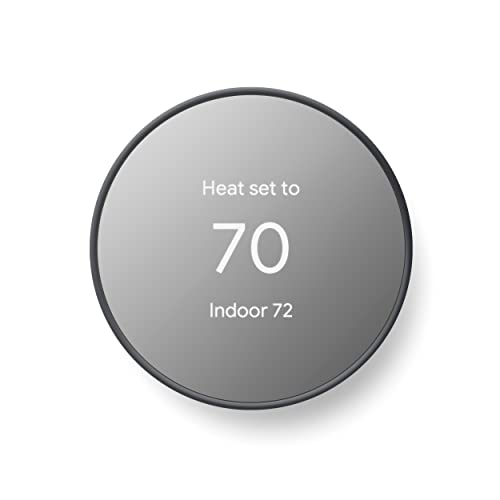
The Nest Thermostat emphasizes energy savings with adaptive scheduling and integration within Google’s ecosystem. It is designed to operate without a C-wire for most homes, though certain systems may require a power accessory. Best for users who want deep Google Home integration and auto-scheduling. Caution: Some setups may require an external power accessory for consistent operation in cooling-only or heat-only environments.
Buying Guide
Where should you start when choosing a wireless thermostat?
- System compatibility: Check your HVAC type (gas, electric, heat pump) and confirm C-wire needs. Some models work without C-wire, but a dedicated power supply improves reliability.
- Smart home integration: Decide which assistants you plan to use (Alexa, Google Assistant, Ring) and confirm compatibility with your thermostat.
- Energy savings: Look for ENERGY STAR certification and features like flexible scheduling, remote access, and energy usage reports.
- Installation: DIY-friendly models suit most homeowners, but some setups with hydronic or multi-zone systems may require professional help.
- Rebates and incentives: Many manufacturers guide you to energy rebates from providers after installation. Check availability in your area.
- Privacy considerations: If data privacy is important, prioritize brands that emphasize data protection and do not sell personal information.
Frequently Asked Questions
- What is a C-wire and why do I need it? A C-wire provides a continuous power supply to power smart features; some models work without it, but you may lose certain functions.
- Are ENERGY STAR thermostats always best for saving energy? ENERGY STAR indicates efficiency, but real savings depend on usage patterns and scheduling.
- Can I install a thermostat myself? Many models are DIY-friendly with step-by-step apps; some complex setups may require a professional.
- Will rebates lower my bill after installation? Rebates can offset purchase costs but vary by provider and location. Check eligibility after installation.
- Do these thermostats work with all home assistants? Most listed models support major platforms, but confirm compatibility with your specific devices.
- How do I know which thermostat is best for multi-zone homes? Consider models with robust zoning support and compatibility with your HVAC configuration.