Answering the search for a wireless remote ceiling fan, this guide highlights top options that simplify control of speed, light, and timing. Best for apartment dwellers seeking simple installation, homeowners upgrading existing fixtures, and those who want smart capabilities. Each pick below explains who it’s best for, plus clear pros and a caution to help you decide.
| Product | Best For |
|---|---|
| LPHUMEX Universal Ceiling Fan Remote Kit (3-in-1) | Traditional AC motor fans; installers who want straightforward setup without removing blades |
| CENMING Universal Remote Control Kit (FAN-53T) | Common 120V AC fans; replacements for Harbor Breeze, Hampton Bay, Hunter, Litex |
| 53T Smart Wi-Fi Ceiling Fan Remote | Smart-home users; Alexa/Google integration for remote control and scheduling |
| LPHUMEX 2 Pack AC Motor Remote Kit | Upgrade multiple fans; 3-in-1 control with timer for energy savings |
| Aubric Universal Ceiling Fan Remote Kit | Wide compatibility; compact receiver fits smaller canopies |
LPHUMEX Universal Ceiling Fan Remote Kit
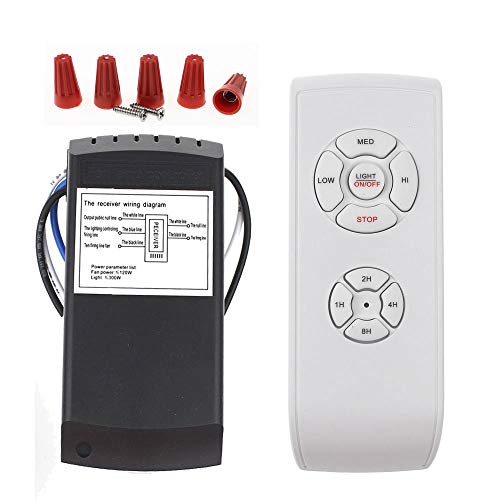
This 3-in-1 AC motor remote kit controls fan speed, light, and a timer. It’s designed for traditional AC motors and requires a standard 5-wire hookup. It’s best for buyers installing into existing canopy spaces without removing the light kit or blades. A key caveat is DC motor fans or fans with more than 3 speeds may not be compatible. Ensure the canopy has enough space, as the receiver measures 4.53 x 1.97 x 1.06 inches. Choose this if you have a standard AC motor fan and want a simple, all-in-one remote experience.
CENMING Universal Remote Control Kit (FAN-53T)
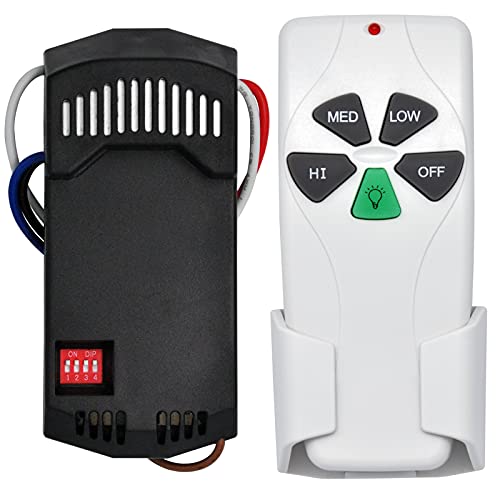
This replacement remote supports most 120V, 3-speed AC fans and works with Harbor Breeze, Hampton Bay, Hunter, Litex, and similar brands. It provides separate control for fan speed (High/Medium/Low) and light dimming, with an OFF option. The remote does not include a reverse function, so it’s best when the fan has a separate reverse control. Not recommended for DC motor fans. Look for this if you need a broad compatibility replacement and a dedicated light dimmer function for incandescent or certain dimmable LEDs.
53T Smart Wi-Fi Ceiling Fan Remote Kit

This kit combines a universal receiver with smart features. Control is available via the remote, a mobile app (Smart Life), and voice assistants (Alexa/Google). It promises broad compatibility with many regular ceiling fans and adds scheduling for automatic on/off. It’s best for households seeking smart-home integration and remote scheduling, but verify that your fan model is compatible with the smaller receiver size. The lack of dimming detail in some LED setups should be considered for lights requiring precise dimming.
Bell+Howell Socket Breeze 15.4″ Socket Fan Light

Socket Breeze combines a ceiling fan and an LED light into one wireless, battery-free operation using a standard electrical socket. It provides bright illumination (1,000 lumens, 5,000K cool color temperature) and simple installation, making it ideal for smaller rooms or spaces where wiring changes aren’t feasible. Best for temporary setups or where a plug-in solution is preferred. A limitation is that it relies on a socket and may not integrate with existing canopy remotes in traditional ceiling fan designs.
LPHUMEX 2 Pack AC Motor Remote Kit

This 2-pack offers three-in-one control: fan speed, light, and an adjustable timer (1, 2, 4, 8 hours). It’s compatible with many AC motor fans from brands like Hunter, Hampton Bay, Westinghouse, and Honeywell. The kit requires careful canopy space assessment since the receiver is 4.53 x 1.97 x 1.06 inches. It’s best for users who want to equip multiple fans or standardize control across several fixtures, with a clear focus on energy savings via the timer function.
Aubric Universal Ceiling Fan Remote Kit

This universal 3-in-1 kit converts a traditional ceiling fan with light into remote-controlled operation. It supports High/Medium/Low speeds and ON/OFF for the light, plus 1H/2H/4H/8H timing options. The receiver is 4.5 x 2 x 1 inch, so users should verify canopy clearance. It’s a good fit for fans from Hunter, Harbor Breeze, Westinghouse, Honeywell, and other well-known brands. Best for buyers who want a widely compatible option with a compact receiver footprint.
Buying Guide
What should you consider when choosing a wireless remote ceiling fan kit?
- Motor type: Most remote kits work with AC motors; DC motor fans are often incompatible. Confirm your fan’s motor type before purchasing.
- Canopy space: Receiver size matters. Measure the canopy space to ensure the receiver fits without crowding the interior.
- Control needs: Do you want speed only, or integrated light dimming and a timer? Some kits offer 3-in-1 control, others separate lighting control.
- Smart-home integration: If you want voice or app control, choose a kit with Wi-Fi or compatible hub (e.g., Alexa/Google). Check app reliability and required accounts.
- Compatibility: Look for universal compatibility with brands you own (Hunter, Hampton Bay, Westinghouse, Honeywell, etc.).
- Installation ease: Most kits use a 5-wire hookup; ensure you’re comfortable with basic wiring and that your wall switch remains ON during setup.
Frequently Asked Questions
- Are these remotes universal for all fans? Most are universal within AC-motor fans but may not work with DC motors or certain proprietary control systems. Always confirm motor type and canopy space.
- Do they require professional installation? Most kits are designed for DIY installation, typically with basic wiring and a 5-wire hookup. Follow included instructions carefully.
- Will a smart remote work with my existing smart home setup? Some kits support Alexa/Google via an app. Check compatibility and required hubs or accounts.
- Can a remote replace a wall switch? Yes, many kits are designed to replace or supplement wall controls, enabling wireless operation without rewiring.
- Do all remotes dim lights? Dimming support varies. Some remotes support light dimming with compatible bulbs; others provide only on/off functionality.
- Is canopy space always enough for the receiver? Not always. Smaller or hugger-style canopies may require a compact or Ultra-Small receiver option.