Answering the needs of farmers, poultry keepers, and garden protectors, this guide spotlights waterproof electric fence chargers that perform in rain, snow, and damp environments. Each product is best for a specific setup—whether you need long-range coverage, high joule output, or versatile power options. Use this to compare devices that keep predators out and livestock safely contained without frequent replacements or failures in bad weather.
| Product | Best For | Output | Range |
|---|---|---|---|
| FarmNix 12KV Electric Fence Charger, 15 Miles, 3 Joules | Ranches and large pastures | 12 kV, 3 J | Up to 15 miles |
| FarmNix 12KV Electric Fence Charger, 15 Miles, 4 Joules | Large farms needing extra deterrence | 12 kV, 4 J | Up to 15 miles |
| Zareba 50 Mile AC-Powered Low Impedance | Weed-prone fences and long layouts | Low impedance, broad compatibility | Up to 50 miles (ideal conditions) |
| 9J Prooveelly Electric Fence Charger | Mixed livestock and predator control | 12 kV, 9 J | Up to 20 miles |
| Happy Henhouse Electric Fence Charger | Small farms and chicken coops | 0.25 J | Up to 2 miles |
FarmNix 12KV Electric Fence Charger, 15 Miles, 3 Joules

The FarmNix 12KV charger delivers reliable long-range performance with 3 joules of pulse energy and 12 kV output. It can operate via AC, DC battery, or solar power, offering flexible placement in various environments. An on/off switch and LED display provide clear status at a glance. Best for large pastures and farms that require economical, long-term operation with strong deterrence. Caution: place the main unit in a protective box to extend life in harsh weather.
FarmNix 12KV Electric Fence Charger, 15 Miles, 4 Joules

This higher-energy FarmNix model adds 4 joules while maintaining the same 12 kV output and 15-mile reach. It supports AC, DC battery, and solar power options with an LED display for easy monitoring. Best for large parcels where stronger pulses improve deterrence without increasing energy consumption excessively. Choose this if you’re protecting high-value livestock across long fences. Limitation: heavier energy draw may matter in solar-only setups without a dedicated battery.
Zareba 50 Mile AC-Powered Low Impedance

With a very high range in ideal conditions, the Zareba 50 Mile charger is designed for large properties and heavy weed environments. It supports multiple fence types and is suitable for extensive pastures where weed growth can dampen performance. Best for established fences requiring robust coverage and broad compatibility. Limitation: performance drops in dense vegetation, so weed control around the fence is recommended for best results.
PROOVEELLY 9J Electric Fence Charger
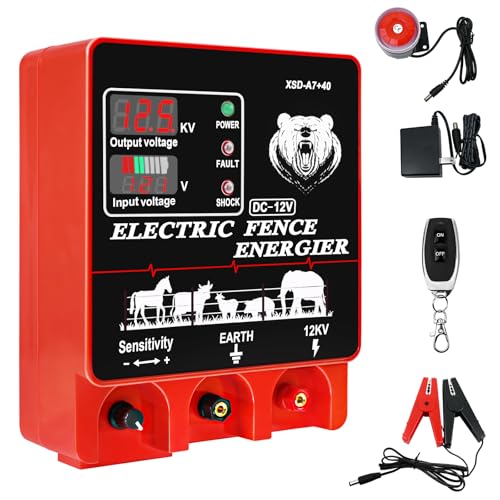
The PROOVEELLY charger combines 9 joules with 12 kV output and up to 20 miles of range. It features a LCD display, alarm-ready setup, and a 12V DC input option, making it versatile for various power sources. Best for mixed-use settings where strong deterrence is needed across moderate distances. Caution: avoid touching the fence while energized and ensure proper grounding for safe operation.
Happy Henhouse Electric Fence Charger

Designed for chickens, small farms, and gardens, this 0.25 joule charger provides a pulsed deterrent ideal for protecting free-ranging birds without harming pets. It runs on 110V AC for steady, plug-in power and covers up to 2 miles. Best for small properties needing simple installation and reliable predator deterrence. Limitation: limited range compared with larger pasture chargers, so not ideal for expansive farms.
Buying Guide
Power source and placement: Choose a model that supports AC, battery, or solar power to fit your site. For remote areas, solar compatibility can eliminate ongoing electrical costs. Grounding: Ensure proper grounding rods and grounding practices so the system delivers a consistent shock. Wire compatibility: Verify fence wire type (polywire, tape, or high-tensile) matches the charger’s output and impedance. Range versus deterrence: Higher joule ratings increase deterrence distance; balance with energy consumption and maintenance. Weatherproofing: Look for IP-rated housings or weatherproof certifications to withstand rain, snow, and dust. Maintenance: Prefer models with LED displays or status indicators for quick troubleshooting.
Frequently Asked Questions
- What makes a fence charger weatherproof? Sealed enclosures, corrosion-resistant components, and gaskets that protect against rain, snow, and humidity.
- How many miles can I cover with a waterproof charger? Coverage varies by model and fence type; premium units can reach 15–50 miles under ideal conditions, while smaller units are suited for 2–5 miles.
- Can these chargers run on solar power? Several models support solar or battery power, often with a separate solar panel sold separately.
- Is a higher joule rating always better? Higher joules increase deterrence but also energy consumption and potential grounding requirements. Match to livestock size and predator risk.
- What safety considerations are there? Avoid touching energized fencing, ensure proper grounding, and install in a weather-protected location as recommended by the manufacturer.