Water line heat tapes offer dependable, energy-efficient freeze protection for pipes in homes, cabins, and remote spaces. This guide reviews five leading options, highlighting certifications, operating temperatures, and installation notes to help you choose the right model for metal or plastic water lines. Each product below includes a quick overview, key features, and practical considerations for American homes facing cold winters.
Summary table of chosen products:
| Product | Brand | Length | Power | Certifications |
|---|---|---|---|---|
| HEATIT Water Line Heat Tape – All-Season | HEATIT | 12 ft | 7 W/ft | CSA & ETL, UL plug |
| 3FT~200FT Heat Tape for Water Pipes | SZFY | 3–200 ft | 5 W/ft | UL listed components, IP67 |
| HEATIT 40ft Self-Regulating Heating Cable | HEATIT | 40 ft | 3 W/ft | ETL listed, UL plug |
| LantingMing 6FT Heat Tape | LantingMing | 6 ft | 5 W/ft | UL listed components |
| JDZKOMKE 50FT Pipe Heating Cable | JDZKOMKE | 50 ft | 5 W/ft | UL full-cable certification |
HEATIT Water Line Heat Tape – All-Season Pipe Freeze Protection

The HEATIT HISD 12 ft heat tape provides self-regulating heating with a 7 W/ft rating. It includes a built-in thermostat and a grounded plug with an indicator light for quick verification of power status. The cable is designed specifically for water-filled plastic or metal pipes, with a focus on reliable frost protection at low temperatures. It is fully CSA and ETL certified, and the UL-listed plug adds an extra safety layer. The product emphasizes safety and full certification across the entire cable assembly, not just the plug.
Key considerations: fit for shorter runs or wrapped sections on smaller pipelines; ensure your pipe material is compatible (plastic or metal). Installation requires careful straight runs without crossing or spiraling for best efficiency. The included thermostat activates around 37°F and deactivates near 50°F, balancing energy use with protection.
SZFY 3FT~200FT Heat Tape for Water Pipes
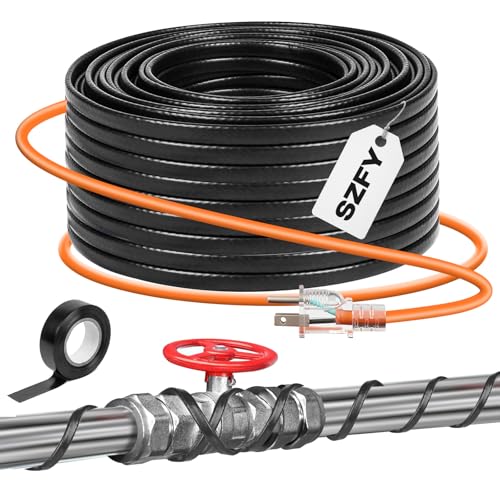
This SZFY heat tape covers a wide length range from 3 to 200 feet, designed for versatile use on roofs, gutters, and water pipes. It delivers 12 W/ft heating power through a copper-core design intended to improve heating efficiency and energy savings. The assembly includes IP67-rated protection and a thermostat-enabled operation, with an 18-foot cord and a protective outer jacket for weather resistance. The product is positioned for multi-scenario applications—from residential to farm settings.
Practical notes: the wide length availability is advantageous for long runs; verify your exact pipe route to minimize waste. The copper core and protective layers aim to maintain consistent heat output while resisting moisture and environmental conditions. The device is suitable for both metal and plastic pipes, expanding installation options around corners and joins.
HEATIT 40ft Self-Regulating Heating Cable

This HEATIT 40 ft model combines energy-saving performance with a self-regulating design that helps maintain water flow in pipes down to -40°F. It carries ETL certification and a UL-listed plug, reinforcing safety. The system includes a 2 ft power cord and options for lengths from 3 ft to 160 ft, allowing flexibility for larger installations. A warranty and safety certifications underpin reliability in challenging winter conditions.
Considerations: ETL certification signals strong safety compliance; ensure the pipe material and diameter are compatible with the tape’s heating range. The product is best for longer pipe runs where continuous heat coverage is needed, and the overall energy use remains predictable with automatic on/off cycling around the set temperatures.
LantingMing 6FT Heat Tape for Water Pipes

The LantingMing 6 ft heat tape targets compact installations with a 5 W/ft rating and an IP67-rated build for exposure to cold and moisture. The inner core uses pure copper with a PVC jacket and an aluminum-winding shield, followed by a resilient outer sleeve. The product supports operation down to -40°F, making it suitable for short pipe sections or rooftop/garage use where space is limited. It includes an indicator light and a UL-listed configuration to aid safe installation and monitoring.
Practical notes: ideal for short runs or incremental protection along a section of pipe. The compact length is useful for tight spaces, such as under sinks or along narrow exterior walls. Always confirm compatibility with your pipe material (plastic or metal) and ensure proper insulation for efficiency gains.
JDZKOMKE 50FT Pipe Heating Cable

JDZKOMKE’s 50 ft pipe heating solution emphasizes UL full-cable certification, with a multi-layer design that includes a copper core and an aluminum shield. The 5 W/ft rating supports effective freeze protection for metal and plastic pipes, with a robust IP67-rated jacket to resist moisture and UV exposure. The installation includes a 5 ft grounded plug with an indicator light, and the product is backed by liability coverage for added consumer security.
Key considerations: longer runs require careful planning to maintain even heat distribution across the entire length. The multi-layer construction aims to reduce the risk of shorts and environmental damage, making it suitable for outdoor or exposed piping in harsh climates.
Buying Guide: Key Purchase Considerations
- Pipe material compatibility: Most heat tapes work with metal (copper, steel) and plastic (PVC, CPVC, PEX). Check the product notes to confirm suitability for your pipe type.
- Length and coverage: Decide whether you need a short run (under a sink or in a crawl space) or a long run (basement, garage, or outdoor piping). Longer tapes often require more planning for consistent heat distribution.
- Power and heat output: Heat tapes are rated by watts per foot. Higher outputs (e.g., 7 W/ft) deliver faster warmth but may consume more energy. For milder climates, lower ratings can be enough when paired with proper insulation.
- Self-regulating design: Self-regulating cables adjust power output along their length, reducing the risk of overheating and saving energy. This feature is common across premium models.
- Certifications and safety: Look for fully certified cables (UL-listed components, ETL or UL certification for the entire assembly). An approved plug alone is not sufficient for complete protection.
- Durability and environment: Determine if the installation is indoors, outdoors, or in harsh environments. IP rating (IP67) and jacket materials (TPE, PVC) affect resilience against moisture, UV light, and temperature swings.
- Installation considerations: Some tapes require straight, non-overlapping runs for optimal performance. Others allow looping or crossing in limited areas—check the manufacturer guidelines to avoid voiding performance.
- Warranty and support: A two-year or longer warranty provides assurance for long-term reliability, especially in remote or hard-to-service locations.
For most American homes facing occasional winter freezes, a mid-range self-regulating tape with full-cable UL certifications provides a balanced mix of safety, efficiency, and ease of installation. When selecting a model, consider the total pipe length to protect, the degree of exposure (indoor vs. outdoor), and the insulation around the pipe. Proper insulation around heat tape improves efficiency by reducing heat loss to the environment. Always follow local electrical codes and, if in doubt, consult a licensed electrician for professional installation.