Answering the question most buyers ask: which water and air heat exchangers deliver reliable heat transfer for heating, cooling, or snow melting? This guide highlights five solid choices and explains who each is best for. If you’re selecting for a residential radiant floor system, a small-capacity water-to-water exchanger may be ideal. For outdoor wood boiler setups, a larger water-to-air unit can handle higher flow and pressure. The list below prioritizes durability, ease of installation, and energy efficiency.
Summary table of featured products:
| Product | Best For | Key Benefit | Capacity |
|---|---|---|---|
| AB Plate Heat Exchanger, 4″x12″ 30 Plates | Floor heating, Snow melting | High flow, rugged construction | 250k-330k BTU/h |
| Water to Air Heat Exchanger 15×20 | Outdoor wood furnaces, forced air | Strong fins for heat transfer | Up to 360kBtu/h |
| Water to Air Heat Exchanger 18×18 | Outdoor wood furnaces, hot water coil | 10–20% higher transfer with fins | Up to 360kBtu/h |
| AB 300 kBTU Heat Exchanger | Outdoor wood boilers, pools | All-steel 316L corrosion resistance | ~300 kBtu/h |
| AB Water to Air Heat Exchanger 24×24 | Residential cooling and heating with air | High transfer with copper ports | Up to 360kBtu/h |
AB Plate Heat Exchanger, 4″x12″ 30 Plates

Best for: Floor heating and snow melting systems that require robust heat transfer in a compact footprint. This 4″x12″ plate exchanger uses 316L stainless steel plates brazed with copper at the edges, delivering strong resistance to leaks and high temperatures. The 30-plate configuration provides a substantial surface area for efficient heating transfer, making it suitable for moderate to high-demand domestic applications.
Why it’s selected: The all-metal construction including 316L stainless steel and copper-brazed edges offers durability in demanding environments. Smooth threads simplify connections, aiding quick installation and reducing potential leaks over time. The model’s 250,000–330,000 BTU/h capacity covers typical radiant floor and snow-melt loads in many homes.
Limitations to note: The data emphasizes high-temperature capability, but installation should follow manufacturer guidelines for flow rates and pump sizing to prevent pressure drop. Consider your system’s specific flow and delta-T requirements before selecting this unit.
Water to Air Heat Exchanger 15×20

Best for: Outdoor wood-fired heating or cooling setups that require a balance of efficiency and ease of installation. The 15×20 exchanger features 12 aluminum fins and three rows of copper tubes, designed to maximize heat transfer while maintaining reasonable pressure drop.
Why it’s selected: The combination of fins and copper tubes increases contact areas, boosting performance. Edges and contact points are base brazed to withstand higher pressures, and the fins are epoxy-coated for wear resistance. Its energy-friendly design supports integration with renewable sources and non-electric heat transfer processes.
Limitations to note: This unit is designed for use with outdoor systems; ensure compatibility with your indoor coils or plenums if integrating with other heating modules. Installers should verify mounting clearances and airflow paths for optimal performance.
Water to Air Heat Exchanger 18×18
Best for: Systems needing a compact exchanger with strong heat transfer for outdoor wood furnaces or hot water coil applications. The 18×18 size offers a balance of surface area and footprint, making it versatile for mid-size heating setups.
Why it’s selected: It delivers up to 360kBtu/h with 12 fins and copper tubes, leveraging a wave-fin design to improve heat transfer. The assembly is base brazed for rugged performance, and epoxy-coated fins increase durability in challenging environments.
Limitations to note: The coil and fin design can require precise ducting or plenum integration. Plan for adequate clearance around the unit to avoid restricted airflow and reduced efficiency.
AB 300 kBTU Heat Exchanger
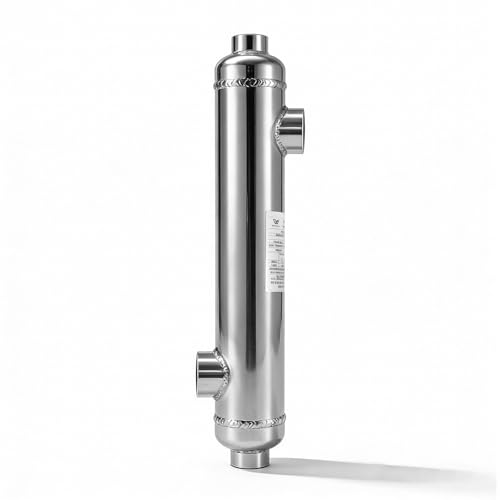
Best for: Outdoor wood boilers, swimming pools, spas, or solar systems requiring high corrosion resistance and strong heat transfer in demanding environments. The unit’s corrosion-resistant 316L stainless steel construction addresses chemical exposure and chlorine in pool applications.
Why it’s selected: Its 316L stainless steel body and copper-brazed edges deliver durable performance in high-temperature and high-flow scenarios. With a capacity around 300 kBtu/h, it suits mid-to-large residential or light commercial loads and supports aggressive heating or sanitation cycles.
Limitations to note: This model’s size and flow requirements may necessitate a larger pump and appropriate piping. Verify compatibility with existing equipment and ensure proper venting and expansion considerations in outdoor installations.
AB 24×24 Water to Air Heat Exchanger
Best for: Residential heating and cooling systems that need robust air-side heat transfer with copper ports for flexible piping. The 24×24 footprint suits larger air handlers or ducted systems requiring higher heat exchange capacity.
Why it’s selected: The exchanger offers a high capacity up to 360kBtu/h, supported by copper ports and a steel shell with base-brazed edges. Copper and aluminum combination enhances thermal conductivity, while the epoxy-coated fins add wear resistance for longer service life.
Limitations to note: Bigger size means more space is required for installation. Ensure the mounting area can accommodate the unit and that ductwork or air distribution is compatible with the exchanger’s ports and flow rates.
Buying Guide: Key Considerations For Selecting A Heat Exchanger
- Application type: Water-to-water units are ideal for radiant floor heating and domestic hot water preheating; water-to-air units suit forced-air systems and outdoor installations. Choose based on whether you transfer heat to water or air.
- Capacity needs: Estimate heating or cooling loads in BTU/h. Match the exchanger’s maximum capacity to your system’s peak load to avoid under- or over-sizing.
- Material compatibility: 316L stainless steel resists corrosion and is common in potable and pool applications. Copper brazing edges enhance heat transfer but require compatible fittings.
- Pressure and temperature: Look for base brazed joints and robust shell construction for high pressure. Check operating pressure and temperature ranges to prevent leaks or warping.
- Installation and maintenance: Consider ease of hookup, port sizes, and available connectors. Smooth-thread fittings help with quick installation and leak prevention.
- Energy efficiency: Fin design (like wave fins) and copper-tube arrangements influence transfer efficiency. Fins with protective coatings extend component life in harsh environments.
- System integration: Ensure compatibility with your pump, expansion tank, and other heat sources (boilers, solar, or biomass). Plan for flow direction and potential pressure drops.
- Size and footprint: Larger exchangers deliver more heat but require more space. Balance installation constraints with performance needs.
Frequently Asked Questions
- What is a heat exchanger in heating systems?
– A device that transfers heat between two fluids (water or air) without mixing them, improving overall system efficiency. - What is the difference between water-to-water and water-to-air exchangers?
– Water-to-water transfers heat between water circuits; water-to-air transfers heat to the air side for space heating or cooling. - Which material lasts longest in outdoor installations?
– Stainless steel 316L with copper brazed joints offers strong corrosion resistance and durability in harsh environments. - How do I determine the right size for my system?
– Assess peak heating loads, available space, and preferred temperature delta. Oversizing can increase costs; undersizing reduces comfort. - Are these exchangers easy to install myself?
– Many units use standard pipe sizes and connections, but review the manufacturer’s guidelines and local codes. A professional installation is recommended for high-pressure systems. - Can heat exchangers improve energy efficiency in existing systems?
– Yes, by enabling better heat transfer efficiency and allowing integration with renewable sources or more efficient boilers, reducing overall energy use.