Finding a reliable refrigerant leak detector is essential for fast diagnostics, minimizing material waste, and ensuring system efficiency. While many detectors use infrared or heated diode sensors, ultrasonic leak detectors offer an additional layer of capability by listening for telltale gas release sounds. This guide highlights five top picks available on Amazon that balance sensitivity, durability, and ease of use across residential and commercial environments.
Summary of chosen products
- Elitech ILD-200: Infrared-based, halogen gas detection, long sensor life
- Fieldpiece DR82: Ultra-sensitive infrared leak detector with backlit LCD
- Inficon 705-202-G1: Heated diode sensor, A2L certified, broad refrigerant compatibility
- Accu-Trak VPE-GN PRO: Gooseneck ultrasonic leak detector with audio feedback
- TOPTES RT-389: 3-sensitivity-mode detector with flexible gooseneck and triple alarms
Elitech ILD-200 Infrared Refrigerant Leak Detector
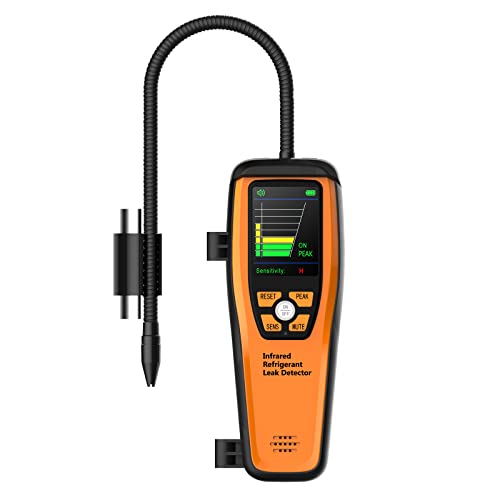
Elitech’s ILD-200 uses an infrared sensor designed for strong anti-interference performance, fast response, and extended life. It offers adjustable sensitivity with High/Medium/Low levels and can detect a wide range of halogenated refrigerants, including CFCs, HFCs, HCFCs, and common blends. Its longevity and broad detection scope make it suitable for automotive and home HVAC diagnostics as well as service work on air conditioning systems. The device emphasizes reliability and long-term operation in busy service environments.
Fieldpiece DR82 Infrared Refrigerant Leak Detector

The Fieldpiece DR82 offers ultra-sensitive infrared detection with a backlit LCD screen for easy reading. It is designed to identify micro leaks quickly, reporting leaks at less than 0.03 oz/year, making it significantly more sensitive than many bubble tests. It supports all major refrigerants used in HVACR and features a durable sensor with IP54-rated protection against moisture and oil. A 10-year sensor life is highlighted to emphasize long-term reliability in professional settings.
Inficon 705-202-G1 Refrigerant Leak Detector
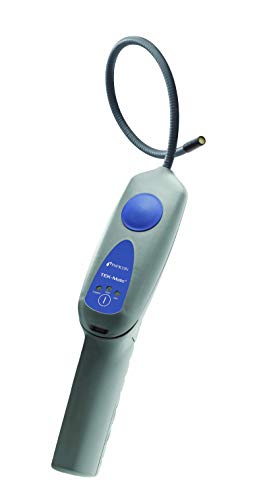
Inficon’s model uses a heated diode sensor with a sensitivity around 0.25 oz/year and is compatible with all CFCs, HCFCs, HFCs, and HFOs. It is A2L certified, ensuring accurate leakage checks for newer refrigerants. The heated diode approach is known for dependable performance across a broad refrigerant spectrum, making it a solid option for service technicians who encounter diverse systems and retrofits.
Accu-Trak VPE-GN PRO Gooseneck Ultrasonic Leak Detector

The Accu-Trak VPE-GN PRO represents an ultrasonic approach, designed to detect the sound of leaking gas with a gooseneck probe for flexible access. It emphasizes audio output with natural sound conversion, helping technicians locate leaks by listening. This model is especially useful in noisy environments where traditional chemical detectors may be harder to interpret, and it pairs well with other methods to confirm refrigerant areas of concern.
TOPTES RT-389 Rechargeable Refrigerant Leak Detector

The TOPTES RT-389 features three sensitivity modes and three alarm types, with a 14.5-inch gooseneck for reach in tight spaces. It provides triple alarms (sound, visual, vibration) and a quick mute option directly from the detection screen. The TFT display shows real-time readings, sensitivity, battery levels, and a trend curve, offering a comprehensive view of refrigerant leak activity. It supports CFCs, HCFCs, HFCs, and HFOs in various HVAC contexts.
Buying Guide: Key Considerations For Ultrasonic And Conventional Refrigerant Detectors
- Sensor technology: Ultrasonic detectors listen for acoustic signatures of leaks, while infrared and heated diode detectors measure gas concentrations. Consider mixing approaches for comprehensive results in complex systems.
- Detection range and sensitivity: Look for adjustable sensitivity and low leak thresholds (for example, fractions of oz/yr). Higher sensitivity helps identify smaller leaks but may require more careful interpretation in busy environments.
- Refrigerant coverage: Ensure compatibility with the refrigerants you encounter (CFCs, HCFCs, HFCs, HFOs, and blends). A broader spectrum reduces the need for multiple detectors.
- Durability and maintenance: Consider IP-rated housings, sensor life expectancy (some models advertise 10-year sensor life), and battery longevity for field use.
- User interface: Backlit LCD or TFT screens, audible alarms, and visual indicators aid readability in dim or noisy spaces. Some models also offer data logging or trend graphs for tracking leaks over time.
- Access and ergonomics: A flexible gooseneck or compact form factor improves reach in tight spaces and around cabinetry. Ultrasonic units may benefit from lightweight builds to reduce technician fatigue.
- Certifications and compatibility: A2L certification or equivalent confirms safe use around newer refrigerants. Cross-check with local regulations and service requirements.
- Cross-verification strategy: For precise leak verification, pair a detector with a refrigerant sniffer or a soap-test approach to confirm suspected leaks identified by audible or infrared signals.
When selecting a detector, consider how you will use it most often: frequent automotive service may benefit from a compact, highly sensitive infrared unit; commercial installations might require longer sensor life and broader refrigerant coverage; projects in noisy environments can leverage ultrasonic feedback as an additional cue for locating leaks. Combining multiple sensor types can provide a robust solution for technicians handling diverse systems.