When homes demand reliable hot water without the bulk of a storage tank, tankless indoor water heaters offer compact efficiency and endless comfort. This guide highlights five top models, detailing how they perform, install considerations, and what to weigh before buying. Whether upgrading a small condo or equipping a multi-bedroom home, these units deliver fast hot water, energy efficiency, and space-saving design.
Product overview table
| Product | Brand | Type | Flow (GPM) | BTUs / Capacity | Key Feature |
|---|---|---|---|---|---|
| FOGATTI Natural Gas Tankless Water Heater Indoor | FOGATTI | Gas, Indoor Tankless | 7.5 | 170,000 BTU | Instant heating, compact footprint |
| Rheem RTG-70DVLN-3 | Rheem | Gas, Indoor Tankless | 7.0 | 160,000 BTU | Durable, compact cabinet |
| Rinnai RX199iN Condensing | Rinnai | Gas, Indoor/Outdoor | 11.1 | 199,000 BTU | Versa Vent, WiFi-ready control |
| GASLAND Gasmart E | GASLAND | Gas, Indoor Tankless | 7.6 | 199,000 BTU | Eco-friendly, compact |
| APUS Natural Gas Tankless Water Heater | APUS | Gas, Indoor Tankless | 6.8 | 140,000 BTU | Smart Wi‑Fi control, instant hot water |
These units illustrate a range of capacities, installation options, and smart features. In the sections that follow, each model is examined in its own right to help distinguish what makes it a fit for particular homes, habits, and hot-water profiles. All models provide on-demand hot water, but the right choice depends on your household’s size, climate, and how many outlets you’ll run simultaneously.
FOGATTI 170S Tankless Water Heater

The FOGATTI Instagas Comfort 170S series combines a compact footprint with high capacity. At 170,000 BTU and 7.5 GPM, it supports multiple outlets with steady temperature control. Its space-saving design is beneficial for tight mechanical rooms, closets, or utility alcoves. Advanced water servo technology and precise sensors maintain temperatures within a tight ±1℉ range, minimizing temperature swings during showers or simultaneous appliance use. The four-stage combustion system supports reliable comfort across seasons, making this model a strong choice for medium homes seeking immediate hot water on demand.
Rheem RTG-70DVLN-3 Indoor Tankless

The Rheem RTG-70DVLN-3 is a high-efficiency indoor tankless unit delivering up to 7.0 GPM with 160,000 BTUs. It’s designed for compact installation and is ideal for homes with 2–3 bathrooms where multiple hot-water demands occur concurrently. The unit’s durable cabinet supports wall mounting by a qualified installer, offering a tidy install and reliable performance. This model balances performance with practicality for typical American homes that want steady hot water for showers, laundry, and kitchen tasks without the storage tank.
Rinnai RX199iN Condensing

The Rinnai RX199iN offers versatility with indoor or outdoor installation, thanks to Versa Vent compatibility and Smart Sense gas control. It provides up to 11.1 GPM (enough for multiple fixtures) with a powerful 199,000 BTU output. A compact form factor and modern interface allow quick adjustments and monitoring. The unit emphasizes energy efficiency with a high UEF rating and features like a Quick Flush for maintenance. Optional control modules enable WiFi control to optimize performance for larger households or varying usage patterns.
GASLAND Gasmart E 199000 BTU
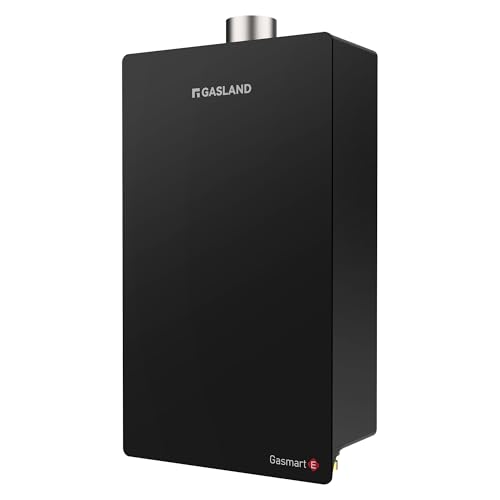
The GASLAND Gasmart E model delivers up to 7.6 GPM with a 199,000 BTU rating, designed for indoor residential installation. It emphasizes energy efficiency with a robust heat exchanger and a compact housing that frees up wall space. The model’s eco-friendly profile highlights reduced NOx emissions compared with traditional tank systems, while maintaining strong flow rates for households with several simultaneous hot-water tasks. It’s suited for homes that want strong performance in a relatively small unit with straightforward installation.
APUS Natural Gas Tankless Water Heater
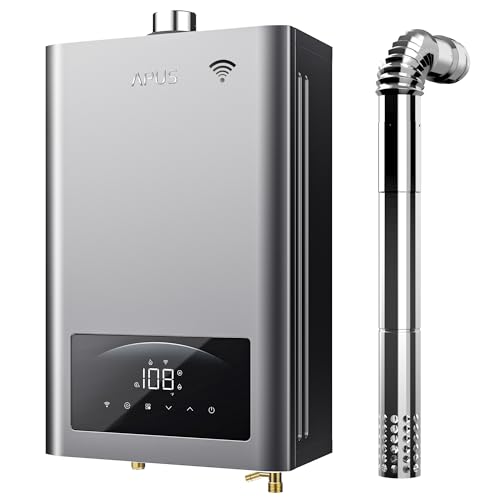
The APUS unit provides 6.8 GPM at 140,000 BTU with built-in smart Wi-Fi control. It emphasizes instant hot water delivery, aided by an updated copper heat exchanger and intelligent heating technology that minimizes wait time. The included 24/7 ECO smart cycle aims to save energy by reducing standby losses while maintaining steady temperatures when multiple outlets are in use. A built-in booster pump increases flow by up to 130%, supporting two showers and two sinks without noticeable temperature fluctuations.
Buying Guide: Key Purchase Considerations
Size of home and hot-water demand is central when selecting a tankless unit. Larger homes with multiple bathrooms may require higher GPM ratings (6–11 GPM) and BTU outputs. Gas line sizing and venting requirements affect installation cost and feasibility. Indoor options offer easier venting but require adequate clearance and safe exhaust routing. Condensing models tend to be more energy-efficient but can be more expensive upfront. Consider the following factors to compare models effectively:
- Flow rate (GPM): Align with the number of simultaneous hot-water outlets. A typical 2–3 bathroom home may need 6–8 GPM; larger homes may require 8–11 GPM.
- Fuel type and venting: Natural gas is common, but propane and electric options exist. Venting requirements influence installation complexity and cost.
- Efficiency and energy use: Look for high UEF (or energy factor) ratings and features like intelligent control, Quick Flush, and eco modes to reduce operating costs.
- Installation space: Indoor units save space but require safe clearance and venting; outdoor units require weather protection and possible venting considerations.
- Control features: WiFi or app control can optimize performance, monitor usage, and simplify maintenance scheduling.
- Durability and serviceability: Stainless steel or durable cabinet construction improves longevity. Access to local service technicians matters for long-term reliability.
- Maintenance needs: Condensing units may require periodic flushing and descaling; check for ease of service and manufacturer guidance.
When evaluating options, pair your preferred model with a qualified professional to verify venting compatibility, gas supply adequacy, and proper installation. The right choice balances instantaneous hot water, energy efficiency, upfront cost, and long-term maintenance demands. This approach helps ensure consistent comfort without sacrificing home efficiency or safety.