Costa Rica’s lush landscapes and tropical climate make solar power a practical option for outdoor devices, RV setups, and emergency backup. This guide highlights five reliable solar panels suited to outdoor use in warm, variable weather, including IP65 waterproof ratings and versatile mounting options. Each product is evaluated on compatibility, durability, and performance to help you choose panels that perform well under Costa Rican sun and occasional cloud cover.
Summary of selected products
| Product | Brand | Key Benefit |
|---|---|---|
| Solar Panel for Security Camera, 5W USB Solar Panel | EverExceed | Simple, compact, USB-powered camera charging with IP65 protection |
| 5W Solar Panel for Security Camera, USB Panel | YCTechCam | Flexible mounting and reliable 5W output for micro USB/USB-C cameras |
| MARBERO 21W Portable Solar Panel | MARBERO | Higher output for camping, travel, and backup charging |
| Renogy 200W Portable Solar Panel | Renogy | High efficiency, foldable design, multiple charging ports |
| DOKIO 150W Portable Foldable Solar Panel Kit | DOKIO | Portable kit with controller and long cable for flexible setups |
EverExceed 5W USB Solar Panel For Cameras

The EverExceed solar panel is designed to power small DC 5V battery cameras with micro USB or USB-C ports. It is not compatible with plug-in cameras such as Arlo or Ring, which helps keep expectations aligned. A 9.8-foot cable offers flexibility to position the panel for optimal sun exposure. The panel carries IP65 waterproofing, enabling outdoor use in varying Costa Rican weather, and a wide temperature range from -4°F to 122°F. The 360° adjustable bracket makes installation straightforward on walls, posts, or fences, ensuring consistent sunlight collection throughout the day.
YCTechCam 5W USB Solar Panel For Security Cameras

The YCTechCam solar panel is a compact 5W solution compatible with micro USB or USB-C rechargeable battery security cameras. It excludes compatibility with Arlo, Blink, Ring, Google Nest, Kasa, and other plug-in cameras to set proper expectations. Installation is designed for easy mounting with a 360-degree adjustable wall bracket, letting users optimize angles to maximize sun exposure. The product emphasizes efficient solar supply through monocrystalline silicon, delivering consistent power to keep cameras operational without frequent manual charging, even in shaded Costa Rican conditions.
MARBERO 21W Portable Solar Panel

The MARBERO 21W foldable solar panel emphasizes portability and higher output, ideal for outdoor enthusiasts in Costa Rica. It folds compactly for transport and includes attachment holes for easy hanging with carabiners. Conversion efficiency up to 23% is supported by built-in smart charging to detect devices and prevent overcharging. Under direct sun, it can deliver 18–21W; on cloudy days, it still provides 12–16W, offering reliable power when sunlight is intermittent—a common scenario in tropical climates with passing showers.
Renogy 200W Portable Solar Panel
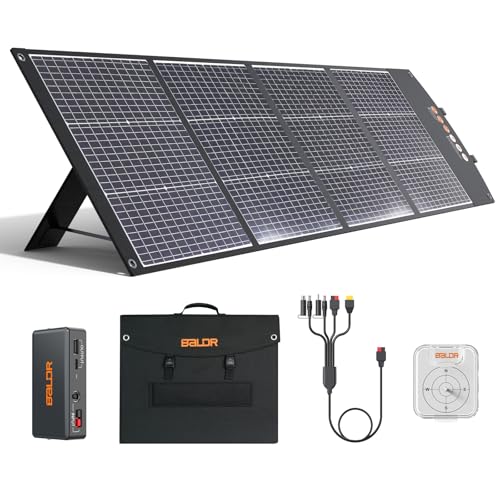
Renogy’s 200W panel uses advanced 16BB N-Type cells and a foldable, lightweight design that’s easy to transport. With an efficiency around 25%, it delivers substantial output suitable for charging multiple devices or powering power stations. This panel supports USB-C PD connectivity and USB-A ports, enabling flexible charging for phones, laptops, cameras, and small devices. The foldable frame with a magnetic closure reduces setup time, increasing reliability for off-grid Costa Rican trips, camping, or emergency backup. MC4 output ensures compatibility with most portable power stations and battery systems.
DOKIO 150W Portable Foldable Solar Panel Kit

The DOKIO kit provides a complete portable charging solution with a separate PWM controller for safer charging of 12V systems. Its 150W panel folds down to a compact size and includes a long 9.85-foot cable, allowing placement in full sun while locating the controller in a shaded area. This combination supports RVs, camping, and emergency backup needs in Costa Rica, where flexible setup and reliable power delivery are important for devices and small appliances in remote locations.
Buying Guide: Picking The Right Solar Panel
- Power needs: Determine whether you need a small panel for cameras or a larger panel to charge power stations and multiple devices. Higher wattage panels (like 150–200W) are better for frequent use and cloudier days, while 5–21W panels are ideal for cameras and USB devices.
- Portability vs. capacity: Foldable panels are easy to carry and set up in outdoor areas typical in Costa Rica, but fixed or semi-permanent mounts may be preferred for longer-term setups on a cabin, RV, or campsite.
- Durability and weather resistance: IP65 or IP68 ratings protect against rain and humidity, essential in tropical climates. ETFE laminates add durability for outdoor exposure.
- Compatibility: Check device compatibility, including USB-C and USB-A outputs, 12V systems, and power stations. Some panels support MC4 outputs for power stations and battery systems, while others focus on USB charging for cameras.
- Angle and placement: Look for adjustable brackets or kickstands to optimize sun exposure. In Costa Rica, seasonal sun angles and frequent showers require flexible positioning to maximize energy capture.
- Cable length and management: Longer cables (like 9.8 ft or more) allow panel placement away from hot equipment and shaded controllers, improving performance while reducing heat buildup.
- Maintenance: Choose panels with simple cleaning and robust construction. In humid environments, ensure waterproof housings and sealed connectors to prevent corrosion.
- Budget and warranties: Assess total cost against expected lifespan. Reputable brands with warranties provide protection against manufacturing defects and environmental wear.
Buying considerations for Costa Rica’s outdoor setting
When selecting solar panels for Costa Rica’s outdoor contexts, several factors influence performance and longevity. The tropical climate features intense sunlight, high humidity, occasional heavy rain, and strong temperatures. Panels with IP65 or better ratings perform well in rain showers and spray from coastal environments. Monocrystalline cells offer higher efficiency in bright sun and often perform better in limited space, which is useful for RVs or compact off-grid setups. For security cameras and lightweight devices, small 5W panels provide reliable daily trickle charging, while 150–200W options are better suited for power stations and multiple devices.
For travelers and campers, portability and fast setup matter. Foldable designs with integrated kickstands and carabiners simplify deployment near tents, vehicles, or shelters. A long, flexible cable helps keep controllers away from heat sources and sun glare, extending panel life and reducing energy losses. In regions with frequent cloud cover, higher-efficiency panels and those with smart charging can adapt to varying light, maintaining a steadier power supply for devices and cameras.
Durability is another priority. Humidity, salt air near coastal zones, and tropical rainstorms can affect connectors and frame integrity. Look for rugged casings, corrosion-resistant hardware, and high-quality laminates (like ETFE) that resist moisture and UV exposure. Finally, pairing a solar panel with a compatible battery, power station, or device charger helps balance energy supply with demand, ensuring you have power when storms roll in or the sun dips behind thick cloud cover.