Answer: Solar fence chargers that are best for horse and livestock fencing provide reliable energy, ample coverage, and easy day/night operation. This guide highlights five top options that balance stored energy, voltage output, and ease of installation for different pasture sizes. It is suitable for horse owners, cattle growers, and mixed livestock managers seeking dependable, solar-powered fencing solutions.
| Product | Coverage | Stored Energy | Best For | Key Benefit |
|---|---|---|---|---|
| 24 Hour Solar Electric Fence Charger, 10 Miles (Epoify) | Up to 10 miles | 0.18J | Small to medium pastures | Night protection with day charging |
| 10 Miles Solar Electric Fence Charger (ANDMON) | Up to 10 miles | 0.16J | Portable grazing setups | Compact and easy to relocate |
| Solar Electric Fence Charger 1.2J Stored Energy (Epoify) | Up to 45 miles | 1.2J | Large pastures and multi-zone fencing | High energy for large livestock |
| Zareba Solar Electric Fence Charger ESP5M-Z | Up to 5 miles | 0J stored (solar) | Remote locations with sun | 360-degree rotation for sun exposure |
| ANDMON MINI400 30 Miles Solar Fence Charger | Up to 30 miles | 0.4J | Medium to large ranches | Night mode and dual power options |
Note: The selections above come from a mix of compact, portable units and higher-capacity ranch models. When choosing, evaluate pasture size, livestock type, sun exposure, and whether you need day/night operation or multi-zone coverage.
24 Hour Solar Electric Fence Charger, 10 Miles
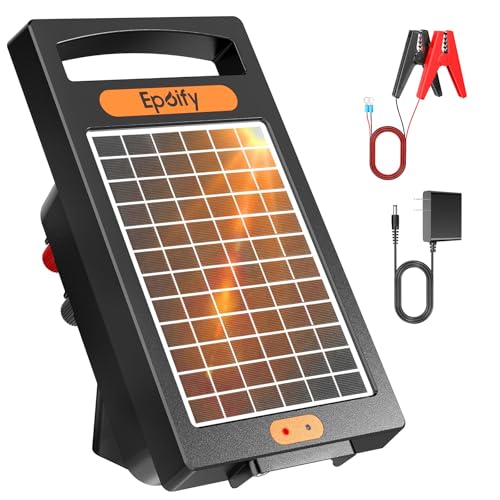
Features: 0.18J output designed for livestock containment and predator deterrence; up to 10 miles of pasture fencing; continuous day charging with night protection due to a built-in large-capacity battery. Best for small to medium pastures with a need for around-the-clock protection. Limitations include moderate coverage compared to higher-energy units, which may be less suited for very large ranches.
Who it’s best for: Horse owners with modest fencing needs or small farms that require reliable, low-maintenance solar power and overnight operation. Why selected: It provides a balance of energy, portability, and simple setup, making it a practical daily-use charger for moderate acreage.
Caution: Ensure proper grounding and regular vegetation management to maximize efficiency and avoid voltage drops in wet or overgrown areas.
10 Miles Solar Electric Fence Charger (ANDMON)
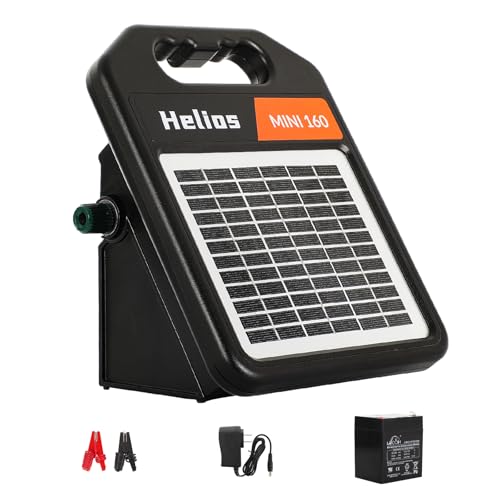
Features: Compact, portable unit designed for strip grazing; energizes up to 10 miles; built-in solar panels with an internal GEL battery; simple mount and quick installation. Best for portable fencing needs, seasonal grazing, or rental setups. Limitation: Real-world mileage depends on fence type, vegetation, and grounding quality.
Who it’s best for: Farmers and ranch managers who move fencing frequently or work in temporary pastures. Why selected: Its portability and a reliable solar build make it ideal for temporary or rotating grazing patterns without power outlets.
Caution: For best results, keep the solar panel exposed to sun; cloudy periods may reduce output, so plan for longer daylight reliance in winter.
Solar Electric Fence Charger 1.2J Stored Energy (Epoify)

Features: TRUE 1.2J stored energy with 7–11kV output; designed for large pastures and multiple livestock. Upgraded solar panel for faster charging and reliable operation in less-than-ideal sunlight; coverage up to 45 miles under optimal conditions. Best for large ranches or multi-zone fencing. Limitation: High energy and coverage require adequate grounding and ample sun to reach peak performance.
Who it’s best for: Large herds including cattle and horses, or properties with extensive fencing within long perimeter lines. Why selected: Its substantial stored energy and wide coverage make it the most capable option in this set for expansive operations.
Caution: In extremely cloudy periods, output may drop; ensure proper maintenance of the solar panel angle and wiring integrity for continued reliability.
Zareba Solar Electric Fence Charger ESP5M-Z

Features: Solar-powered unit energizes up to 5 miles; versatile mounting with built-in bracket for T-posts and other posts; 360-degree rotation for optimal sun exposure; stores energy to operate during cloudy periods for up to two weeks. Best for remote locations where power is unavailable. Limitation: Smaller coverage may not fit larger pastures without additional units.
Who it’s best for: Small farms or remote paddocks where sun exposure can be optimized by pole positioning. Why selected: The rotational mounting helps maximize sun capture, which is particularly useful in varying climates.
Caution: Check post compatibility and ensure secure mounting to withstand wind and vibration across seasons.
ANDMON MINI400 30 Miles Solar Fence Charger
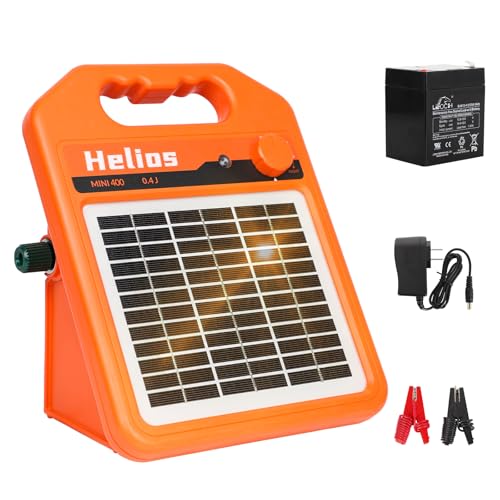
Features: 0.4J stored energy with low-impedance design; powers up to 30 miles of fence; day/night mode; dual power options with solar and DC charger; easy installation. Best for medium to large ranches needing longer run times. Limitation: Higher energy requires more robust grounding and proper panel orientation for optimal efficiency.
Who it’s best for: Ranches with larger perimeters or multi-zone fencing that require longer uninterrupted operation. Why selected: The 0.4J energy and night mode provide strong performance for extended periods, making it a solid mid-to-large scale solution.
Buying Guide: Key Considerations For Solar Fence Chargers
- Pasture size and fence length: Larger properties benefit from higher stored energy and greater miles of coverage. Match energy (Joules) and output volts to livestock and fence type.
- Sun exposure and climate: Solar charging depends on daylight and weather. Units with higher solar panel efficiency and larger batteries perform better in cloudy seasons.
- Portability vs. permanence: For rotating grazing, portable units simplify relocation; for permanent ranch lines, higher-capacity chargers reduce maintenance.
- Power options: Dual power (solar plus DC) offers flexibility in low-sun environments or during storms.
- Mounting and maintenance: Choose units with robust mounting systems and easy-access battery compartments for long-term reliability.
- Alerts and safety: Short-circuit alarms help you detect wiring issues quickly and minimize livestock risk.
Frequently Asked Questions
- What distance should I expect from a solar fence charger?
- Do these chargers work at night without power?
- Is higher joule output always better?
- Can I use a solar fence charger on any fence type?
- What maintenance helps maximize performance?
- How do I choose between day/night and energy-heavy models?
Expected distance varies by model and fence setup. Small units cover up to 5–10 miles, while larger ranch models can cover 30–45 miles under optimal conditions.
Yes. Most include a built-in battery that stores energy during the day to energize the fence at night.
Higher joules deliver stronger pulses, but effectiveness also depends on fence design, wire type, and grounding. Choose based on livestock and pasture needs, not just energy rating.
Most are compatible with standard electric fencing for cattle, horses, and livestock, but always verify compatibility with your fence wire and post system.
Keep solar panels clean, ensure proper grounding, trim vegetation around panels, and test the fence voltage regularly to confirm energy delivery.
Choose day/night models for permanent pastures with constant livestock presence and higher energy needs. For rotating or seasonal grazing, portable units with decent mileage may be more cost-effective.