Answering your search for a cost-effective way to warm an above-ground pool, these solar heating options harness the sun to raise water temperature with minimal ongoing cost. They suit different pool sizes, installation styles, and outdoor conditions. This guide highlights five top picks, explaining who each is best for, plus practical cautions to consider before buying.
Quick reference
- Intex 47 Inch Solar Pool Water Heater Mat — Best for small-to-medium above-ground pools, value-focused outdoor setups.
- Bestway Solar-Powered Pool Heating Pad — Best for eco-friendly, simple, easy-to-connect heating.
- Doheny’s Solar Pool Heating System (2.5′ x 20′ Collector Kit) — Best for larger backyards with flexible mounting options.
- Goplus 2.5FT x 16.5FT Solar Pool Heater — Best for flexible sizing, all-weather PE construction.
- FAFCO Solar Bear Universal DIY Kit — Best for DIY enthusiasts seeking a high-efficiency, American-made option.
Intex 47 Inch Solar Mat For 8,000 Gallon Pools

Best for: Small to mid-sized above-ground pools that need an economical boost. The Intex mat uses solar energy to raise water temperature by about 5–9 degrees, depending on sun exposure. It offers an 11-square-foot surface area and fits filter pumps up to 1/3 HP or flows under 2,000 GPH. This makes it a practical option for budget-constrained setups where a simple solar boost is sufficient.
What to know: Designed for above-ground pools, easy to deploy, and compatible with common pump sizes. A limitation is that significant temperature gains require favorable sunlight and longer sun exposure during the day. Weight is about 6.41 pounds, so consider placement stability on flat ground.
Bestway Solar-Powered Heating Pad

Best for: Homeowners seeking an energy-efficient, user-friendly solar heating pad with straightforward installation. The pad uses sunlight to heat pool water as it circulates. It includes two hose outlets, one to the filter pump and one returning to the pool, enabling a gradual, even temperature increase as water passes through the unit. It emphasizes durability and weather resistance for long-term outdoor use.
Strengths: Simple setup, energy-efficient operation, and robust construction. Caution: Temperature gains depend on sun exposure and water flow; poor sun or high ambient shading may limit performance. No gas or electricity beyond solar heating is required, which lowers operating costs.
Doheny’s Solar Pool Heating System (2.5′ x 20′ Collector Kit)
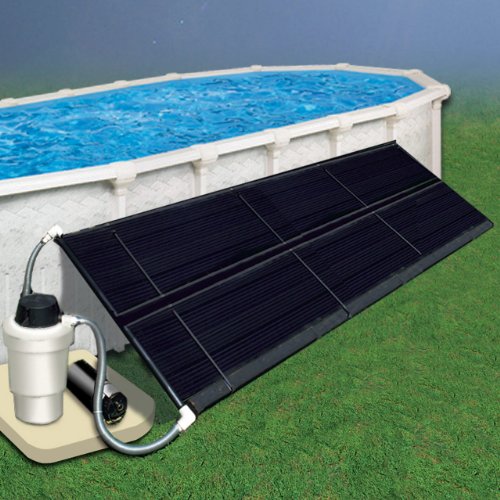
Best for: Above-ground pools where mounting options are flexible and space allows longer collectors. This kit uses solar panels to heat circulating water before returning it to the pool, offering energy savings compared with gas or electric heaters. The collector sizes vary, with installations possible on plywood beside the pool or on a roof with a mounting kit.
Why chosen: It provides a scalable approach to solar heating, which can be expanded by adding more panels. Caution: Requires installation planning for mounting and plumbing; PVC or flex pipes are not included, so compatibility must be confirmed during setup.
Goplus 2.5FT x 16.5FT Solar Pool Heater

Best for: Pool owners who want a compact, efficient solar heating system with straightforward assembly. The two-panel configuration provides a total length of 16 feet and can raise water temperature by about 10.8°F, extending the pool season. Construction uses weatherproof PE material designed for outdoor rooftop use and broad temperature ranges.
Limitations: While efficient, performance depends on sun exposure and water flow. The system is designed to heat water rather than provide rapid temperature spikes, so expect gradual warming throughout the day.
FAFCO Solar Bear Universal DIY Kit

Best for: DIY enthusiasts who want a high-efficiency solar heating solution for above-ground pools. FAFCO is a recognized manufacturer in solar heating, offering a kit designed for cost-effective solar heating powered by the sun. The kit uses polyolefin materials and is designed for dependable long-term use with robust performance expectations.
Why this option stands out: It emphasizes US manufacturing quality and durability. Caution: As a DIY kit, installation complexity and system sizing require careful planning to match pool volume and plumbing options.
Buying Guide: Key Purchase Considerations
What size pool do you have? Match the heater’s surface area or collector length to your pool’s gallons and desired warming rate. Larger pools often benefit from multiple or longer collectors and careful water flow management.
Where will you install it? Above-ground pools typically use ground- or deck-level mats or panels. Collectors that can be mounted on a wall, shed, or a roof may need mounting hardware and connectors not included in basic kits.
How sun exposure affects performance? Solar heating relies on direct sun. Shaded yards or cloudy climates will warm more slowly. For best results, place collectors where they receive steady sun through the day.
Is installation simple or DIY-friendly? Some options are plug-and-play with minimal plumbing, while others require hoses, adapters, or mounting schemes. Assess whether you want a quick setup or a scalable system you can expand later.
Maintenance considerations? Look for materials that withstand UV exposure and weathering. Panels or mats should be cleaned occasionally to remove dirt that could hinder heat absorption. Check for any seals or connectors that may need periodic inspection.
Frequently Asked Questions
- Can a solar pool heater heat a large pool quickly? – Solar heaters typically warm water gradually; larger pools may require longer exposure and multiple panels to achieve noticeable gains.
- Do I need a professional to install solar pool heating? – Some systems are DIY-friendly, while larger or roof-mounted kits may benefit from professional installation for proper mounting and plumbing.
- Will solar heating work on cloudy days? – Performance drops in low sunlight; sunny days yield the best results. Consider a backup heater for peak times.
- Can I use solar heating with existing pumps? – Most heat methods are designed to work with standard pool pumps; verify flow rates match the heater’s requirements.
- Are there maintenance steps I should perform regularly? – Periodic cleaning, checking connections, and inspecting seals help maintain efficiency and prevent leaks.
- Is a solar heater environmentally friendly? – Yes. Solar heating uses sunlight, reducing reliance on gas or electricity and lowering operating costs over time.