Choosing the right 80 amp solar charge controller is essential for maximizing efficiency, protecting batteries, and extending system life. The following picks highlight models that auto-detect voltages, support 12V to 48V systems, and offer protections like overcharge, short-circuit, and reverse connection. This guide compares PWM and MPPT options, setup features, and compatibility to help American homeowners and off-grid enthusiasts pick the best fit for lighting, pumps, and other solar-powered loads.
| Product | Brand |
|---|---|
| YKYWTRWL Solar Charge Controller 80A PWM | YKYWTRWL |
| PowMr 80A PWM Solar Charge Controller | PowMr |
| 80A Solar Charge Controller with Load Timer | IPO-R.Kwat |
| Ampinvt 80 Amp MPPT Solar Charge Controller | AMPINVT |
| POWLAND 80A MPPT Solar Charge Controller | POWLAND |
YKYWTRWL 80A PWM Solar Controller
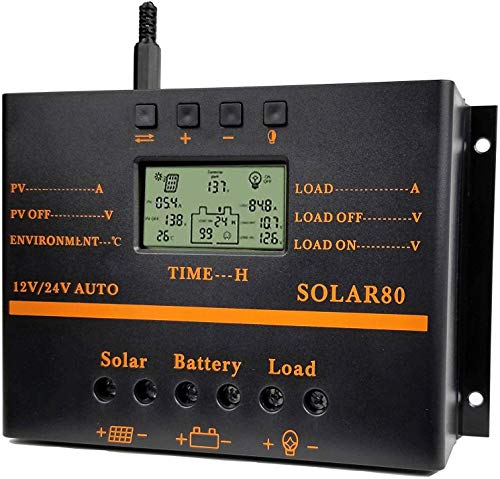
The YKYWTRWL 80A PWM controller supports 12V or 24V auto-identification and handles up to 960W (12V) or 1920W (24V) of PV input power. It includes a USB 5V port for charging devices and a multi-circuit protection system—short circuit, overcharge, over-current, and reverse connection protections—to safeguard both panels and batteries. The ABS housing offers a durable, anti-fall shell designed for long life in outdoor or utility spaces. A built-in battery monitor is included in the package, enhancing system visibility for homeowners managing lighting and auxiliary loads.
Key considerations include compatibility with common lead-acid, AGM, and LiFePO4 chemistries, simple wiring, and the reliability of PWM regulation in moderate climates. Users should verify that their PV array does not exceed the stated max input to prevent throttling. While PWM controllers are typically more affordable, they deliver slightly lower efficiency in high-voltage setups compared with MPPT options.
PowMr 80A PWM Solar Controller with LCD

The PowMr 80A PWM solar controller auto-detects 12V, 24V, 36V, and 48V systems, with a maximum input power of up to 3840W at 48V. It features built-in dual USB ports (5V, 2A) and an LCD display for real-time monitoring and parameter configuration. Its 3-stage PWM charging (Bulk, Boost, Float) is designed to optimize battery life across AGM, Gel, FLD, Lead-Acid, and some lithium options. This model emphasizes robust protection against short circuits, open circuits, reverse polarity, and overloads. Its large current rating and clear display make it suitable for larger lighting or water-feature installations in off-grid settings.
Potential trade-offs include PWM efficiency versus MPPT in high-irradiance arrays and the need to size PV input to stay within the specified limits. The LCD interface simplifies setup for users who prefer manual adjustments and monitoring without a separate battery monitor device.
IPO-R.Kwat 80A PWM Solar Charge Controller

This 80A PWM regulator from IPO-R.Kwat supports 12V and 24V systems with 80A charging current and an LCD display. It includes multiple protection features—short-circuit, open-circuit, reverse protection, and overload protection—to help maintain battery health and ensure reliable operation of landscape lighting and water features. The device also notes automatic shutdown if the battery voltage falls below 10V, which helps prevent deep discharge of the system and extends battery life.
Considerations include battery type compatibility (lead-acid, gel, and certain Li-ion chemistries), and the balance between PWM simplicity and the efficiency advantages MPPT controllers provide in variable sunlight. This unit is well-suited for straightforward, low- to mid-complexity off-grid lighting projects where simplicity and safety are priorities.
Ampinvt 80A MPPT Solar Charge Controller
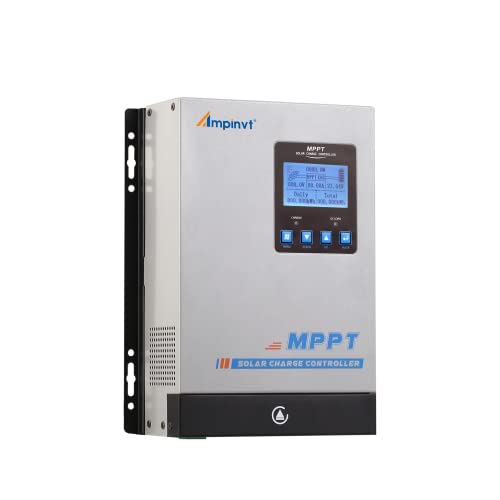
The AMPINVT 80A MPPT controller supports 12V to 48V systems with input voltage up to 150V PV and a wide range of max input powers depending on system voltage (e.g., up to 4540W at 48V). It features an LCD display for real-time data, multiple load control modes, and an automatic identification of battery voltage. The controller uses an MPPT algorithm to maximize PV utilization, often delivering higher efficiency than PWM in fluctuating sunlight conditions. It also provides an auto-control function to prevent charging power from exceeding rated values, protecting both panels and batteries. This makes it suitable for more complex off-grid installations, including lithium and sealed gel chemistries.
Users should verify battery compatibility, as MPPT performance relies on proper voltage alignment with the chosen battery type. The higher input voltage capability makes this unit attractive for larger or modular PV arrays where module strings deliver varied voltages.
POWLSOJX 60A/80A MPPT Solar Controller

The POWLSOJX MPPT controller is available in 60A, 80A, and 100A variants and supports 12V/24V/36V/48V systems with automatic voltage detection. It emphasizes seven operation modes, including timing and load-control options, with an intuitive LCD display showing battery and panel status. Its MPPT function tracks the maximum power point efficiently, which helps maximize energy capture across varied sun conditions. The device is designed for high PV efficiency and supports a range of battery chemistries, including lithium and lead-acid types, making it suitable for solar RVs, cabins, and larger home systems that require precise load management and monitoring.
Potential drawbacks include controller cost relative to PWM options and the need for proper setup to get the most benefit from MPPT efficiency. The seven modes provide flexible control for complex duty cycles or specific lighting schedules, which can be advantageous for gardens, water features, or remote outbuildings.
Buying Guide
Key purchase considerations when selecting an 80A solar charge controller:
- Voltage and system type: Ensure the controller supports your battery bank voltage (12V, 24V, 36V, or 48V) and the PV array configuration. MPPT models are generally more efficient in higher voltage setups, while PWM units are typically more affordable for smaller systems.
- PV input power and voltage: Match the controller’s max input power to your expected panel array. Going over the rating can reduce efficiency or damage components.
- Battery chemistry compatibility: Confirm compatibility with your battery type (lead-acid, AGM, Gel, LiFePO4, or other Li-based chemistries). Some MPPT controllers offer specific charging curves for different chemistries.
- Protection features: Look for short-circuit, reverse polarity, overcharge, and over-discharge protections. A robust protection suite helps extend battery life and protect panels.
- Monitoring and control: LCD displays, USB ports, and data logging improve visibility of system performance. Consider whether you need real-time monitoring, load control, and timing features for lighting and pumps.
- Future expandability: If you plan to expand your solar array, pick a controller with headroom and MPPT efficiency that matches larger panels and higher voltage strings.
- Environment and durability: ABS or metal housings, IP ratings, and cooling features affect longevity in outdoor spaces. For remote cabins or yards, weather resistance is a practical factor.
Choosing between PWM and MPPT hinges on system size and climate. MPPT controllers maximize energy harvest in shaded or temperature-variable conditions and allow higher PV voltages, enabling longer cable runs with less voltage loss. PWM controllers offer simplicity, reliability, and lower upfront cost, which can be ideal for small lighting-only setups or backup systems. For 80A capacities and multi-volt compatibility, MPPT models are generally the best option when space and budget permit, especially for higher wattage panels and lithium battery applications.