If you’re looking for compact, point‑of‑use hot water without a bulky installation, these small electric models deliver instant hot water at the tap. They’re ideal for tight under-sink spaces, apartments, or RV setups where space and energy efficiency matter. This guide highlights five compact options, who they’re best for, and practical buying considerations.
| Product | Best For | Key Benefit |
|---|---|---|
| ThermoMate ES150 Mini Tank | Sinks and small kitchens | Instant hot water with compact wall/floor mounting |
| ThermoMate ES250 Mini Tank | Medium hot water needs under sink | 2.5 gallon capacity with high insulation |
| BOSCH Tronic 3000 ES2.5 | Quiet, reliable under-sink setup | Glass-lined tank with 98% thermal efficiency |
| AIYEZIDT Tankless 3kW | Small spaces needing on-demand hot water | Digital display and IPX4 protection |
| xwdzswgs 3000W Under Sink | Kitchens and bathrooms needing rapid hot water | LED display with smart temperature control |
Note: For every model, consider space under the sink, electrical requirements, and whether you need a tanked (small storage) or tankless (on-demand) solution. The following sections present detailed product profiles to help you compare options quickly.
ThermoMate ES150 Mini Tank Water Heater

The ES150 is a 1.32-gallon mini tank designed for point-of-use installations. It provides instant hot water with fast recovery and features a high thermal efficiency up to 99%. The unit can be wall or floor mounted and plugs into a standard 120V outlet. With a nominal current around 12 amps and a three-level thermostat (77°F to 140°F) with a high-temperature limit, this model suits small sinks or under-sink setups where space is limited. Best for: small kitchens and under-sink fans who want immediate hot water with simple installation.
Caution: Its lower capacity means it’s best for single taps or small continuous-use scenarios; high flow at the sink may reduce outlet temperature.
xwdzswgs 3000W Tankless Under Sink Water Heater

This 110V tankless model delivers instant hot water with a 3000W power rating and an LED display. It can raise water by roughly 82°F to 131°F depending on flow, providing continuous hot water on demand. It’s compact and designed for under-sink installation, with safety features like IPX4 waterproofing and multiple protections. Best for: kitchens or bathrooms needing on-demand hot water in tight spaces, where visible temperature control helps with precise settings.
Limitation: Not suitable for showers that require higher flow rates (often 1.8 GPM or more) due to its 0.3–0.5 GPM performance range at higher temperature rises.
ThermoMate ES250 Electric Mini Tank Water Heater

The ES250 expands the storage capacity to 2.5 gallons, supporting more sustained hot water. It features a 1440W, 120V plug-in design, a 50–149°F adjustable temperature range, and enhanced insulation with a 30mm thick polyurethane layer to minimize standby heat loss. The tank is built with a fused porcelain enamel glaze and a robust anode rod, which together improve longevity and corrosion resistance. Best for: small households or sinks where you want a greater reserve of hot water without sacrificing compact form.
Limitation: Slightly bulkier than ultra-compact models; placement under the sink should accommodate its 10–14 inch height, depending on model orientation.
AIYEZIDT Tankless 3kW Electric Water Heater
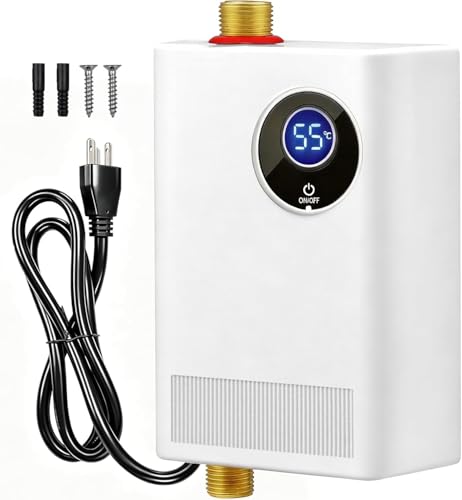
This tankless unit offers on-demand hot water with a compact footprint and a digital LCD display. It’s designed for 110V operation and claims rapid heating (3–5 seconds) with a temperature rise up to 55°C (131°F). It’s wall-mounted for space savings and includes IPX4 water resistance plus leak and dry-burning protections. Best for: small spaces such as kitchen islands, RVs, or apartments needing instant hot water without a bulky tank.
Limitation: The maximum flow rate can limit simultaneous use; not ideal for higher-demand scenarios like multiple outlets at once.
xwdzswgs 3000W Under Sink – Digital Display (Another Model)

This variant mirrors the 3000W tankless design with a clear digital display and solid under-sink installation. It follows the same safety protections (IPX4, dry-burning, overheating protection) and emphasizes a predictable temperature management experience. Best for: users who want a second point-of-use heater with precise digital temperature control in a dual-sink setup or along a secondary bathroom vanity.
Caution: Correct vertical orientation is recommended to avoid heating element issues noted in some setups; ensure electrical wiring matches 30A/10AWG requirements where applicable.
Buying Guide: How To Choose The Right Small Point-Of-Use Heater
- Tank vs Tankless: Tank models store hot water for quick access; tankless units heat on demand, saving space and reducing standby heat loss. Choose based on your hot water needs and space constraints.
- Capacity and Flow: For under-sink uses, 1.3–2.5 gallons is typical; tankless units depend on GPM and temperature rise. If you frequently run hot water for longer periods, a larger tank or a higher-flow tankless unit is beneficial.
- Electrical Requirements: Most under-sink heaters run on 110–120V. Check breaker size and wire gauge (commonly 10 AWG for 30A in some models). Improper wiring can lead to safety issues.
- Temperature Range and Safety: Look for adjustable thermostats, high-temperature limits, and protections against dry heating and overheating. IP ratings (IPX4) indicate splash resistance suitable for kitchens and baths.
- Space and Orientation: Measure cabinet height, width, and depth. Some units are optimized for wall mounting; others fit floor-mill installations under counters. Orientation may impact element performance in rare cases (as noted by some models).
- Installation Considerations: Ensure inlet/outlet fittings match standard plumbing sizes (G1/2″), and plan for proper venting and drainage if required by local code.
- Maintenance: Tanks with glass-lined interiors resist corrosion, but periodic inspection is recommended. Tankless models benefit from mineral scaling considerations; descaling may be needed in hard water areas.
Frequently Asked Questions
- What is a point-of-use water heater? It is a compact unit installed near the water outlet to deliver hot water quickly without heating a large portion of pipe run.
- Do these units require professional installation? Some can be installed by handy homeowners, but electrical and plumbing work may require a licensed professional depending on local codes.
- Can I use a point-of-use heater for showers? Most under-sink models are not designed for showers due to flow rate; check the specific unit’s GPM rating and installation guidelines.
- How energy efficient are these units? Tankless models generally save energy by eliminating standby losses; tank models save energy with better insulation but still consume standby power for stored water.
- What maintenance is needed? Tank models: periodic flushing to prevent sediment; Tankless models: occasional descaling in hard water areas and checking electrical connections.
- Which model is best for a small apartment? A compact tank or a high-efficiency tankless unit with a simple 120V hookup is typically ideal for apartments with limited space and straightforward electrical access.