When power outages or surges threaten essential devices, a single outlet battery backup can be a smart, compact safeguard. This guide highlights five reliable units that balance capacity, protection, and simplicity, helping you choose a unit that fits a single-outlet use case or compact setups while still delivering dependable backup power and surge protection.
| Product | VA / W | Outlets | Key Benefit |
|---|---|---|---|
| APC BE425M | 425 VA / 225 W | 6 total (4 battery backup + surge; 2 surge-only) | Compact, wall-mountable with service-replaceable battery |
| Amazon Basics 400VA | 400 VA / 255 W | 6 (3 battery backup + surge; 3 surge-only) | Balanced performance for home networks and entertainment |
| APC BE600M1 | 600 VA / 330 W | 7 total (5 battery backup + surge; 2 surge-only) | USB charger port for mobile devices |
| CyberPower ST425 | 425 VA / 260 W | 8 total (4 backup + surge; 4 surge-only) | Compact with transformer-spaced outlets |
| Tripp Lite BC600R | 600 VA / 300 W | 4 outlets | Small desktop form with reliable restart on power return |
Note: The listed products vary in battery-backup vs. surge-only outlets. For single-outlet or minimal setups, prioritize units with battery backup on at least a subset of outlets to keep essential devices running during outages.
APC BE425M Battery Backup and Surge Protector

The APC BE425M provides 425 VA / 225 W of backup power across a total of six outlets, with four outlets offering battery backup and surge protection and two outlets offering surge protection only. A 5-foot power cord connects to a standard wall outlet, and the unit is wall-mountable for space-conscious setups. The battery is not user-replaceable but can be service-replaced by a qualified technician, making it suitable for environments where long-term maintenance is planned. This model balances compact design with practical backup capacity for small home networks or media centers.
Amazon Basics UPS Battery Backup & Surge Protector 400VA

The Amazon Basics 400VA unit offers 400 VA / 255 W of standby backup power across six outlets, including three battery-backed and surge-protected outlets and three surge-protected-only outlets. It is designed to protect home networks, IoT devices, and home entertainment gear during short outages, preserving data integrity and allowing orderly shutdowns when needed. Battery runtime ranges with load; at about half load, expect several minutes of backup, with diminishing time as load increases. This model emphasizes broad compatibility and straightforward setup.
APC BE600M1 Back-UPS with USB Charger Port
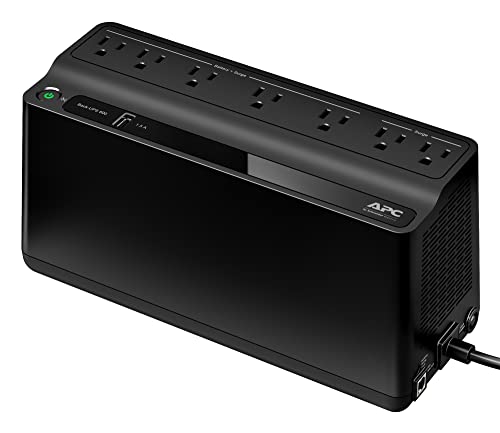
The APC BE600M1 offers 600 VA / 330 W of battery backup across seven outlets, with five battery-backed outlets and surge protection on two, plus a USB charging port for mobile devices. This configuration is well-suited for a small office or media center where multiple devices require uninterrupted power, including a modem, router, and a computer. The included USB port adds convenience for on-the-go charging during outages or maintenance windows.
CyberPower ST425 Standby UPS with 8 Outlets

The CyberPower ST425 combines 425 VA / 260 W of standby backup with eight outlets, split into four battery-backed and surge-protected outlets and four surge-protected-only outlets. It uses simulated sine wave output, suitable for basic home office and entertainment setups including computers, gaming devices, and routers. A status LED indicates power, wiring faults, and mode status. The compact design and higher outlet count make it a flexible option for small workstations.
Tripp Lite BC600R Desktop UPS

The Tripp Lite BC600R provides 600 VA / 300 W of battery backup power in a compact desktop form factor with four outlets for use in home or office environments. It supports reliable restarts once power returns and includes surge protection for connected devices. While smaller than some tower models, its form factor makes it ideal for a PC desk, small media center, or single-workstation setup where space efficiency is important.
Buying Guide
- Battery backup capacity: VA and watt ratings indicate how long devices can run during an outage. Higher values support longer runtimes for higher-powered equipment. Consider your essential devices and estimate runtime at typical loads.
- Number and type of outlets: Distinguish between battery-backed outlets and surge-only outlets. If you rely on uninterrupted power for a computer, router, or modem, ensure enough outlets provide backup power.
- Form factor and installation: Wall-mountable models save space, while desktop units offer easy relocation. Choose a design that fits your workspace or entertainment nook.
- Battery accessibility: Some units feature user-replaceable or service-replaceable batteries, which can reduce long-term maintenance costs. Others require professional replacement.
- Protection features: Look for surge protection ratings, transformer-spaced outlets to accommodate larger plugs, and status indicators to monitor power and faults.
- USB charging and ports: USB ports can be convenient for charging phones or devices during outages, adding versatility beyond traditional outlets.
- Runtime vs. load: Real-world runtime varies with connected devices. Plan for sufficient buffer time to save work and shut down safely during outages.
- Warranty and service: A longer warranty and accessible service options can reduce total cost of ownership and downtime.
- Noise and heat: Standby UPS systems are generally quiet, but heavy loads may generate noticeable heat. Consider placement in a well-ventilated area if running multiple devices.
Consider pairing a single-outlet or compact UPS with a basic power management plan: keep critical equipment on the UPS, perform regular battery checks (where possible), and ensure a routine for safe shutdown during longer outages. For environments with sensitive devices or frequent outages, evaluate models with higher backup capacity and longer runtime to maintain essential operations without interruption.