Ser Cable for 100 amp service is a critical choice for reliable power delivery to homes and mobile homes. This guide reviews five top options, highlighting conductor size, length, voltage rating, and suitability for underground or above-ground installations. The selections focus on aluminum and copper SER cables that meet 600V and 100A requirements, with varied lengths to fit different buildout needs. Use this overview to compare durability, flexibility, and installation suitability across common residential scenarios.
| Product | Brand | Length | Conductor Type | Voltage / Amp |
|---|---|---|---|---|
| Wirenco 2-2-2-4 SER Aluminum Service Entrance Cable (50FT Cut) | Wirenco | 50 ft | Aluminum, 2-2-2-4 | 600V, 100A |
| FairySandy 50′ 1-1-1-3 SER Aluminum Service Entrance Cable | FairySandy | 50 ft | Aluminum, 1-1-1-3 | 600V, 100A |
| Wirenco 2-2-2-4 SER Aluminum Service Entrance Cable (100FT Cut) | Wirenco | 100 ft | Aluminum, 2-2-2-4 | 600V, 100A |
| NASSAU ELECTRICAL SUPPLY 2-2-2-4 SER Aluminum Service Entrance Cable Wire | Nassau Electrical Supply | 100 ft | Aluminum, 2-2-2-4 | 600V, 100A (typical) |
| Nassau Electrical Supply 110′ 3-3-3-5 SER Copper Service Entrance Wire | Nassau Electrical Supply | 110 ft | Copper, 3-3-3-5 | 600V, 100A (typical) |
Wirenco 50ft 2-2-2-4 SER Aluminum Service Entrance Cable

Above Ground Service Entrance Cable rated for 600 volts and 100 amps, suitable for wet and dry locations. The 50-foot length provides flexibility for typical residential service runs. This aluminum SER variation features a standard 2-2-2-4 conductor configuration, offering adequate current-carrying capability for many single-family installations. Consider this option when you need a mid-length run with straightforward installation and dependable UL-style insulation.
FairySandy 50′ 1-1-1-3 SER Aluminum Cable
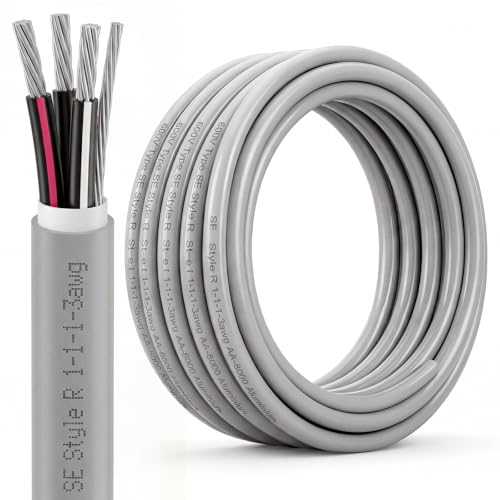
This direct-burial, 50-foot aluminum SER cable uses three 1 AWG conductors plus a 3 AWG ground wire, designed for common 100-amp service applications. Rated at 600V, the 1-1-1-3 configuration provides good flexibility for underground or buried installations associated with mobile homes or site-built homes. Its XHHW-2 insulation contributes to resistance against moisture and temperature variations, making it a practical choice for outdoor runs.
Wirenco 100ft 2-2-2-4 SER Aluminum Cable
This 100-foot aluminum SER cable extends the same 600V, 100A capability with a robust 2-2-2-4 conductor pattern. It is well-suited for longer service runs, enabling flexible routing from the meter base to the main electrical panel without excessive splices. The product’s above-ground design supports use in wet or dry locations, offering durability for outdoor installations and weather-exposed environments.
NASSAU ELECTRICAL SUPPLY 100FT 2-2-2-4 SER Aluminum Wire

An aluminum 2-2-2-4 SER cable in a 100-foot length, designed for above-ground or buried service runs in 600V systems. The 4-conductor setup aligns with standard residential service requirements, providing reliable current delivery while maintaining reasonable flexibility for routing through utility spaces and along exterior walls. This option is positioned for users who need a longer lead-in from the service panel with consistent performance.
NASSAU ELECTRICAL SUPPLY 10′ 2-2-2-4 SER Copper Cable

Copper SER cable offers excellent conductivity and lower resistance per conductor compared to aluminum. The 2-2-2-4 configuration supports 100-amp service with a compact 10-foot run, ideal for short internal routing or servicing tight spaces where aluminum would be less practical. Copper’s properties can translate to smaller required wire gauges in some installations, depending on local codes and panel requirements.
Buying Guide
Key purchase considerations help ensure you select a SER cable that meets code and installation needs:
- Conductor material: Aluminum SER cables are typically more affordable and lighter, while copper SER cables offer lower resistance and potentially easier termination in some panels.
- Conductor configuration: Common 2-2-2-4, 3-3-3-5, or 1-1-1-3 patterns reflect how many conductors and grounds the assembly includes; choose based on service type and local electrical codes.
- Voltage and amp rating: Most residential SER cables used for 100A services are rated at 600V. Verify the ampacity aligns with your service panel rating and feeder requirements.
- Length and routing: Longer runs reduce the need for splices but require careful routing to avoid physical damage and comply with clearance rules around structures and hardware.
- Underground vs. above-ground use: Direct burial or moisture-resistant insulation (such as XHHW-2) is essential for underground or exterior installations. Ensure jackets and insulation meet local climate conditions.
- Installation standards: Always confirm compliance with the National Electrical Code (NEC) and any jurisdiction-specific amendments. When in doubt, consult a licensed electrician.
- Durability and environment: Wet and dry location ratings influence where the cable can be installed. For exterior or underground runs, prioritize moisture resistance and abrasion protection.
- Length flexibility: If a single exact length is unavailable, select a longer length with proper termination options and plan for proper caging or enclosure as needed.