Answering the search for a reliable outdoor sensor light: these options cover solar-powered flexibility, hardwired reliability, and multi-head designs for broad coverage. They’re ideal for homeowners wanting hands-off dusk-to-dawn or motion-activated security, as well as renters seeking no-wuss setup. The top picks below balance brightness, wide detection ranges, and weather resistance. Best buyers: homeowners needing year-round solar alternatives; renters or modern homes seeking easy installation; and security-minded buyers who want wide coverage and durable IP-rated fixtures.
Summary of top picks (focused on outdoor sensor lighting)
| Product | Best For | |
|---|---|---|
| MIHANI Solar Flood Lights Outdoor (2 Pack) | Wide-area security for yards and patios | 270° wide-angle, 2500LM, IP65, 3 heads, motion up to 30 ft |
| Tuffenough Solar Outdoor Lights (2 Pack) | Remote-controlled flexibility | 3 heads, 2500LM, 26 ft sensing, 270° angle, remote control |
| LUTEC 72W 7500LM Security Lights | High-brightness perimeter lighting | 180° sensor, 69 ft range, 4 modes, IP65 |
| HMCITY 120 LED Solar Wall Lights (2 Pack) | Versatile modes for gardens | 270° angle, 120 LEDs, IP65 |
| kuyimy Solar Outdoor Lights (2 Pack) | Energy-efficient, broad coverage | 270° wide angle, 230 LEDs, 3 modes |
MIHANI Solar Flood Lights Outdoor — 2 Pack

Three adjustable heads provide a 270° illumination spread, with a 180° PIR sensor range reaching up to 30 feet. Best for large patios, yards, and entryways where broad, bright coverage is desired without wiring. The 6500K cool white light helps define edges and improve night visibility. The 30% higher energy-conversion tempered glass panel supports longer service from daylight charging. Useful for homeowners seeking robust solar security lighting with no ongoing electrical costs.
Best for: homeowners seeking strong, wire-free outdoor security with wide coverage. Limitation: solar efficiency can vary with daylight conditions and weather, affecting nighttime brightness and runtime.
Tuffenough Solar Outdoor Lights — 2 Pack

Each unit uses 210 LEDs to deliver up to 2500 lm at 6500K. A wireless remote controls three modes and provides flexible operation—strong light, dim light, or long-lasting brightness. The 270° wide angle and 26-foot sensing distance help cover driveways and garages. Best for: buyers who want easy remote control and customizable lighting without running wires. Caution: remote range can vary with weather and obstacles.
LUTEC 72W Security Lights — 3-Head Flood

With 7500 lumens of 5000K daylight brightness, this three-head fixture offers strong perimeter lighting and energy efficiency. Motion sensing reaches up to 69 feet and covers a wide area, with four modes including dusk-to-dawn and manual override. Best for: larger properties needing bright, high-coverage lighting with multiple mode options. Limitation: higher wattage may draw more power if not careful with usage timing.
HMCITY Solar Lights Outdoor — 2 Pack
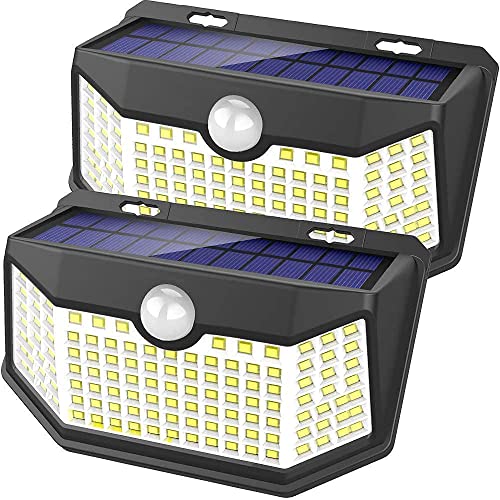
Three lighting modes plus a 270° wide-angle with 120 high-power LEDs deliver broad coverage for gardens and pathways. The monocrystalline solar panel boosts efficiency, and the ABS housing stands up to weather. Best for: users who want multiple modes (motion, constant low, and bright response) and solid weather resistance. Caution: solar performance can be affected by shade or low sunlight days.
kuyimy Solar Outdoor Lights — 2 Pack

These lights offer 270° wide-angle illumination with a 3-5M PIR range and 230 LEDs, delivering broad coverage for yards and fences. Three modes cover always-on, dim, and motion-activated lighting, with a large-capacity solar panel for better daytime charging. Best for: eco-conscious buyers who want substantial light output without electrical wiring. Limitation: 10-16 ft motion coverage may be narrower than some competitors in very large spaces.
Buying Guide: Outdoor Sensor Light Considerations
What type should you choose: solar or hardwired? Solar lights are easy to install and ideal for locations without quick electrical access. Hardwired lights often deliver consistent output and longer lifespans in demanding conditions. Consider your climate and sun exposure, as high-latitude or shaded areas reduce solar performance.
Brightness and Coverage
Look for lumens in the 2000-7500 range for outdoor spaces. Wider angles (270°) and multi-head configurations improve coverage, reducing blind spots around entryways and corners.
Sensor Range and Modes
Motion sensing range and the number of detectable feet or meters directly impact security. Modes such as dusk-to-dawn, motion-activated, and constant-on offer flexibility for different needs and times of day.
Durability and Weather Resistance
IP65 or higher ratings help ensure resistance to rain and dust. Materials like tempered glass panels and rugged housings extend life in harsh outdoor environments.
Energy Efficiency and Maintenance
For solar models, panel efficiency and battery capacity determine nighttime performance. Hardwired options rely on electricity but offer steady brightness with fewer directional limitations.
Installation and Aesthetic Fit
Consider mounting height, wall space, and color to match your home exterior. Remote control and adjustable heads add flexibility for targeting specific zones.
Frequently Asked Questions
- What is the best outdoor sensor light for a large yard? A multi-head, high-lumen model with a wide angle (270°) and strong motion range is ideal, such as LUTEC or MIHANI offerings.
- Are solar sensor lights reliable in winter? They can be less efficient in short days and snow; choose models with higher energy conversion and larger battery capacity for better performance.
- Do I need a professional to install hardwired lights? No, but ensure a safe electrical setup and local code compliance; consult a licensed electrician if unsure.
- How long do solar lights typically last at night? It depends on battery size and daylight charging; many provide several hours of bright illumination after a full day’s charge.
- Can I install these lights on wooden siding? Yes, most can be mounted on wood with suitable screws or mounting brackets; avoid vibration-prone surfaces for the best stability.
- What maintenance do these lights require? Periodic cleaning of solar panels and lenses helps maintain brightness; check seals for weather wear and replace batteries as needed.