When selecting a second stage LP regulator, accuracy, durability, and compatibility with your first stage are critical. This article reviews five reliable options commonly used in propane and LP gas applications. Each product includes key specs, connection sizes, and operating ranges to help you compare at a glance. Use this guide to choose a regulator that maintains steady pressure and safe delivery for your grill, heater, or appliance setup.
| Product | Brand | Inlet x Outlet | Outlet Range | Notes |
|---|---|---|---|---|
| Emerson-Fisher R622-DFF | Emerson-Fisher LP-Gas Equipment | 3/4″ x 3/4″ FNPT | 9–13 in WC | 9–13 in WC; 10 psig inlet; emergency 50 psig |
| Marshall 1622-BCF | MEGR-1622-BCF | 1/2″ x 1/2″ NPT | 9–13 in WC | Requires 10 psi input; back-to-back stage setup |
| Watflow LP Regulator | Watflow | 3/4″ x 3/4″ FNPT | 9–13 in WC | Back mount design; rated up to 10 psig |
| Marshall 1652-CFF | MEGR-1652-CFF | 1/2″ x 3/4″ NPT | 9–13 in WC | Backmount; 10 psi input required |
| Emerson-Fisher R622-BCF | Emerson-Fisher LP-Gas Equipment | 1/2″ x 1/2″ NPT | 9–13 in WC | Compact 1/2″ connections; 10 psi inlet |
Emerson-Fisher R622-DFF 2nd Stage Regulator
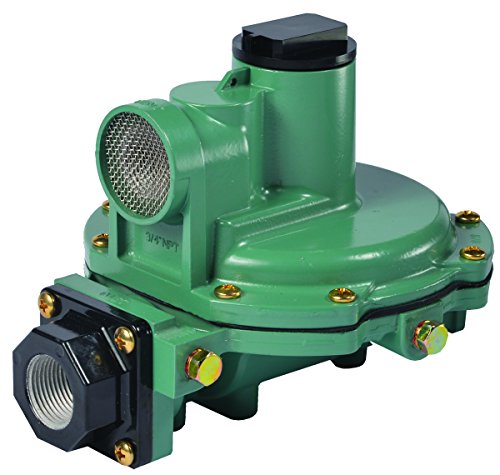
The R622-DFF model from Emerson-Fisher LP-Gas Equipment is a second-stage regulator designed for safe post-first-stage pressure management. It features a 3/4″ FNPT inlet and outlet, enabling straightforward integration with typical LP gas lines. Its maximum inlet pressure of 10 psig and emergency inlet rating at 50 psig provide a robust range for residential and small-commercial systems. The regulator delivers an outlet range of 9 to 13 inches of water column (in WC), equivalent to about 22 to 32 mbar, which is suitable for appliances requiring stable, low-pressure delivery. This unit fits applications where space is at a premium and a compact, reliable regulator is needed.
Marshall 1622-BCF Second Stage Propane Regulator

The Marshall 1622-BCF is a two-stage regulator intended for propane systems with a 10 psi first stage input requirement. It provides an 11″ water column output and uses a 1/2″ x 1/2″ NPT inlet/outlet configuration with a straight-through design. This regulator is ideal when you need steady pressure across a line feeding multiple appliances, preserving consistent flame and performance. For configurations that require safety margins between stages, this unit pairs well with a compatible high-pressure first stage to maintain safe and stable delivery.
Watflow LP-Gas Regulator With Two Stages

Watflow offers a two-stage propane regulator with back-mounting configuration. Its 3/4″ x 3/4″ FNPT connections align with common gas lines, and it supports an operating range of up to 10 psig with an emergency inlet up to 30 psig. The regulator delivers 9 to 13 inches of water column (22 to 32 mbar), matching standard residential and light-commercial appliances. The back-mount design helps simplify installation in tight spaces, and the dual-stage approach provides enhanced stability against fluctuations in upstream pressure.
Marshall 1652-CFF Second Stage Regulator

The Marshall 1652-CFF is a 11″ water column output regulator with a 1/2″ x 3/4″ NPT connection pattern, designed for backmount installation. It requires a 10 psi input from a first stage regulator and provides an adjustable output range of 9 to 13 inches of water column. This configuration supports appliances that need consistent low-pressure propane flow and can be integrated into multi-appliance setups where space allows for backmount gear. The 3/4″ outlet helps accommodate larger line servings while maintaining strict delivery control.
Emerson-Fisher R622-BCF 2nd Stage Regulator
The Emerson-Fisher R622-BCF delivers a compact second-stage regulator with 1/2″ x 1/2″ NPT ports, ideal for smaller or space-constrained installations. It maintains outlet pressure in the 9 to 13 in WC range and supports an inlet up to 10 psig. The emergency inlet pressure can be higher at 50 psig, providing a safety margin in scenarios where the upstream regulator may briefly experience higher pressures. This model is well-suited for residential setups where precise, steady pressure is essential for consistent appliance performance.
Emerson-Fisher R622-CFF 2nd Stage Regulator
The Emerson-Fisher R622-CFF combines a 1/2 x 3/4 inch FNPT inlet/outlet arrangement with a 9-13 in WC outlet range. Like the other R622 family, its maximum inlet pressure is 10 psig, with a 50 psig emergency inlet rating. The 1/2 x 3/4″ configuration makes it a flexible option for mixed line configurations where one leg of a system requires a slightly larger outlet for a downstream appliance. This model suits installations that demand reliable regulation across variable downstream draws.
Buying Guide: Key Purchase Considerations
- Regulator type and stages: Two-stage regulators provide better control and smoother gas delivery, especially in systems with fluctuating upstream pressures. Consider how many stages you need based on your application and typical gas demand.
- Inlet and outlet connections: Match the inlet and outlet sizes to your existing piping (commonly 1/2″ or 3/4″ FNPT or NPT). Incompatibility can require adapters or re-plumbing, increasing installation time and cost.
- Operating pressure and range: Aim for an outlet range around 9–13 inches of water column (WC). Ensure the regulator can handle your first-stage pressure and any emergency exposure you might encounter.
- Installation orientation and mounting: Some units are backmount, others are inline. Choose based on space constraints and ease of maintenance. Backmount can simplify routing but may require more clearance.
- Emergency inlet ratings: A higher emergency inlet (e.g., 50 psig) provides a safety buffer if upstream pressure spikes occur. This can prevent regulator damage or unsafe delivery.
- Compatibility with first-stage regulators: Many second-stage regulators require a specific first-stage input (for example, 10 psi). Verify compatibility to avoid mismatches.
- Material and build quality: Look for regulators built to withstand propane and LP gas environments, with corrosion-resistant fittings and durable diaphragms for long-term reliability.
- Maintenance and replacement parts: Check for availability of diaphragms, springs, and seals. A regulator with readily available parts reduces downtime and total cost of ownership.
- Warranty and service support: A solid warranty and accessible support can be valuable if you encounter performance issues or need replacements.
When selecting among these options, factor in your system layout, whether you prioritize compact design (for tight spaces) or higher ease of service (for frequent maintenance). If you operate multiple appliances with varying demand, a regulator with stable output over the 9–13 in WC range will generally provide the most consistent performance. Maintain compliance with local codes and manufacturer instructions during installation and testing to ensure safe operation.