Choosing the right RV solar panel kit with a battery and inverter helps ensure reliable power on the road, whether you’re camping off-grid or staying in remote areas. This guide highlights five top kits that balance performance, durability, and ease of use. Each selection includes a built-in battery and an inverter, so you can run essential appliances without worrying about hookups. The comparisons below focus on daily output, battery capacity, inverter wattage, and build quality to help you pick a setup that fits your RV lifestyle and energy needs.
| Product | Daily Output (approx.) | Battery | Inverter | Notes |
|---|---|---|---|---|
| ECO-WORTHY 200W Kit (2x 100W Panels) | ~800 Wh | 100 Ah Li-ion | Premium Inverter | |
| ECO-WORTHY 200W Kit (200W Panels, LiFePO4 50 Ah) | ~800 Wh | LiFePO4 50 Ah | 600W Inverter | |
| ECO-WORTHY 200W Kit w/ MPPT & 12V 2000W Inverter | ~800 Wh | 12V 100 Ah Li Battery | 2000W Inverter | |
| Renogy 200W Kit with 100Ah Li Battery | ~1000 Wh | 100 Ah Li Battery | 600W Inverter | |
| ECO-WORTHY 1.6KWh Complete Kit (400W, 2x 200W) | ~3200 Wh | 2x 100Ah Li Batteries | 1100W Inverter |
ECO-WORTHY 200 Watt 12V Complete Solar Panel Starter Kit for RV Off Grid with Battery and Inverter
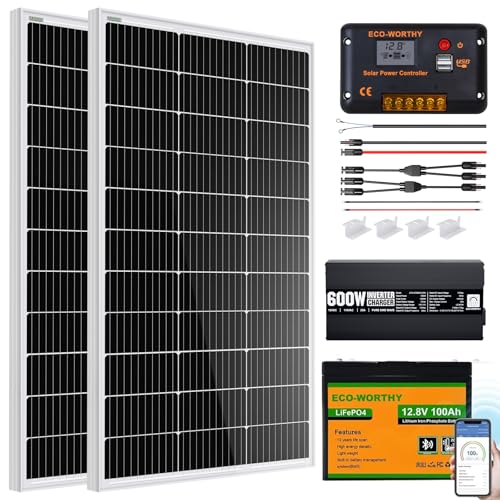
The kit combines two 100W solar panels with a 30A charge controller, a 100Ah lithium battery, and a premium solar inverter. It delivers an estimated 800Wh daily under ideal sun conditions, making it suitable for RV batteries, lighting, and low-wattage appliances. The 21% efficiency increase from high-efficiency panels and a corrosion-resistant frame support long outdoor life. The Li-ion battery includes a BMS to guard against overcharge, overdischarge, and overheating, extending deep-cycle capabilities beyond traditional lead-acid options.
ECO-WORTHY 200 Watt 12V Complete Solar Panel Starter Kit for RV Off Grid with Battery and Inverter
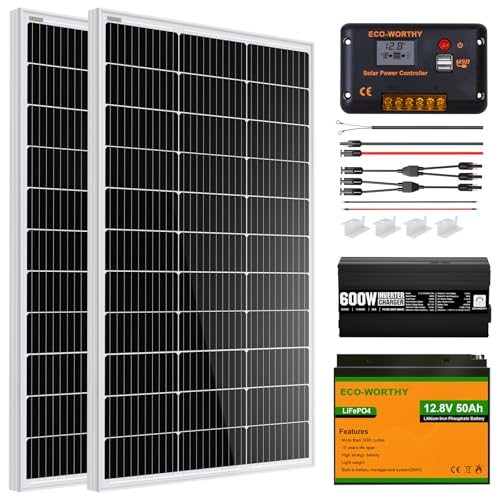
This complete kit emphasizes ease of setup for beginners, with 800Wh daily output potential under four hours of sun. It uses durable 100W panels in a sturdy frame designed to withstand wind and snow loads, and includes a LiFePO4 battery for deeper cycles and longer life. The built-in battery management system (BMS) protects against common electrical issues, helping you maintain reliable power for RV needs like lighting and small appliances.
Renogy 200 Watt 12V Complete Solar Panel Starter Kit

The Renogy kit uses 100% EL-tested Grade A+ cells and PERC technology to achieve high cell efficiency, often around 22%. Accompanying a 100Ah lithium battery with a robust BMS, the system can deliver around 1000Wh daily under ideal sun. The PWM Adventurer charge controller provides practical protection against overcharge and short circuits, while the all-weather aluminum frame resists corrosion and withstands harsh outdoor conditions.
ECO-WORTHY 1.6KWH Complete Solar Panel Kit 400W 12V for RV Off Grid

This larger system pairs four 100W panels with a 40A MPPT controller and two 12V 100Ah lithium batteries plus a 2000W upgraded inverter. With a daily output around 1.6 kWh under 4 hours of sun, the kit supports higher-wattage appliances and longer outings. Features include dual-axis tracking options and bracket mounts to optimize sun exposure, along with a Bluetooth module for system monitoring and maintenance reminders.
ECO-WORTHY 1.6KWH Complete Solar Panel Kit 400W 12V for RV Off Grid

This 400W kit emphasizes robust MPPT performance with 99% efficiency tracking and up to 98% peak conversion. The 40A MPPT controller supports the lithium battery bank for stable charging, even on cloudy days. It’s designed for RVs, cabins, and remote homes needing reliable backup power to run common AC devices, lighting, and electronics without frequent recharging.
ECO-WORTHY 7.168KWH 800W Solar Panel Kit for RV Off Grid

The 800W system combines four 200W bifacial panels with a 3000W inverter charger and two 12.8V 280Ah lithium batteries. It supports UPS functionality, enabling seamless switching between solar and mains power. With a stated daily generation approaching 3.2 kWh under optimal sun, this setup is suited for users with heavier energy demands and longer off-grid stays, including larger appliances and climate control.
Buying Guide: Key Considerations For RV Solar Kits
- Daily energy needs: Estimate appliance wattage and typical daily usage to determine required daily output (Wh/day).
- Battery chemistry and capacity: LiFePO4 (Li-ion) batteries provide longer cycle life and lighter weight than lead-acid but at higher upfront cost. Match battery capacity to your daily needs plus a reserve for cloudy days.
- Solar panel quantity and wattage: More panels increase daily output but require appropriate mounting space and wiring. High-efficiency cells improve performance in limited sun.
- Charge controller type: MPPT controllers optimize charging under varying solar conditions and generally yield higher efficiency than PWM controllers, especially in cooler or partially shaded conditions.
- Inverter wattage: Select an inverter with continuous wattage comfortably above your peak loads (coffee makers, microwaves, fans). Consider true sine wave for sensitive electronics.
- Durability and weather resistance: Look for corrosion-resistant frames, IP ratings, and robust mounting systems for RV travel and outdoor exposure.
- Installation complexity: Some kits are beginner-friendly with pre-wired components; others require more electrical knowledge and professional mounting.
- Expandability: If future energy needs grow, check compatibility with additional panels, batteries, or a larger inverter without reconfiguring the entire system.
- Monitoring features: Bluetooth or app-enabled monitoring helps track performance, battery health, and maintenance reminders for long-term reliability.
- Weight considerations: Heavier kits affect RV payload and handling; balance weight against output and durability.
When selecting a kit, weigh the balance of upfront cost against long-term reliability and the specific demands of your travel plans. Larger systems deliver more daily power and resilience during overcast days but require more space, heavier installation, and potentially higher maintenance. For casual or occasional off-grid use, compact 200W–400W kits with LiFePO4 batteries and MPPT controllers often provide a practical mix of performance and value. For full-time off-grid living or frequent high-wattage use, larger 1.6 kWh kits or bigger may be more suitable to avoid frequent recharging.