Direct and efficient ventilation is essential for comfort and safety in attic, garage, warehouse, and bathroom spaces. This guide highlights five roof-mounted exhaust fans that balance power, durability, and ease of maintenance. Best for: heavy-duty commercial spaces, mid-size workshops, and residential roofs needing reliable heat and moisture removal.
| Product | Airflow | Motor Type | |
|---|---|---|---|
| Hakazeni Roof Exhaust Fan | Up to 2850 rpm | 185W motor | Heavy-duty, weatherproof outdoor installations |
| CXRCY 1400 CFM Upblast Roof Exhaust Fan | 1400 CFM | All-copper motor, 2700 RPM | Industrial spaces requiring strong airflow |
| FICBXRA Roof Extractor Fan | 171 CFM | 2500 RPM external rotor | Smaller to mid-size spaces, low-noise needs |
| FICBXRA Roof Exhaust Fan (Food Truck style) | 2500 CFM | 0.5 HP motor | High-velocity exhaust in mobile setups |
| CAPTIVE-AIRE Direct Drive | 300 CFM | 0.060 HP motor | Hospitals, schools, and offices |
Hakazeni Roof Exhaust Fan — 1500 CFM Aluminum Roof Mounted

Best for: large outdoor roofs and garages that demand robust heat and odor removal. The 185W motor delivers high-speed exhaust up to 2850 rpm, expelling hot air quickly while running quietly. The thick aluminum body is weatherproof and rust-resistant, with an upblast design to prevent water backflow. The sealed motor and debris guard support low maintenance and reliable operation year-round.
Caution: High airflow can generate noticeable intake noise in very quiet environments. Consider installation distance from occupied spaces to minimize perceived noise.
CXRCY 1400 CFM Upblast Roof Exhaust Fan

Best for: warehouses, factories, and large commercial kitchens needing strong, consistent air exchange. It features a high-efficiency 1400 CFM airflow, a durable all-copper motor turning at 2700 RPM, and a 260W power draw for energy savings. The spun-aluminum housing is weatherproof to withstand rain and debris, making it a solid long-term outside install.
Caution: The copper motor and high RPM can contribute to increased vibration without proper mounting. Use a vibration isolator or solid mounting surface where possible.
FICBXRA Roof Extractor Fan
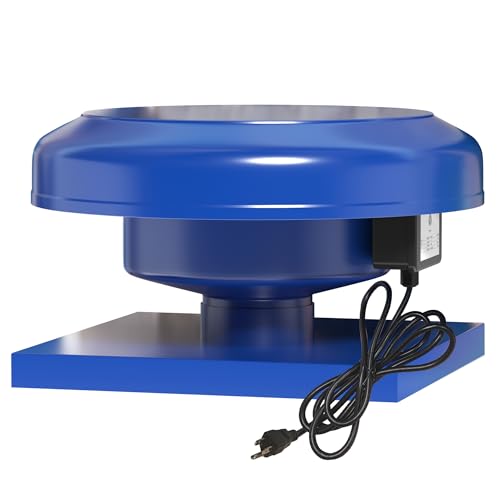
Best for: mid-size warehouses or attics needing balanced ventilation with low noise. This fan delivers 171 CFM at 2500 RPM and uses a metal shell with corrosion-resistant coating. The single-phase external rotor motor keeps noise low while maintaining strong airflow for continuous operation.
Caution: It’s rated for general ventilation, not grease or smoke exhaust. Do not use for commercial kitchens with heavy grease loads.
CAPTIVE-AIRE Direct Drive Centrifugal Downblast

Best for: institutional spaces like hospitals, schools, and hotels that require a compact, high-quality exhaust with integrated speed control. The 19″ wheel, birdscreen, and 9″ wheel provide efficient downblast exhaust with a modest 300 CFM, suitable where duct routing and ceiling height are considerations.
Caution: Lower airflow compared to larger rooftop models means it may not meet high-velocity exhaust needs in very large spaces.
TBCDHCMC Roof Mounted Exhaust Fan

Best for: compact installations needing reliable axial downblast performance. The 19″ fan base and 830 CFM with a direct drive, single-phase motor provide straightforward installation and dependable operation. The spun aluminum construction offers rust resistance, and built-in bird screens add protection.
Caution: Not designed for exhausting smoke or grease; ensure use aligns with ventilation needs to avoid performance shortfalls in grease-heavy environments.
HYITCL Roof Mounted Downblast Exhaust Fan
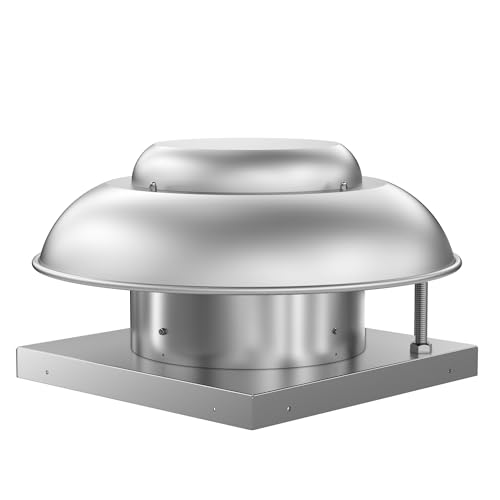
Best for: homes and small workshops needing reliable axial exhaust with weather resistance. The 21″ base and 1160 CFM rating strike a balance between space constraints and airflow. The spun aluminum body and die-formed blades support durable operation, and a built-in bird screen helps protect the discharge.
Caution: Not intended for fuel or fire hazard exhaust; verify duct routing and clearance before installation.
Buying Guide
What should you consider when selecting a roof-mounted bathroom or workspace exhaust fan?
- Airflow needs: Choose higher CFM for larger spaces or higher ceilings; smaller areas may require lower CFM with better noise control.
- Motor and efficiency: Copper or aluminum housings with durable motors offer longer life and consistent performance in harsh weather.
- Weatherproof design: Look for rust-resistant materials and upblast or downblast configurations to prevent water intrusion.
- Noise and vibration: Check for sealed motors, guards, and mounting recommendations to minimize noise in occupied spaces.
- Size and mounting: Confirm fan base dimensions align with your roof or wall openings and that the installation area has adequate ducting space.
- Maintenance features: Sealed bearings, debris guards, and accessible service paths ease long-term upkeep.
- Intended environment: Distinguish between grease-heavy kitchens and general ventilation to avoid incompatible models.
Frequently Asked Questions
- What is roof-mounted exhaust best for?
Roof-mounted exhaust fans are ideal for outdoor installations where ducting is long or where attic and garage spaces require efficient air exchange against heat and moisture buildup.
- How do I choose the right CFM?
Match CFM to the space size, ceiling height, and the presence of other ventilation sources. Larger spaces generally need higher CFM, but consider noise tolerance as well.
- Are copper-motor fans better than aluminum?
Copper motors tend to offer robust performance and durability in demanding environments, though aluminum builds can be lighter and weather resistant. Choose based on durability needs and budget.
- Is downblast or upblast better for rain exposure?
Upblast designs help prevent water backflow from rain in some configurations, while downblast can be preferable for directing exhaust away from occupied spaces. Consider roof layout and placement.
- Can these fans be used indoors?
Most are designed for rooftop installation; indoor use is not recommended unless the unit is explicitly rated for that environment and appropriate ducting is used.
- Do these require professional installation?
Installation often involves electrical wiring and roof sealing. Consult a licensed professional to ensure safe, weatherproof mounting and compliance with local codes.