Need to swap your ceiling fan’s direction with a simple, reliable switch? These 6-pin, 3A-6A reverse switches are designed to replace worn or failed controls and let you switch between summer cooling and winter heating with ease. Best for DIY homeowners and professionals replacing a faulty switch or upgrading a dated unit. The editors’ picks below cover a range of brands and compatibility to fit most standard fans.
Summary of chosen products:
| Product | Brand | Key Benefit | Best For |
|---|---|---|---|
| Ceiling Fan Reverse Switch 6-Pin Toggle | Reluen | Prewired 6-wire leads for quick replacement | Most straightforward installs |
| ZE-209-22 Ceiling Fan Reverse Slide Switch | SwitchPrince | Wide compatibility with major brands | Homes and small businesses |
| HQRP 6-Pin Slide Reverse Switch | HQRP | UL Listed and double pole throw | Flush-mount installs |
| ZZLZX 6-Pin Canal Ceiling Fan Reverse | ZZLZX | Durable materials; UL certified | Durable replacement |
| ZE-209-22 Replaces SL13B, 6-Pin Slide Switch | ZE-268S6- | Easy compatibility with ZE-209-22 and SL13B | Standard fan models |
Ceiling Fan Reverse Switch 6-Pin Toggle — Reluen

Best for: Homeowners replacing a worn forward/reverse control in a standard indoor or outdoor ceiling fan. This prewired 6-wire switch helps you replace a failing switch quickly. It is rated 3A at 250V or 6A at 125V, which covers most residential fans. Cautions: Verify terminal positions align with your original switch, as wire colors may vary. Mounting screws are not included, so reuse existing hardware or source matching screws.
ZE-209-22 Ceiling Fan Reverse Slide Switch — SwitchPrince
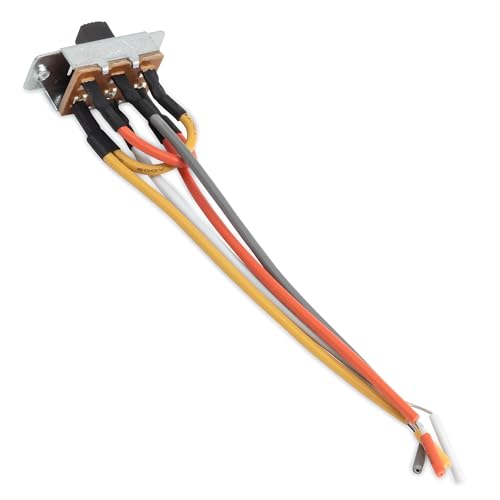
Best for: Homes with multiple brands; a wide compatibility scope including Hunter, Hampton Bay, Westinghouse, and more. It supports a 6-wire On-On configuration and is UL Listed, providing a safe, straightforward swap. Caution: Some models may require matching the exact terminal layout to your prior switch to ensure correct wiring.
HQRP 6-Pin Slide Reverse Switch

Best for: Installers seeking UL Listed assurance and a compact, flush-mount fit. This 6-Pin On-On switch handles 6A at 125V or 3A at 250V with double pole double throw, suitable for many standard ceiling fans. Caution: Verify this matches your fan’s mounting and screw spacing; screws are not included.
ZZLZX 2PCS 6A 125V, 3A 250V Canal Ceiling Fan Reverse

Best for: Durable, UL-certified replacement in high-usage environments. It uses high-quality plastics and metal, designed for 6A at 125V or 3A at 250V. Caution: Wire harnesses are pre-wired to the PCB; take care when detaching and reattaching to prevent shorts.
ZE-209-22 Toggle Switch Replaces SL13B — ZE-268S6-
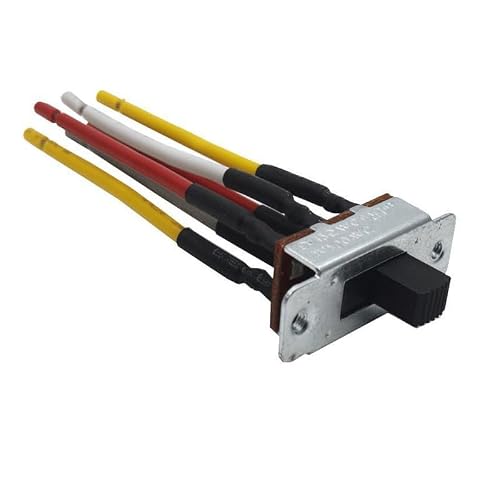
Best for: Users upgrading to a standardized ZE-209-22/SL13B-compatible unit with quick mounting and flush fit. It provides On-On control with 6-Pin, 6A at 125VAC or 3A at 250VAC. Limitation: Ensure mounting depth and screw spacing align with your fan’s base to prevent misalignment.
MEETOOT 2pcs 6 Pin Canal Ceiling Fan Reverse

Best for: Replacement in residential fans that require 6-pin, 3A/6A rating with UL certification and robust construction. This kit includes screws for installation. Caution: Wire gauge and insulation must be suitable for your fan model; verify compatibility before installation.
SQXBK 2pcs ZE-209-22 Toggle Switch

Best for: Replacements for a broad range of canal ceiling fans; the UL-listed 6-pin slide switch provides On/Off action and 6A at 125V, 3A at 250V. Caution: This option may require precise matching to your fan’s connector style for a secure fit.
Buying Guide: Choosing The Right Ceiling Fan Reverse Switch
- Compatibility: Confirm your fan’s model and existing wiring, including the number of wires and the terminal layout. Some switches advertise broad compatibility, but physical fit and wiring order vary by brand.
- Electrical ratings: Look for switches rated for 6A at 125V or 3A at 250V with a UL listing for safety. Ensure the rating matches your fan’s electrical draw and local code requirements.
- Wiring and installation: Prewired or kit-style switches simplify replacement. Check if mounting screws are provided or if you must reuse original hardware.
- Build quality: UL-certified materials, durable plastics, and robust metal components contribute to longer life in variable temperatures and attic spaces.
- Form factor: Some switches mount flush with the fan base; others require a little extra depth. Confirm fit before purchasing to avoid clearance issues near the motor housing.
- Warranty and support: Short-term warranties (like 200 days) can offer extra assurance when replacing non-OEM parts.
FAQ
- What is a 6-pin ceiling fan reverse switch used for?
– It switches the fan motor winding connections to reverse direction, enabling summer cooling and winter heating efficiency. - Can I replace a ceiling fan reverse switch myself?
– Yes, with basic electrical knowledge and by turning off the circuit breaker before work. Follow installation notes for wiring and mounting. - What should I check before buying a reverse switch?
– Verify compatibility with your fan brand, confirm the voltage/current rating, and ensure the switch matches your wiring layout. - Are all reverse switches UL listed?
– Not all, but many listed options are UL or equivalent certified for safety and reliability. - Is it necessary to replace screws or mounting hardware?
– Some kits include screws; others do not. Use existing hardware or source matching screws to avoid mounting issues. - What if the switch doesn’t fit my fan after replacement?
– Recheck terminal positions and wire colors; if mismatched, consider a different model with the correct terminal layout.