Shifting to solar energy is a practical move for many American homeowners seeking lower utility bills and a smaller carbon footprint. This guide highlights five top residential solar panel options that balance efficiency, durability, and off-grid capability. From high-efficiency monocrystalline bifacial panels to compact portable solutions, choose a system that fits your roof space, budget, and energy goals. Each section provides key features, installation notes, and real-world considerations to help you compare at a glance.
| Product | Type | Peak Power | Best Use |
|---|---|---|---|
| SUNGOLDPOWER UL61730 450W Bifacial Panels | Bifacial Monocrystalline | 450W | Residential grid/off-grid hybrid |
| JJN Bifacial 400W Panels | Bifacial Monocrystalline | 400W | Rooftop, off-grid setups |
| ECO-WORTHY 5000W Off-Grid Kit | Off-Grid Kit | 5000W (inverter) | Homes, backup power |
| SOKIOVOLA 200W Portable | Portable Monocrystalline | 200W | Camping, RV, backups |
| Dark Energy Spectre 18W | Portable Solar Panel | 18W | USB charging on the go |
When evaluating residential solar panels, consider efficiency, durability, climate resilience, ease of installation, and how well a system scales with your energy needs. The options below cover a range of home contexts—from full off-grid kits suitable for backup power and microgrids, to high-efficiency rooftop modules designed to maximize daytime energy capture in limited space.
SUNGOLDPOWER UL61730 450W Bifacial Panels
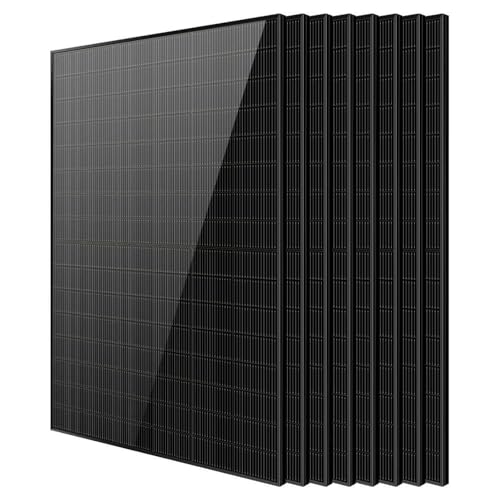
- High Efficiency: 450W N-Type 16BB bifacial monocrystalline modules with up to 22.5% front-side energy gain and up to 30% additional energy from the rear side.
- Durable Build: High tolerance with a robust dual-glass design to withstand harsh heat, cold, snow, and wind.
- Flexible Installation: Applicable to a variety of installation methods and angles without complex tilt analysis.
The SUNGOLDPOWER UL61730 450W panels are designed for both on-grid and off-grid residential projects. Their bifacial technology can boost annual energy output, especially in reflective environments, while their durable construction supports long-term outdoor use. These panels pair well with modern optimizers and microinverters in spaces with varied sun exposure.
JJN Bifacial 400W Panels (2 Pcs)

- Dual-Sided Power: Transparent backsheet design enables energy generation from both sides, increasing output estimates.
- Advanced 16BB N-Type Cells: Higher efficiency and reduced shading impact compared with older cell technologies.
- Rugged and Weather Resistant: Aluminum frame, IP67 connectors, and IP65 junction box for outdoor reliability in wind and snow.
These 400W bifacial panels suit residential rooftops or semi-permanent ground mounts where shading is a concern. They offer strong efficiency gains in favorable conditions and are well-suited for paired inverters and battery-ready setups for energy storage and resilience.
ECO-WORTHY Off-Grid Kit: 5000W System

- Complete Off-Grid Solution: Includes two 48V 100Ah LiFePO4 batteries, 24×195W bifacial panels, and a 5000W inverter with MPPT control.
- Scalable Storage: Battery bank supports parallel expansion, enabling substantial energy storage for outages or higher energy demand.
- Smart Monitoring: WiFi-enabled inverter and battery communication for performance tracking and system tuning.
The ECO-WORTHY kit targets homeowners seeking full independence from the grid, with modular growth potential. It supports single-phase and split-phase 120V output and can be paralleled with additional inverters to reach higher AC capacities, making it a strong choice for backup power and resilient home energy systems.
SOKIOVOLA N-Type 200W Portable Panel
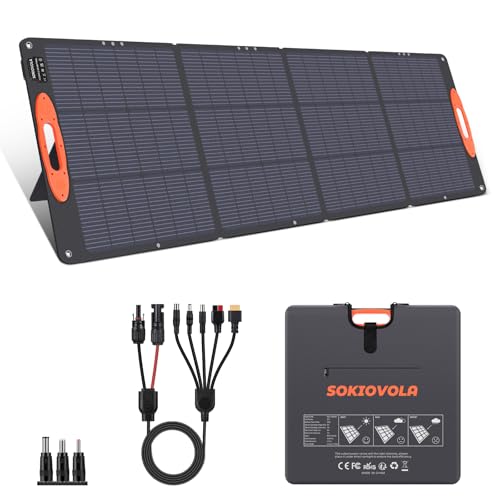
- Compact and Portable: 200W foldable panel with a travel-friendly size and magnetic handle for easy transport.
- High Efficiency: 25% conversion efficiency through A+ grade monocrystalline cells.
- Rugged and Weatherproof: IP68 waterproofing and ETFE coating for durability in outdoor use, including camping and RV setups.
Ideal for temporary power needs, camping, RV trips, small off-grid campsites, or emergency charging. While portable, it still leverages efficient monocrystalline cells and a robust build for reliable performance in varied weather.
Dark Energy Spectre Folding 18W Panel

- Ultra-compact Power: Foldable design fits easily in a bag or glove compartment for on-the-go charging.
- USB-C and USB-A Output: Simultaneous charging for multiple devices, suitable for mobile devices and small accessories.
- Efficient On-the-Go Technology: CIGS cells optimize power delivery in shady or cloudy conditions, aided by Sun Efficiency Meter guidance.
The Spectre 18W panel is best for travelers and light-usage scenarios where mobility and quick USB charging are priorities. It complements larger home solar installations by providing portable power for outdoor activities and contingency charging.
JJN Bifacial 400W Panel (Second Option)

- Bifacial Efficiency: Front and back-side energy production up to 25% higher than some standard panels.
- N-Type 16BB Cells: Improved efficiency and shading tolerance for long-term energy reliability.
- Durable Build: Black frame, IP65/IP67 grade protections for robust outdoor use.
Designed for rooftop or ground-mount installations where space and sun exposure align well with higher-efficiency modules, this panel emphasizes durability and performance in mixed weather conditions while keeping a practical footprint for residential projects.
Buying Guide: Key Considerations For Choosing Residential Solar Panels
- System goals: Decide between grid-tied, off-grid, or hybrid setups. Off-grid kits emphasize storage and backup capability, while grid-tied systems prioritize day-to-day savings and net metering.
- Panel technology: Bifacial panels can improve output in suitable environments, but require proper mounting and orientation. N-Type cells offer higher output and resilience to shading but can come at a premium.
- Durability and climate readiness: Look for corrosion-resistant frames, weatherproof junction boxes, and reliable connectors (IP ratings matter for outdoor installations).
- Installation space and orientation: Roof pitch, shade analysis, and mounting flexibility influence the choice of panel size and tilt strategy. Some systems offer plug-and-play or modular expansion for easier upgrades.
- Storage and backup: If energy independence is a goal, choose a kit with battery storage, a compatible inverter, and scalable capacity to handle peak loads during outages.
- Monitoring and maintenance: Inverter and battery monitoring via apps improves transparency and control. Opt for components with accessible service and warranty support.
- Budget and long-term value: Consider upfront costs against expected savings, warranty terms, and the potential return on investment over 10–15 years when evaluating higher-efficiency modules.
- Compatibility: Ensure inverters, batteries, and controllers are compatible with the chosen panels and the electrical code requirements in your area.
In selecting panels for a home, weigh the trade-offs between higher efficiency and durability against installation complexity and cost. For many households, a balanced mix of robust, high-efficiency rooftop modules and a capable storage/inverter system delivers reliable energy both day-to-day and during outages. Portable panels provide valuable flexibility but typically serve as supplementary charging options rather than primary home power sources. Always consult a licensed installer to verify roof integrity, electrical compatibility, and local regulations before purchasing and installing solar equipment.