Answering the question of how to monitor natural gas, propane, and carbon monoxide in a home, these devices alert you to dangerous gas levels and CO buildup. This guide highlights five reliable options, suitable for owners who want plug-in detectors, portable sniffers, or multi-gas alarms. Best for renters seeking easy installation, homeowners needing ongoing monitoring, and DIYers wanting portable safety tools.
The following quick-reference table compares key aspects of the selected products to help you compare at a glance.
| Product | Detection Type | Power | Best For | Limitations |
|---|---|---|---|---|
| Kidde COPDLG | CO and Explosive Gas | Plug-in with AA backup | Whole-home monitoring with back-up power | Requires outlet access |
| Kidde 3rd Edition CO/GAS Alarm | CO and Explosive Gas | Plug-in with AA backup | Older/renovated homes needing updated tech | Rotating plug design may affect outlet fit |
| First Alert GCO1CN | CO and Gas | Plug-in with digital display | Clear local readouts | Limited to 120V outlet |
| TOPTES PT205 | Combustible Gas with %LEL | Portable detector | Spot checks for leaks in multiple rooms | Requires warm-up; battery management |
| Klein Tools ET120 | Combustible Gas | Handheld | Job-site or DIY gas checks | Not a fixed-home detector |
Kidde COPDLG: CO and Explosive Gas Alarm

The Kidde COPDLG model detects low levels of carbon monoxide alongside natural gas, propane, and other explosive gases. It uses a 120V plug-in power source with two AA batteries for backup during outages. A backlit digital display shows the CO concentration or indicates “GAS” when explosive gas is present, with an 85 dB alarm to alert occupants. Best for: households needing reliable, continuous monitoring with a familiar plug-in format. Limitations: depends on access to a standard outlet; backup batteries do not protect against power-outage-induced risks if the unit isn’t plugged in.
Kidde 3rd Edition CO & Explosive Gas Alarm
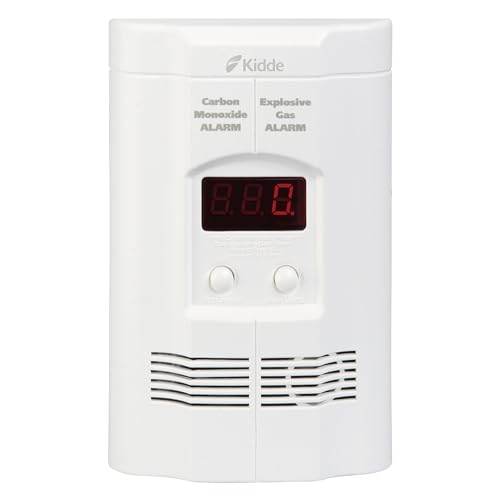
This model combines carbon monoxide detection with explosive gas monitoring in a plug-in unit with a digital backlit display. It’s designed for modern homes that need early CO alerts and clear gas status indicators. Best for: mid-size homes where a compact, plug-in CO/gas detector is desired. Caution: digital displays may require a brief moment to update after rapid gas changes; ensure good unit placement for accurate readings.
First Alert GCO1CN Combination Alarm

The First Alert GCO1CN provides a versatile combination of carbon monoxide and explosive gas sensing with a backlit digital display. The device can be remotely muted using compatible household remotes, offering convenient control in living rooms or kitchens. Best for: users who prefer straightforward, clearly visible readouts with remote-control compatibility. Limitation: relies on standard 120V power with potential for outlet placement constraints.
TOPTES PT199 Natural Gas Detector
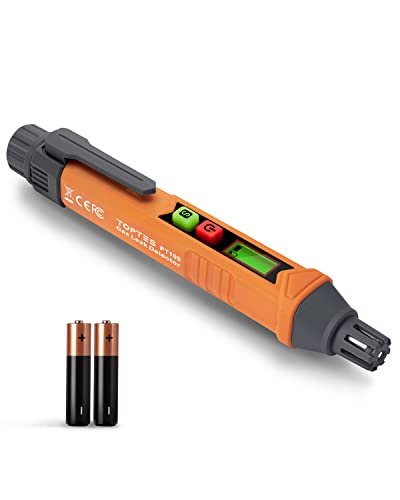
PT199 is a portable gas detector that senses natural gas, methane, propane, and other combustible gases. It features a rapid 0.5-second alarm with an LCD that turns red at high concentrations. It includes two AAA batteries and auto-shuts off after five minutes of inactivity. Best for: spot-checking potential leaks in kitchens, basements, or outdoor grills. Caution: not a fixed home detector; needs to be carried to suspected leak areas.
TOPTES PT177 Portable Gas Detector

PT177 is a pocket-sized gas detector with five red LEDs and a loud 75 dB alarm. It requires a 30-second warm-up in a clean environment to ensure accurate detection. Best for: RV owners, campers, or DIYers needing a portable gas detector. Caution: the device needs proper warm-up and calibration for reliable readings in new environments.
Klein Tools ET120 Gas Leak Detector

The Klein Tools ET120 is a handheld detector with a wide detection range from 50 to 10,000 ppm, adjustable sensitivity, and strong visual/audible alerts. Best for: contractors or homeowners performing regular gas checks or diagnosing larger leaks. Limitation: not intended as a fixed-home detector; best used as a portable diagnostic tool.
Buying Guide: Practical Considerations for Choosing a Residential Gas Detector
- Fixed vs. portable: Decide if you need a permanent installation or a handheld detector for spot checks. Fixed units provide continuous coverage, while portable detectors suit temporary or multiple-location checks.
- Gas types detected: Look for devices that cover both CO and combustible gases (natural gas, propane, etc.). If you primarily monitor CO, prioritize CO-specific models with gas indicators as needed.
- Power and backup: Plug-in detectors with battery backups add reliability during outages. Consider rotating plugs if you have limited outlet space and ensure backup batteries are easy to replace.
- Readouts and alarms: Digital displays help with quick assessments of gas levels. Audible alarms should be loud enough for your living space, and visual indicators should be clear in dim lighting.
- Response time and sensitivity: Fast alarms are crucial for immediate action. Some models offer adjustable sensitivity or LEL (%LEL) readings to gauge concentration levels more precisely.
- Placement: Install detectors away from cooking appliances or bathrooms to reduce false alarms. Place units near sleeping areas for early warnings, but avoid direct exposure to drafts or air vents.
- Maintenance: Check battery life and test functionality regularly. Some devices auto-calibrate or require a warm-up period before accurate readings.
Frequently Asked Questions
- What should I consider when choosing a residential gas detector?
– Look for fixed vs. portable needs, gas types detected (CO and combustible gases), power options, readouts, and maintenance requirements. - Can these detectors alert you to gas leaks outdoors?
– Most home detectors are designed for indoor use; portable detectors can be used for outdoor checks around grills or appliances, but follow the manufacturer’s guidelines. - Do I need both CO and gas detectors in my home?
– If your home has gas appliances and potential CO sources (like furnaces or heaters), a combination CO and gas detector can provide comprehensive coverage. - How often should I test or replace detectors?
– Test according to the manufacturer’s instructions, typically monthly for alarms and replace batteries as needed. Replace the unit per the product’s shelf life or if readings become inconsistent. - Where is the best place to install a gas detector?
– Install near sleeping areas, kitchens, basements, or furnace rooms, avoiding direct contact with vents or high-heat areas. - What is %LEL detection and why is it important?
– %LEL indicates the lower explosive limit. Detecting within a certain %LEL helps quantify the risk level of gas concentrations and potential ignition risk.
This article focuses on five practical picks for residential safety. Each option provides clear indications of gas presence and CO levels, with distinct advantages depending on your home layout and monitoring needs. For quick comparison and straight-to-action use, consider a plug-in model with backup power for continuous coverage or a portable detector for on-the-go checks in areas with gas appliances.