Protecting portable generators from the elements while keeping ventilation and access in mind is essential for safe outdoor use. This guide reviews five enclosure and accessory kits designed to shield generators during operation or storage, helping you choose options that fit your power needs and weather conditions. The selections emphasize waterproofing, sturdy construction, wind resistance, and easy setup.
| Product | Brand | Key Benefit | URL |
|---|---|---|---|
| Generator Tent Cover While Running Pro-Max | GENARMOR | 100% waterproof, windproof with reinforced frame | Amazon |
| GenArmor Generator Covers While Running | GENARMOR | Heavy‑duty tarp with steel frame for durability | Amazon |
| GENSHED Generator Shed (Running & Storage) | GENSHED | Combination running cover and storage enclosure | Amazon |
| Champion Power Equipment 30‑Amp Through Wall Kit | Champion Power Equipment | Weather-resistant inlet box with multiple outlets | Amazon |
| WILAWELS 30 Amp Generator Cord & Inlet Box Kit | WILAWELS | NEMA L14‑30P to L14‑30R with 25 ft cord and ETL listing | Amazon |
GenArmor Tent Cover While Running Pro-Max

Powerful protection for 4000W to 13000W generators, the GenArmor Tent Cover combines a waterproof outer shell with a reinforced metal frame. The windproof kit includes four guy lines with tensioners and four heavy-duty stakes to anchor the enclosure in gusty conditions. This setup aims to minimize slip or collapse while the generator runs outdoors, even during rain or snow. Installation is designed to be straightforward, enabling quick deployment when weather changes rapidly.
Key features include 100% weatherproofing for active use, a heavy-duty frame that resists deformation, and a complete wind stabilization package. The design prioritizes keeping exhaust and intake accessible while shielding critical components from moisture and debris. Users should ensure compatibility with their generator’s dimensions and clearance for airflow and maintenance access.
Overall, this GenArmor option is suited for users who need a rugged, ready-to-use enclosure that performs in varied outdoor climates without requiring permanent installation. It balances protection with portability, making it a practical choice for temporary setups or frequent relocations.
GenArmor Covers While Running

This GenArmor model emphasizes a 100% waterproof design with heavy-duty tarpaulin and a sturdy metal frame. The one-piece, bolt-secured construction enhances stability, especially in windier environments. Weighing around 14 pounds, the enclosure is designed for durability and long-term use, making it a robust option for frequent outdoor operation and storage transitions.
Its integrated protection approach helps prevent moisture intrusion while preserving access to the generator’s controls for maintenance and refueling. The enclosure is intended for users who value a long-lasting solution with strong wind resistance and a simple setup, without needing complex assembly steps each time you deploy it.
GENSHED Generator Shed

The GENSHED design combines running accessibility with outdoor storage in a single unit. The running cover and storage box are integrated into a steel frame, with side covers that allow switching between operating and storage modes easily. A notable feature is the fabric’s isolation from the hot running generator, reducing the risk of melts in windy weather. Ground clearance and simple maneuvering are emphasized for practical daily use, especially on uneven terrain or during transport within a yard or driveway.
This option suits users who want a versatile enclosure that transitions between active use and storage without relocating the generator or dismantling components. The steel frame and coordinated fabric system aim to minimize handling and provide reliable protection against the elements during both functions.
Champion Power Equipment 30‑Amp Through Wall Kit

The Champion Through Wall Kit provides a weather-resistant inlet box with six standard receptacles plus USB ports and built-in circuit protection. It eliminates the need for running cords through doors or windows by enabling a direct, prewired connection from your generator to the home electrical system. The kit includes prewired components for quick installation and reduces the complexity of emergency power setups, though it is not a standalone enclosure. It is ideal for homeowners seeking a cleaner, safer alternative to exposed extension cords during power outages.
Key strengths include integrated outlets, protection features, and a straightforward installation path. The kit supports a practical approach to permanent or semi-permanent backup power for essential appliances and electronics when paired with an appropriate transfer solution.
WILAWELS 30 Amp Generator Cord & Inlet Box Kit
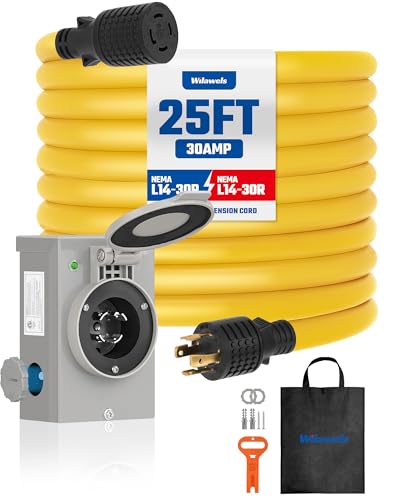
This kit pairs a 25-foot, 30-amp power cord with a pre-drilled inlet box for a generator-to-house connection. It includes a NEMA L14-30P to L14-30R setup, a twist-lock end for secure mating, and ETL certification for safety. The bright yellow cord improves visibility, aiding in setup and maintenance. It is designed to minimize distance-related exhaust concerns and simplify transfer when a generator powers a home or RV. The kit also provides a cord organizer and storage bag for portable use and vehicle transport.
Consider this option if you need a reliable, ready-to-install transfer solution that emphasizes safety, visibility, and organized storage, particularly when setting up in yards, garages, or RV campsites where permanent wiring is not feasible.
Buying Guide: Key Considerations For Portable Generator Enclosures And Accessories
- Weatherproofing vs. ventilation: Ensure the enclosure design protects against rain, snow, and wind while allowing adequate airflow to prevent overheating.
- Compatibility: Measure your generator’s dimensions and exhaust outlet location to ensure the enclosure or kit fits properly without impeding cooling or maintenance checks.
- Materials and durability: Look for reinforced frames, weatherproof fabrics or tarps, and corrosion-resistant hardware for long-term outdoor exposure.
- Stability and anchoring: Wind resistance depends on sturdy stakes, guy lines, or anchored frames. Check included hardware and installation guidance.
- Mobility and setup: If you move generators frequently, prioritize lightweight designs and modular components that are quick to assemble or disassemble.
- Electrical integration: For through-wall or inlet kits, confirm compatibility with your transfer switch, outlets, and home wiring standards. Follow local electrical codes and safety guidelines.
- Noise and exhaust management: Some enclosures or muffler adapters help reduce sound and direct exhaust away from living spaces. Assess any installation impact on performance.
- Maintenance access: Ensure the design allows easy access for refueling, filter checks, oil changes, and normal inspections without removing the entire enclosure.
- Cost vs. value: Compare durability, warranty, and expected lifespan across options to determine long-term cost effectiveness for your setup.
- Usage scenario: For temporary camping or yard power, lighter tents may suffice. For frequent outage protection or frequent relocation, heavier, more secure systems may be preferable.