Answering the need for stable aquarium pH, these top picks cover hobbyist tanks, hydroponics systems, and mixed-use setups. The best choice depends on whether you want remote monitoring, multi-parameter readings, or simple pH control. The Milwaukee MC122US suits serious hobbyists with clear alarms; the Gain Express unit blends pH and temperature with straightforward calibration; the DANOPLUS devices offer automation via app control and multiple measurements; the Marine Color PH2010 provides continuous online monitoring for multi-system environments. Use the table below to compare their core strengths and intended users at a glance.
| Product | Best For |
|---|---|
| Milwaukee MC122US pH Controller | Hydroponics and aquariums needing distinct hi/low alarms |
| Digital Combo pH & Temperature Meter (Gain Express) | Budget-friendly dual readings with automatic calibration |
| Smart 3-in-1 pH, EC & Temperature Monitor (DANOPLUS) | Remote monitoring with app alerts and multi-parameter data |
| DANOPLUS Smart pH ORP Controller | Automated dosing and remote management for complex setups |
| Marine Color PH2010 pH Meter & Controller | Online monitoring for ponds, aquariums, and mixed systems |
Milwaukee Instruments MC122US pH Controller

Features include a user-selectable hi/low set point, manual 2-point calibration, and a visual LED alarm. Best for hobbyists who need clear, immediate alerts and straightforward dosing control in either aquariums or hydroponic systems. This model emphasizes direct control and simple maintenance. A key limitation is that advanced remote monitoring is not built-in, requiring separate monitoring solutions for smartphones or networks.
Digital Combo pH & Temperature Meter

Best for budgets and beginners who want pH and temperature monitoring in one device. It supports up to 3-point pH calibration (pH 7.0, 4.01, 10.01) and includes a permanent temperature probe with a replaceable pH probe for maintenance. It offers automatic temperature compensation and a simple calibration workflow to minimize user error. Avoid if you require advanced Wi-Fi or cloud logging, as this unit focuses on on-site readings and calibration.
Smart 3-in-1 pH, EC & Temperature Monitor (DANOPLUS)

Best for users needing simultaneous pH, EC, and temperature readings with app-based control. Features include real-time monitoring on a backlit LCD, Wi-Fi app control for remote access, high/low alarms for each parameter, and ±0.1 pH, ±2% EC, and ±1.0°C accuracy. It’s ideal for hydroponics and aquariums that require ongoing trend analysis. A limitation is reliance on 2.4 GHz Wi-Fi; 5 GHz devices are not supported.
DANOPLUS Smart pH ORP Controller

Best for automated control with remote app monitoring and dosing capabilities. This 3-in-1 device simultaneously measures pH, ORP, and temperature, with dual power sockets to drive dosing equipment or valves as needed. It supports Tuya app integration for real-time monitoring from a mobile device. Use this if you want centralized control across multiple devices. Limitation: some users may need 2.4 GHz Wi-Fi; complex setups can require more configuration time.
API pH UP Freshwater Aquarium pH Raising Solution
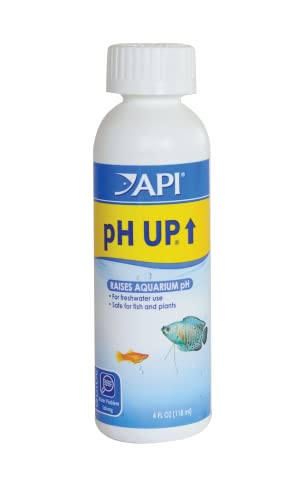
Best for adjusting freshwater pH safely without plants or fish stress. This bottle raises aquarium pH with a phosphate-free formula and is designed to avoid promoting unwanted growth. Choose this when you need a reliable pH increase to neutral or slightly alkaline levels. A caution: use in small increments and test water parameters to prevent sudden shifts.
API PROPER pH 7.0 Freshwater Stabilizer

Best for stabilizing pH at neutral in freshwater setups without live plants. This product helps maintain stable pH, supporting overall fish health and color. It is not designed for planted tanks and should be used in line with water change routines. Use when you need predictable, steady pH without frequent adjustments.
Marine Color PH2010 pH Meter & Controller

Best for online monitoring in both freshwater and saltwater environments, including ponds and complex liquid systems. This unit provides continuous pH monitoring and supports automatic regulation through connected devices. It integrates with CO2 and calcium reactors for tighter pH control. Limitation: ensure compatibility with your specific dosing equipment and app ecosystem if remote control is required.
Buying Guide: Key Considerations For pH Controllers
- Purpose: Decide between simple pH control, multi-parameter monitoring, or remote app-based management.
- Calibration: Look for devices with multi-point calibration and clear calibration procedures to minimize drift.
- Alerts and Alarms: Determine whether you need audible-visual alarms, app notifications, or both.
- Connectivity: Consider Wi-Fi or Tuya-enabled devices for remote monitoring versus stand-alone controllers.
- Probes and Probes Replacement: Check if probes are replaceable and the cost/availability of replacements.
- Power and Dosing: Assess whether the controller includes dual relays or sockets for dosing pumps and other equipment.
- System Compatibility: Ensure the controller works with your tank size, salinity, and the type of reactor or CO2 setup you use.
- Maintenance: Favor units with clear fault indicators, sturdy housings, and easy cleaning processes.
Frequently Asked Questions
- What is a pH controller for an aquarium?
A device that measures the water pH and automatically adjusts it through connected dosing equipment to keep the water within your desired range.
- Do I need a pH controller if I already test pH daily?
A controller can automate adjustments, reduce manual work, and maintain stable conditions, which is beneficial for sensitive setups.
- Can pH controllers work for saltwater and freshwater tanks?
Yes, many models support both, but verify probe compatibility and calibration ranges for each salinity level.
- Is remote monitoring essential for pH control?
Not essential, but it can improve responsiveness and convenience for larger or multiple systems.
- What maintenance do pH probes require?
Probes typically need routine cleaning, occasional replacement, and recalibration to maintain accuracy.
- Are multi-parameter monitors worth it?
If you run complex systems with CO2, nutrient dosing, and temperature control, multi-parameter monitors reduce the need for separate devices.