Efficient outdoor lighting relies on reliable timers that manage dusk-to-dawn operations, minimize energy waste, and reduce maintenance. The following selection covers mechanical and digital timers designed for outdoor use, with features suited to parking lot lighting—from simple on/off control to complex weekly schedules and daylight adjustments. Explore five top options from trusted brands to help you automate parking lot illumination with precision and ease.
| Product | Brand | Key Benefit | Typical Use |
|---|---|---|---|
| Intermatic T101 | Intermatic | 24-hour mechanical control with manual override | Standard lighting and pumps |
| EWZ Series | NSI | 7-day digital scheduling with daylight compensation | Commercial exterior lighting |
| DTU40 | NSI | 7-day, 40-amp, universal multi-volt programming | Outdoor fixtures, HVAC, signs |
| TU40 | NSI | 24-hour programming with multiple on/off times | Outdoor lighting and appliances |
| Woods 59101RWD | Woods | Outdoor 24-hour heavy-duty mechanical timer | Large parking lot or site lighting |
Below are five product sections that detail each timer’s capabilities, paired with practical notes for parking lot lighting scenarios. Each section stays within a concise length while highlighting how the timer can be used to optimize security lighting, reduce energy use, and simplify maintenance scheduling.
Intermatic T101 24-Hour Mechanical Timer Switch

The Intermatic T101 provides direct 24-hour mechanical control for a wide range of loads, making it suitable for parking lot lighting cycles, security lights, or other outdoor electrical needs. With the capability of up to 12 on/off operations per day and a minimum one-hour interval, you can tailor shifts to match post-sunset activity or maintenance windows. A built-in manual override adds convenient control for unforeseen lighting requirements, such as additional lighting for events or emergencies. The robust metal enclosure supports outdoor or semi-protected environments, while handling up to heavy-duty loads up to 40 amps.
In a parking lot setting, this timer offers dependable, maintenance-light operation without software dependencies. Install near the power source, attach the controlled circuit to the external lights, and set on/off times that align with typical dusk-to-dawn hours. Because it’s mechanical, it’s resilient in environments with irregular power quality and provides straightforward, long-term reliability for consistent nighttime visibility.
NSI EWZ Series Multipurpose Control Astronomic 7 Day Time Switch

The EWZ Series supports automatic on/off control with a digital 7-day, 24-hour display and up to 20 on/off cycles each day. Its one-minute minimum cycle and manual override provide granular control over daily lighting needs—ideal for a parking lot that requires extended evening illumination or shorter shifts on weekends. Automatic compensation for daylight saving time, leap year, and seasonal sunrise/sunset variation adds convenience for year-round operation. The device accepts 120-277 VAC input, accommodating a wide range of outdoor lighting configurations.
For parking lots, the EWZ series offers sophisticated scheduling without relying on a centralized controller. Set weekday or weekend patterns to match customer traffic, and use the daylight compensation to ensure consistent lighting when days grow shorter. The digital interface makes it simple to adjust schedules as lighting needs evolve, reducing energy waste during off-peak hours.
NSi TORK DTU40 Indoor/Outdoor 7-Day Timer

The DTU40 is a 7-day, 40-amp universal multi-volt digital appliance timer with 24-hour programming and multiple on/off settings. It supports 120-277 volt systems and is compatible with incandescent, compact fluorescent, and LED lighting. Automatic voltage detection helps simplify installation. For parking lots, the DTU40’s granularity supports complex lighting schedules—such as longer dusk-to-dawn cycles during peak events or reduced lighting when the lot is least active. A user-friendly interface helps facility managers program and adjust settings without frequent technician visits.
With support for multiple on/off events and a practical 1-minute cycle resolution, this timer provides precise control over lighting duration. Its durability and external mounting options make it suitable for outdoor installations near entrances, walkways, or perimeters where consistent lighting is crucial for safety and security.
NSi TORK TU40 Indoor/Outdoor 40-Amp Universal Timer

The TU40 timer provides 24-hour programming with multiple on/off settings and captive tabs to define durations. It operates over a wide voltage range (120-277 VAC) and is compatible with diverse lighting technologies, including LED and CFL fixtures common in parking lots. Its design supports as little as 15-minute intervals, enabling quick adjustments to light levels during late-night security patrols or event setups. A real-time clock face and automatic voltage detection simplify installation and ongoing operation.
For parking zones that require varied lighting regimes—such as brighter lighting during events or reduced output during late-night hours—the TU40 delivers flexible scheduling. The ability to set frequent on/off cycles within a 24-hour period helps ensure energy is used efficiently while maintaining safety and visibility across the lot perimeters and entry points.
Woods Outdoor 24-Hour Mechanical Time Switch 59101RWD
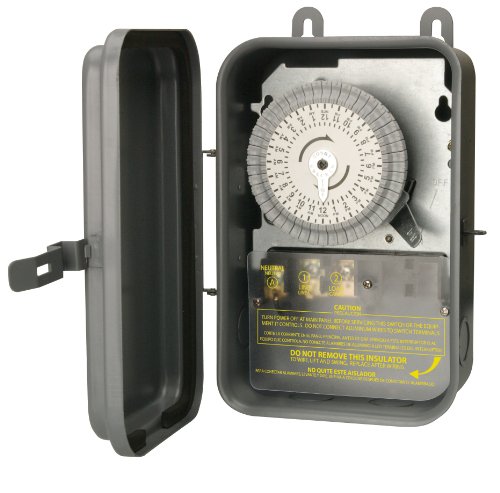
The Woods 59101RWD offers outdoor-ready 24-hour mechanical control with up to 24 ON/OFF settings per day and repeats daily. This makes it suitable for long-running parking lot lighting plans that require consistent daily cycles. The unit is designed for heavy-duty outdoor use, focusing on reliability in environments that demand straightforward, durable operation. Use this timer to maintain steady illumination for security and occupancy while keeping maintenance simple and predictable.
In parking lot contexts, the Woods timer can handle large lighting loads with a dependable, mechanical approach. It is ideal for installations where reliability and rugged construction outweigh advanced programmability. This timer provides a robust baseline solution that minimizes the need for digital troubleshooting and maintenance while ensuring consistent lighting schedules year after year.
Buying Guide: Key Considerations For Parking Lot Timers
Choosing the right timer for parking lot lighting involves balancing reliability, control complexity, and environmental durability. Here are essential factors to consider when evaluating options:
- Outdoor durability: Look for weatherproof housings, IP ratings, and rugged enclosures to withstand rain, dust, and temperature fluctuations.
- Control type: Mechanical timers offer rugged simplicity and low maintenance, while digital timers provide complex scheduling, daylight compensation, and backup features.
- Voltage and load compatibility: Ensure the timer supports the system voltage (120-277 VAC) and the lighting load (watts/amps) you plan to control, including LED and HID fixtures.
- Programming flexibility: For large lots or event-based lighting, a timer with 7-day programming or multi-event capability helps align illumination with traffic patterns and security needs.
- Daylight saving and sun timing: Automatic DST adjustments and sunrise/sunset compensation can improve energy efficiency year-round.
- Manual override: A quick, reliable override option is useful for maintenance or temporary security needs without reprogramming schedules.
- Backups and reliability: Battery backup or robust mechanical design reduces downtime during power outages and maintains continuity in lighting.
- Ease of installation: Some models offer universal voltage compatibility and straightforward wiring, which lowers installation costs and downtime.
- Future proofing: If you expect upgrades to LEDs or smart lighting in the future, consider timers that can accommodate evolving loads and control schemes.
For many parking lot applications, a mix of mechanical timers for critical exterior lights and digital controllers for complex schedules provides a balanced approach. When evaluating options, map out your typical nightly schedule, identify peak activity hours, and determine how often you need to adjust settings for events or seasonal changes. This helps select a timer that minimizes energy use while maintaining safe, well-lit areas for customers and employees.