On-demand tankless water heaters provide continuous hot water with immediate response, saving space and energy. This guide highlights five top options that balance power, efficiency, and installation needs for American homes. Each entry includes performance details, installation notes, and notable features to help you compare models quickly.
Summary of selected products
| Product | GPM (Typical) | Voltage | Notable Benefit |
|---|---|---|---|
| EcoSmart ECO 11 | Up to 1.8–3.3 | 240V | Self-modulating technology, compact |
| Orbek 14kW | Up to 3.38 | 240V | Fast hot water, compact display |
| Orbek 18kW | Up to 4.17 | 240V | Higher flow for multiple fixtures |
| Rheem 18kW | Up to 4.4 | 240V | LED thermometer with self-modulation |
| APUS 140k BTU Propane | Up to 6.8 | Propane | Instant hot water, smart control |
EcoSmart ECO 11 Electric Tankless Water Heater

The EcoSmart ECO 11 is a compact 13 kW unit designed for 240 V electrical systems. It uses patented self-modulating technology to adjust heat output based on demand, delivering endless hot water with efficient energy use. The system is 90% smaller than traditional tank heaters and is suitable for wall or point-of-use installation. It claims high thermal efficiency and only heats water when called, reducing standby losses.
Orbek 14kW Tankless Water Heater

Orbek’s 14kW electric tankless model provides up to 3.38 GPM for 2–3 points of use. It requires a 240V/60A two-pole breaker, 6 AWG wiring, and 1/2″ NPT water connections. The unit features an LED digital display and ETL certification. Water-electricity separation helps minimize scale and corrosion while delivering hot water within seconds, potentially lowering energy costs relative to tank heaters.
Orbek 18kW Tankless Water Heater
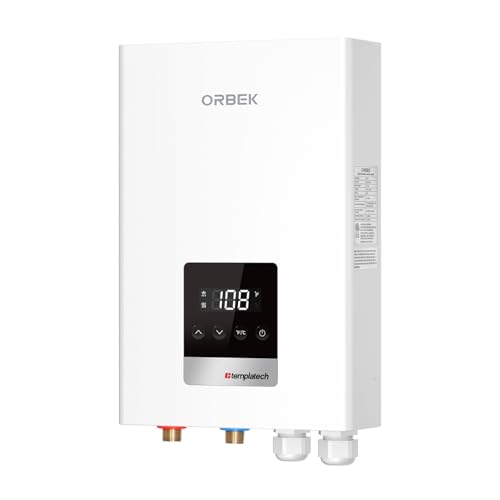
This 18kW Orbek model delivers up to 4.17 GPM at 240 V and is designed for 2–3 fixtures. It requires two 240V/40A breakers, two 8 AWG wires, and 3/4″ NPT connections. Its high-power design enables faster hot-water delivery and is suited for homes that demand more simultaneous usage, while maintaining efficient operation and quick recovery between uses.
Rheem 18kW 240V Tankless Electric Water Heater
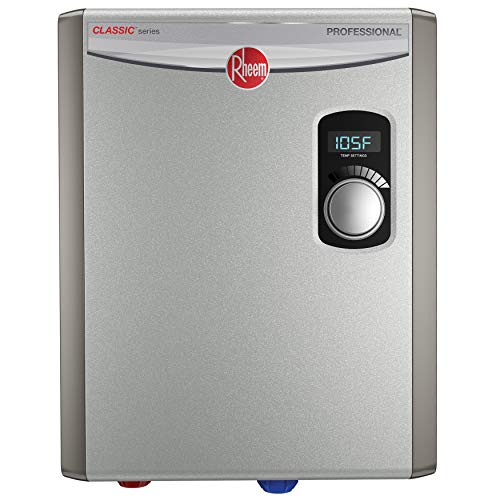
Rheem’s 18kW unit features external digital thermostatic control with LED display and self-modulation to match hot-water demand. It uses durable copper immersion heating elements and is field serviceable. Maximum flow rate reaches about 4.4 GPM, making it suitable for busy households with multiple simultaneous draws, while maintaining precise temperature control.
APUS Tankless Water Heater Propane
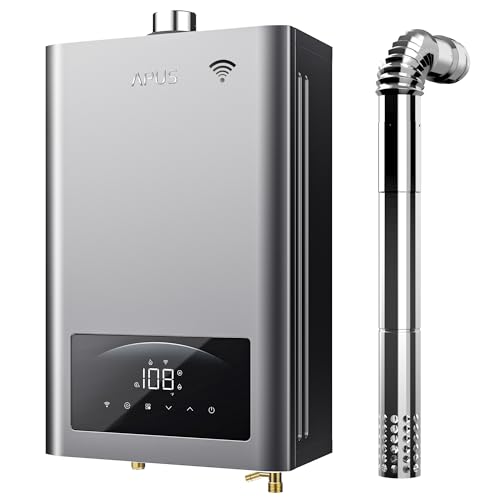
APUS offers a propane-powered tankless system rated at 140,000 BTU, with a maximum 6.8 GPM flow. It emphasizes instant hot water with zero cold-water delay through its single-circulation technology and includes a smart Wi-Fi app for control. A built-in booster pump enhances flow by up to 130%, supporting two showers and two sinks concurrently, suitable for whole-home use with high demand.
Buying Guide: Key Considerations for On-Demand Tankless Water Heaters
Choosing the right tankless model depends on household hot-water needs, installation constraints, and energy goals. Consider the following perspectives to balance performance and value.
- Your hot-water demand
- Electrical or gas supply and required clearances
- Flow rate (GPM) versus temperature rise in your climate
- Efficiency features such as self-modulation and insulation
- Installation location (under-sink, wall-mounted, or closet)
- Warranty, serviceability, and ease of maintenance
- Smart controls and connectivity for monitoring and scheduling
Electrical versus gas models
Electric models are easier to install in many homes but may require upgrading the electrical panel or multiple breakers. Gas-powered units deliver higher GPM for larger households but need proper venting and venting components. Assess home infrastructure and local building codes.
Sizing and installation considerations
Accurately sizing a heater involves calculating the needed GPM at the hottest expected water temperature. Oversized units offer future-proofing but cost more upfront. Budget for proper wiring, mounting space, and venting if applicable.
Energy efficiency and cost impact
Tankless heaters typically reduce standby energy loss and can lower utility bills, especially when compared to traditional tanks. Look for units with self-modulating technology and high thermal efficiency to maximize savings over time.
Reliability and serviceability
Durable components, accessible service parts, and clear maintenance guidelines influence long-term performance. Units with field-serviceable elements and widely available replacement parts tend to minimize downtime.