Choosing the right NEMA 14-30 EV charger can streamline home charging, especially for EVs that rely on the standard dryer outlet. This guide highlights five well-regarded options that support 24A charging at 240V, offer portable or plug-and-play installation, and work with a range of vehicles. The focus is on reliability, compatibility, and ease of use for American households.
Summary of selected products:
| Product | Brand | Cable Length | Key Feature |
|---|---|---|---|
| NEMA 14-30 Level 2 EV Charger | SEGUMA | 25 ft | Adjustable current up to 24A; dryer outlet compatibility |
| EVDANCE Level 2 EV Charger | EVDANCE | 25 ft | Plug-and-play 24A; Tesla-ready; IP66 rating |
| SEGUMA Tesla Level 2 Charger | SEGUMA | 25 ft | NACS/Tesla-ready; 24A; NEMA 14-30 plug |
Additional options include adapter-focused products that complement a NEMA 14-30 charging setup, and a portable Level 2 charger that supports flexible amperage. The following sections break down each choice with practical details to help compare compatibility and installation needs.
SEGUMA NEMA 14-30 Level 2 Charger

The SEGUMA charger delivers up to 24A, 240V (about 5.76 kW), which is roughly four times faster than a typical Level 1 setup. The unit uses a NEMA 14-30 dryer outlet for power, eliminating the need for substantial electrical work. An adjustable current function lets users pick from 10A, 16A, 20A, or 24A, helping to match the home circuit and prevent overload. Built around a J1772-compatible connector, this charger supports a broad range of non-Tesla and Tesla-adapted vehicles. The design emphasizes plug-and-charge convenience with minimal installation steps, though Tesla owners will need an adapter for full compatibility. This model suits households seeking a portable, no-hussle solution that leverages existing dryer outlets for Level 2 charging.
Key considerations: ensure your dryer outlet is indeed a NEMA 14-30, confirm vehicle compatibility with SAE J1772, and account for a potential adapter if you drive a Tesla. The charger’s 25-foot cord length offers flexibility in garage layouts and parking spots, reducing the need to reposition your EV during charging sessions.
EVDANCE Level 2 Charger For Teslas

The EVDANCE unit is designed for Tesla models and offers 24A charging via a 240V NEMA 14-30 plug. It emphasizes a plug-and-play approach, with a 25-foot reach that helps extend charging access from a laundry room to exterior parking. An IP66-rated housing supports robust use in varying conditions, making it a practical option for home garages and detached spaces. The charger’s readout is designed for clarity, allowing users to monitor charging status and power usage at a glance. Note that this model is optimized for Tesla-typical charging needs; other J1772 vehicles may require adapters or alternate configurations.
Purchase considerations include compatibility with non-Tesla vehicles, the strength of the outdoor or indoor installation environment, and whether the 25-foot reach aligns with your parking setup. The device’s built-in control and power management features help prevent circuit overload while delivering efficient Level 2 charging speeds.
SEGUMA Level 2 Tesla Charger (NEMA 14-30 Plug)

This SEGUMA model targets Tesla owners with a NACS-ready design and a 24A capability at 240V, delivering up to 5.76 kW of power. The unit uses a NEMA 14-30 dryer outlet and provides a flexible amperage range from 10A to 24A to adapt to household circuits. The charger emphasizes future-ready compatibility, positioning itself as a long-term investment for both current and upcoming non-Tesla vehicles that adopt the NACS standard. It offers a dependable, portable charging solution that blends ease of use with broad vehicle compatibility and a straightforward setup for garages or laundry rooms.
Consider whether you plan to keep a Tesla as your primary EV and how you expect future non-Tesla vehicles to evolve in your household. The 25-foot cord provides mobility within typical home spaces, and adjustable current helps manage electrical load without sacrificing charging speed.
CircleCord NEMA 10-30P to 14-50R EV Charger Adapter Cord
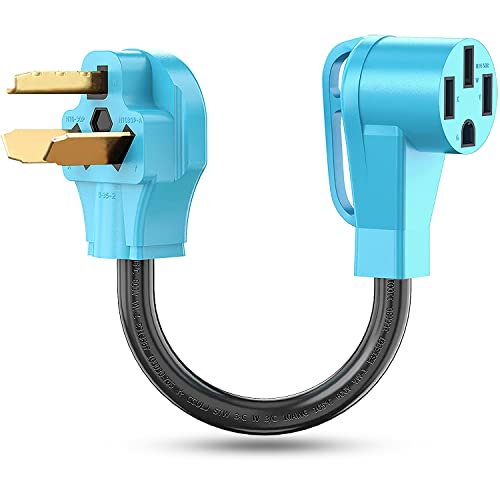
This adapter cord converts a NEMA 10-30P dryer outlet to a NEMA 14-50R receptacle, enabling Level 2 charging on compatible EVs. It is ETL listed and designed for durability with a heavy-duty 10-gauge jacket, making it suitable for indoor and outdoor use. While not a charger itself, this accessory provides a bridge for owners who want to leverage existing dryer outlets to support Level 2 charging with compatible EV hardware. Tesla charging setups that require a 14-50R receptacle can benefit from this adapter, though users should verify outlet compatibility and ensure safety practices when connecting high-amperage loads.
Potential caveats include ensuring the target EV charging equipment supports 14-50R connections and confirming that the adapter’s amperage rating aligns with the vehicle’s charging requirements. The adapter is a practical option for households looking to maximize the utility of existing outlets without a full electrical upgrade.
Suplevel 25ft EV Charger Adapter Cord

The Suplevel adapter connects NEMA 14-30P to NEMA 14-50R, extending Level 2 charging options to a broader set of EVs and outlets. With a 25-foot length and a 30-amp overload tolerance, this cord supports up to 7,500 watts at 240V. It’s ETL listed and designed to withstand common home charging scenarios, including RV-friendly or vehicle-specific charging needs. This adapter is particularly useful for households working with limited outlet configurations but seeking flexibility for multiple EV models, including those from Tesla and non-Tesla lines, using a Level 2 charging approach.
When considering this accessory, owners should assess the outlet availability, cable routing, and any required safety precautions for high-current connections. The cord’s ergonomic handles on both ends facilitate quick connections and disconnections as part of a modular charging setup.
H3JANG EV Charger Adapter: TT-30P to 14-50R

This adapter converts a TT-30P 30A dryer outlet to a 14-50R receptacle for Level 2 EV charging, making it suitable for remote locations or sites lacking a full EV charging station. It’s UL-listed and built with 10 AWG wiring for improved safety under load. Compatibility covers Tesla Gen 2 chargers and J1772-compatible EVs, provided that the installation aligns with local electrical codes and the outlet type matches the adapter’s intended use. The adapter supports up to 50A charging via a 14-50R receptacle, though actual charging must respect the vehicle’s capabilities and the circuit’s limits.
Key considerations for this adapter include verifying outlet type, ensuring the charger and vehicle support 14-50R, and adhering to safety guidelines for high-current connections in remote or temporary charging setups.
Buying Guide: NEMA 14-30 EV Charger Essentials
When evaluating NEMA 14-30 charging options, consider these factors to match your needs and vehicle lineup:
- Charger compatibility: Check SAE J1772 vs. Tesla’s NACS standards, and whether your EV requires adapters for non-Tesla models.
- Current and power: Typical Level 2 charging uses up to 24A at 240V. Confirm your home circuit capacity and whether current can be adjusted to prevent overloading existing breakers.
- Outlet and wiring: A NEMA 14-30 dryer outlet is common in older North American homes. Ensure the outlet, wiring gauge, and breaker size (often 30A) align with the charger’s needs.
- Cord length and reach: A longer cord (around 25 ft) improves flexibility, especially for garages with distant parking spaces.
- Portability vs. permanent installation: Portable units offer flexibility, while wall-mounted setups can be tidier and more weather-resistant.
- Safety and certification: Look for ETL/UL certifications and weather-rated enclosures if you plan outdoor use.
- Future-proofing: Some models are designed to be compatible with evolving charging standards, such as NACS adoption, which may affect long-term value.
- Cost and maintenance: Consider the total cost of ownership, including adapters and potential future upgrades to accommodate new vehicle models.
For a blended charging strategy, consider a primary Level 2 charger paired with high-quality adapters to support both current and future EVs. Keep in mind that adapter use can introduce additional cables and potential points of failure, so prioritize models with robust build quality and clear safety guidance.