When selecting a natural gas solenoid valve, seek devices designed for gas compatibility, robust materials, and reliable actuation across temperatures. This guide highlights five top options, each suitable for different setups—from RV and generator applications to industrial gas lines. The best choice depends on voltage, connection size, and whether you need stainless steel or brass construction. The top picks below are best for budget-conscious upgrades, high-durability needs, and easy installation in gas systems.
Summary of selected products (quick comparison):
- ACCUREX 464540 Natural Gas Solenoid Valve — 120V, OEM-style reliability, US-made.
- U.S. Solid 1/2″ Stainless Electric Solenoid Valve — 12V DC, stainless steel, high durability.
- U.S. Solid 1/4″ Brass Electric Solenoid Valve — 12V DC, brass with Viton seal, fast response.
- FJXBYWM Solenoid Valve for LPG/Natural Gas — 12V, 180° fitting, versatile for vehicles and mobile setups.
- Datanly 12V Solenoid Valve LPG/Propane — 1/4″NPT, stainless steel, high-temperature tolerance.
ACCUREX 464540 Natural Gas Solenoid Valve, 120 Volt

Best for: Systems needing OEM-grade parts with a U.S. origin. This valve emphasizes authenticity and compatibility with standard OEM practices, making it suitable for replacements in established gas-control boards.
Why selected: It is marketed as a genuine OEM part made in the United States, focusing on safety, reliability, and performance that align with original equipment standards.
Limitation: As an OEM part, it may be oriented toward professional installation and service contexts; compatibility should be verified with existing hardware.
U.S. Solid 1/2″ Stainless Electric Solenoid Valve

Best for: Higher-pressure gas lines and projects where stainless steel durability matters. Ideal for longer installations that encounter tougher environments or higher temperatures.
Why selected: Stainless steel construction provides corrosion resistance and strength, supporting heavier-duty gas applications while maintaining fast actuation. The Viton seal enhances chemical resistance for fuels and oils.
Limitation: Not suitable for drinking water applications due to material composition; ensure system fluids match valve specifications.
U.S. Solid 1/4″ Brass Electric Solenoid Valve

Best for: Smaller-line gas control where quick response and flexible fitting are required. The 1/4″ brass valve is well-suited for compact installations in vehicles or portable gas setups.
Why selected: Brass with Viton seal delivers reliability in high-temperature environments and with fuels. The valve is designed for rapid opening and closing—critical for on-demand gas control.
Limitation: Brass valves should not be used with drinking water; verify fluid compatibility with the system’s media and pressure.
FJXBYWM 12V Propane/LPG/Natural Gas Solenoid Valve
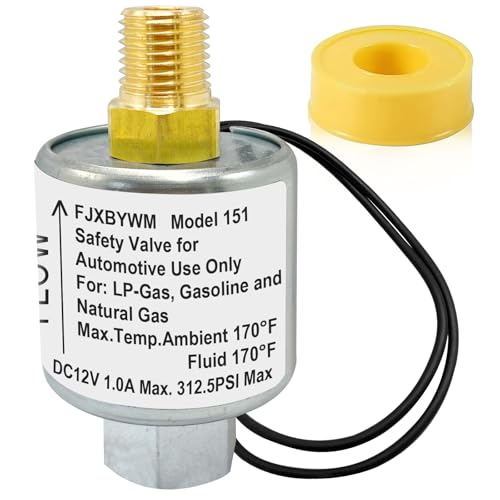
Best for: RVs, trailers, ATVs, and mobile setups needing a compact 12V valve with an all-purpose gas compatibility profile.
Why selected: The valve features a 180° fitting angle, helping fit into tight spaces. It supports LPG, natural gas, diesel, gasoline, and air, providing versatile use cases for on-the-road fuel management.
Caution: The valve notes that inlet is female NPT and outlet is male NPT, with no polarity on the wires—wire connections must be wired correctly to ensure proper operation.
Datanly 12 Volt Solenoid Valve LPG Propane 1/4″NPT

Best for: Applications requiring precise 1/4″ NPT connections with stainless steel construction for durability in gas management tasks.
Why selected: It combines a 1/4″ female NPT inlet and 1/4″ male NPT outlet with stainless steel body, offering longevity and resilience under high-pressure liquid or vapor propane and low-pressure natural gas conditions.
Limitation: Designed for ambient temperatures up to 170°F; verify operating environment compatibility to avoid performance impacts in hotter settings.
Buying Guide: Key Considerations for Natural Gas Solenoid Valves
Voltage and control: Choose a valve with a voltage compatible with your control system (12V or 120V). Consider whether you need a compatible supply for remote or centralized control.
Materials: Stainless steel provides corrosion resistance and durability in harsh environments; brass offers good heat tolerance and is often more cost-effective. Viton seals enhance chemical resistance in gas applications.
Inlet/outlet size: Confirm NPT sizing (1/4″, 3/8″, etc.) and verify compatibility with existing fittings. A matching thread orientation (inlet/outlet) prevents installation errors.
Operating temperature and pressure: Check the maximum ambient temperature rating and the gas pressures the valve can safely handle. Some valves are optimized for LPG or natural gas with specific pressure ranges.
Safety features: Look for valves with fail-safe or automatic shut-off behavior when power is cut, especially for mobile or remote setups where safety is paramount.
Durability and warranty: Consider OEM parts or valves with robust construction for long-term reliability. While warranties vary, an OEM-focused part often aligns with equipment safety standards.
Compatibility notes: Some valves are not suitable for drinking water or potable applications due to material choice. Always verify fluid compatibility for your system.
Frequently Asked Questions
- What is a gas solenoid valve used for? It controls the flow of gas (such as natural gas or propane) by electronically actuating a valve to open or close the gas path.
- Which material is best for gas valves? Stainless steel offers high durability and corrosion resistance; brass is a common, cost-effective alternative with good heat tolerance and Viton seals for chemical resistance.
- Can I use a 12V valve on a 120V system? No. Use a valve with the voltage specified by your control system to ensure proper operation and safety.
- Are gas solenoid valves safe for RV and mobile use? Yes, with proper installation and safety features such as automatic shut-off, but verify suitability for your vehicle’s fuel type and pressure.
- Do these valves work with LPG and natural gas? Many listed models are designed for LPG, propane, or natural gas. Always confirm compatibility with your exact gas type and pressure requirements.
- Do valves require maintenance? Routine inspection for leaks, seals, and electrical connections is recommended to maintain safety and performance.