Detecting combustible gas leaks quickly is essential for safeguarding homes, RVs, and workplaces. This guide reviews five leading natural gas leak testers, comparing detection ranges, alarms, portability, and ease of use. Each product is selected for reliability, clarity of readouts, and suitability for DIY inspections around kitchens, basements, and vehicles.
The following table provides a quick snapshot of the chosen models, including what they detect, key strengths, and typical use scenarios. Use this as a reference as you read the in-depth sections below.
| Product | Brand | Detects | Strength | Best For |
|---|---|---|---|---|
| PT199 Natural Gas Detector | TOPTES | Methane, propane, butane, LPG, natural gas | Fast 0.5s alarm, visual LCD alert, portable | Home safety checks and quick sniffing |
| Klein Tools ET120 | KLEIN TOOLS | Gas concentrations 50–10,000 ppm | Adjustable sensitivity, strong alerts | Detailed gas monitoring in tight spaces |
| PT520A Natural Gas Detector | TOPTES | Methane, propane, natural gas, LPG, butane | 17-inch gooseneck, fast 0.5s response | Hard-to-reach areas and caravans |
| PT177 Gas Leak Detector | TOPTES | LPG, methane, propane, butane, natural gas | Pocketable, auto-calibration, 0.5–3s alarm | Portable everyday use |
| PT210S Gas Leak Detector | TOPTES | Natural gas, methane, propane, butane | 4-inch probe, Percent LEL readout | Accurate leak severity and hard-to-reach spots |
PT199 Natural Gas Detector with Audible & Visual Alarm
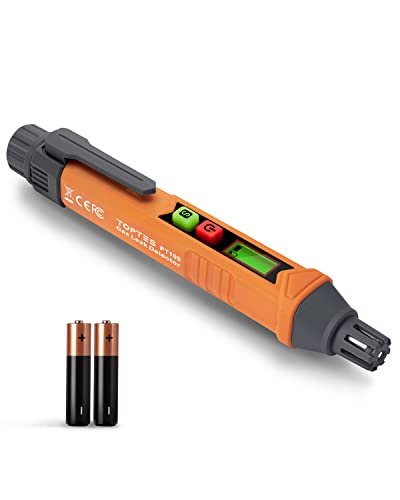
The PT199 by TopTes is a compact, easy-to-use combustible gas detector designed for quick spot checks around the home. It detects methane, propane, butane, LPG, and natural gas with a rapid 0.5-second response. Visual and audible alarms intensify with rising gas concentration, and the LCD screen turns red at higher levels. It ships with batteries and powers on after a short warm-up, making it suitable for immediate use in kitchens, basements, and near appliances. A low-battery indicator helps ensure readiness for ongoing safety checks.
Klein Tools ET120 Gas Leak Detector

The Klein ET120 provides a broad detection range from about 50 to 10,000 ppm, making it versatile for various household leak scenarios. Its adjustable sensitivity allows users to switch between High and Low settings to tailor detection to the environment. With five red LEDs and an 85 dB audible alert, the device ensures visibility and audible warnings as gas levels rise. This model is well-suited for detailed monitoring in tight spaces like under sinks, behind appliances, or near gas lines.
PT520A Natural Gas Detector

The PT520A features a 17-inch gooseneck probe designed for accessing hard-to-reach locations such as pipelines, storage areas, gas fireplaces, and basements. It detects a broad range of gases including methane, propane, natural gas, LPG, and butane, with a rapid 0.5-second alert and a 75 dB alarm that deepens as concentration increases. Its long reach and clear visual indicators make it suitable for RVs, cabins, and home installations where tight spaces are common.
PT177 Gas Leak Detector

The PT177 is a compact, pocket-sized detector that covers a wide range of combustible gases, including LPG, methane, propane, and natural gas. It requires a 30-second warm-up in a clean environment for accuracy and provides a 30-second auto-calibration after powering on. Five red LEDs and a 75 dB audible alarm intensify as gas concentration increases. Its portability and included storage bag make it a convenient tool for RVs, boats, and everyday home use.
PT210S Gas Leak Detector

The PT210S combines a four-inch probe with a portable pen-style design to detect natural gas, methane, propane, and butane across a 100 ppm to 5,000 ppm range (1% LEL to 10% LEL). It provides a clear Percent LEL readout and uses a 75 dB buzzer with red screen alerts as gas levels rise. The extended probe makes it practical for inspecting pipes, vents, and tight spaces where leaks commonly occur in homes and RVs.
Buying Guide: Key Considerations For Choosing A Natural Gas Leak Tester
When selecting a natural gas leak tester, consider the following perspectives to balance performance, safety, and practicality:
- Detection range and gases: Look for devices that cover methane, propane, butane, LPG, and natural gas. Wider ppm and LEL ranges provide more flexibility in different environments.
- Response time and alarms: Fast 0.5-second responses are common in this category. Ensure the device has both audible and visual alerts, and consider models with adjustable alarm thresholds for noisy settings.
- Readout type: Some testers show simple LED indicators; others provide digital readouts in ppm or %LEL. Digital readouts help quantify leak severity for decision-making and record-keeping.
- Probe design and reach: Long gooseneck or extendable probes help access hard-to-reach areas like behind cabinets, pipes, or storage spaces. Weigh compactness against reach needs depending on your space.
- Portability and power: Battery-powered units with included batteries offer quick deployments. Rechargeable options reduce ongoing costs but require charging availability.
- Calibration and maintenance: Some models require auto-calibration or warm-up periods. Consider ease of calibration and the availability of replacement parts or batteries.
- Durability and form factor: For RVs and outdoor use, rugged housings and secure storage cases improve longevity and transportability.
- Ease of use and learning curve: User-friendly interfaces with clear indicators reduce the risk of misinterpretation, especially for non-professionals conducting routine checks.
- Price vs. value: While features may vary, prioritize devices with reliable alarms, clear displays, and proven customer support to maximize long-term safety.
In choosing a tester, map your typical scenarios: routine kitchen checks, basement inspections, RV travel needs, or tight-space detections. A model with a long reach, strong audible alerts, and clear %LEL reporting provides the most actionable information for homeowners and caretakers alike.