If you’re designing a reliable, low-maintenance landscape lighting setup, choosing the right low voltage underground cable is essential. This guide highlights five strong options, explains who they’re best for, and compares key features like conductor material, direct burial suitability, and insulation. Ideal buyers include DIY homeowners tackling yard lighting, professional installers, and those upgrading to longer runs with minimal voltage drop and durable weather resistance.
Overview of top picks (summary table):
- — Best for long runs, pure copper, direct burial, ETL listed.
- — Best for easy DIY projects, flexible, direct burial ready.
- — Best for larger power needs, durable, direct burial capable.
- — Best for smaller installations, heavy-duty bare copper, direct burial.
- — Best value, direct burial compatible, easy to handle.
SUNVIE 12/2 Low Voltage Landscape Wire 250FT
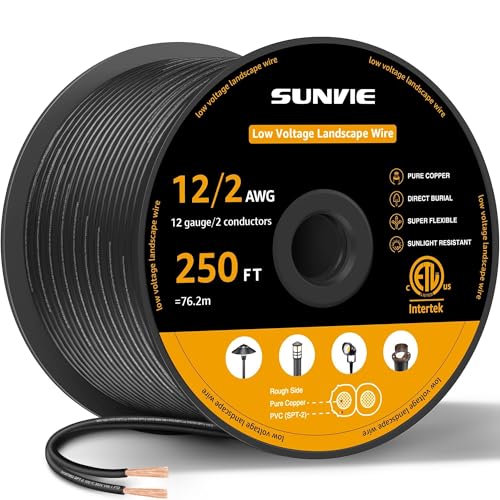
Specification: 250FT of 12/2 conductors with SPT-2 black PVC insulation, pure copper, VW-1 fire resistance, maximum working voltage 300V. Direct burial capability makes it suitable for long, underground runs. This model emphasizes pure copper for minimal voltage drop and stable brightness over extended distances.
- Best for: Long-yard lighting projects needing reliable voltage stability and direct burial protection.
- Why selected: 100% pure copper offers superior conductivity compared to CCA, helping maintain brightness over 250 feet.
- Limitation: Higher upfront cost than some alternatives due to copper composition.
Wirefy 14/2 Low Voltage Landscape Wire 100 ft

Specification: 14/2, 100 ft, direct burial ready, pure copper. Designed to be flexible and easy to strip for DIY installations, suitable for path lights, deck lighting, and garden accents. Insulation supports outdoor exposure and moisture resistance.
- Best for: DIYers starting small, with a need for easy handling and direct burial suitability.
- Why selected: Flexible 14-gauge copper wire is a common, user-friendly choice for many landscape projects.
- Limitation: Shorter run length than some 250 ft options, so plan for bigger installations accordingly.
SUNVIE 100FT 12 Gauge Low Voltage Wire
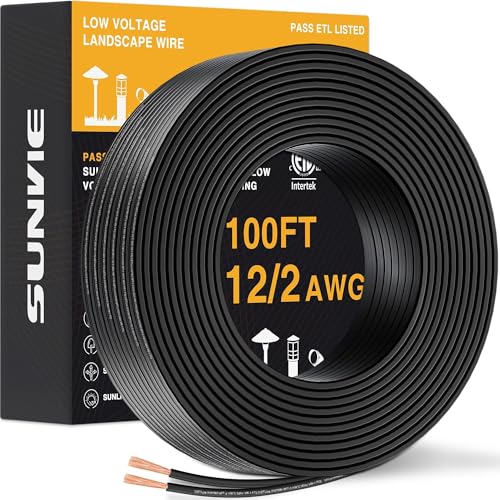
Specification: 100FT 12/2 conductors, SPT-2 black PVC insulation, pure copper, VW-1 fire resistant, maximum working voltage 300V. Direct burial compatibility supports longer, subterranean runs without conduit in many setups.
- Best for: Medium-length installations with high current needs, like multiple fixtures on a single leg.
- Why selected: Pure copper helps minimize voltage drop across shorter to mid-length runs.
- Limitation: Not the longest option; plan ahead for future expansions if you anticipate longer runs.
Lightkiwi 16/2 Low Voltage Landscape Wire 50 ft
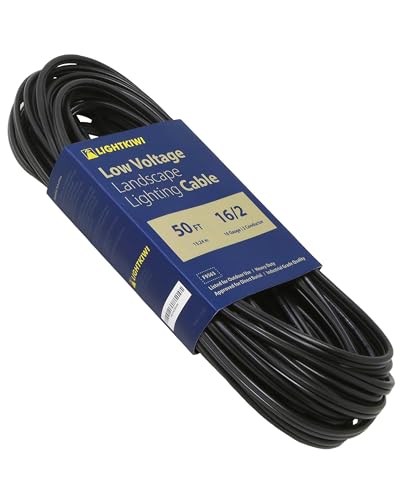
Specification: 50 ft, 16/2, direct burial capable, 100% pure bare copper conductor. The jacket is designed to withstand outdoor conditions, with flexible handling for small-scale projects and tight spaces.
- Best for: Small gardens or pathway lighting where a lighter, more flexible run is needed.
- Why selected: Bare copper improves conductivity and reduces voltage drop over shorter distances.
- Limitation: Shorter length requires more segments if the layout spreads across a large area.
UBOORY 16/2 Low Voltage Landscape Wire 100Feet

Specification: 100 feet, 16 AWG, two conductors, direct burial suitable, 300V max working voltage. Flexible, easy to strip, and designed for outdoor environments with moisture resistance.
- Best for: Budget-conscious projects needing direct burial compatibility and simple handling.
- Why selected: A solid balance of price and performance for typical residential lighting circuits.
- Limitation: 16 AWG is thinner than 14/2 or 12/2, which may be less ideal for higher-wattage fixtures on longer runs.
Buying Guide
What to consider when selecting low voltage underground cable for landscape lighting:
- Conductor size: Larger gauges (12 AWG, 14 AWG) reduce voltage drop on longer runs and handle higher current. For long runs or many fixtures, choose heavier gauge.
- Material: Copper conductors offer superior conductivity and stability versus copper-clad aluminum (CCA). If brightness consistency and voltage stability matter, copper is preferred.
- Direct burial suitability: Ensure the cable is rated for direct burial and moisture exposure. Some cables tolerate sun, soil moisture, and abrasion better than others.
- Insulation and jacket: Look for durable jackets (SPT-2 PVC) and fire-rating standards (VW-1) for safety and longevity in outdoor environments.
- Bundle length and layout: Plan the run length and the number of fixtures to minimize voltage drop. Use additional runs or transformers as needed.
- Installation environment: Consider whether the run will be underground, underground-in-conduit, or surface-mounted along hardscape edges.
Frequently Asked Questions
- What gauge is best for a mid-range landscape lighting run? For mid-range runs with several fixtures, 12 or 14 gauge is common to balance cost and voltage drop.
- Can I bury landscape wire directly in the ground? Yes, if the cable is rated for direct burial and you follow local code and installation guidelines.
- Is pure copper worth paying extra for? Yes, copper provides better conductivity and reduces voltage drop compared with copper-clad aluminum over longer runs.
- How do I avoid voltage drop? Use heavier gauge cable for longer distances and keep the total run length within design guidelines for your transformers and fixtures.
- Do I need a conduit for burial? For certain soils and installation environments, conduit adds protection. If your cable is rated for direct burial, conduit may still be used in high-traffic areas or when required by code.
- What is the recommended maximum voltage for low-voltage landscape wire? Most common low-voltage cables are designed for up to 300V in residential setups, but always verify the product rating and local code.