Low voltage control panels help protect batteries and automate disconnection to prevent deep discharge. This article reviews five reliable options from Amazon that suit 12V–36V and 12V–48V systems, highlighting how each device manages under-voltage, saves settings, and supports diverse battery chemistries. The goal is to provide clear guidance for selecting a panel that balances protection, ease of use, and compatibility with solar, lead-acid, and lithium setups.
Summary of Selected Products
- WSDMAVIS 1 Pcs Battery Low Voltage Controller Protection Panel 12V-48V Universal Undervoltage Cut Off Automatic Switch Recovery Protection Controller
- Digital Low Voltage Protector Disconnect Switch Cut Off 12V Over-Discharge Protection Module for 12-36V Lead Acid Lithium Battery
- 12-36V Low Voltage Digital Protector Disconnect Switch Cut Off Lithium Battery Over Discharge Protection Module (Pack of 2)
- EPLZON 2 Pack 12V-36V Voltage Protection Module Digital Low Voltage Protector Disconnect Switch Cut Off Over Discharge Protection Module
- Onyehn 2pcs 12V-36V DC Voltage Protection Module Digital Low Voltage Protector Disconnect Switch Over Discharge Protection Module
WSDMAVIS Low-Voltage Controller For 12V–48V Systems
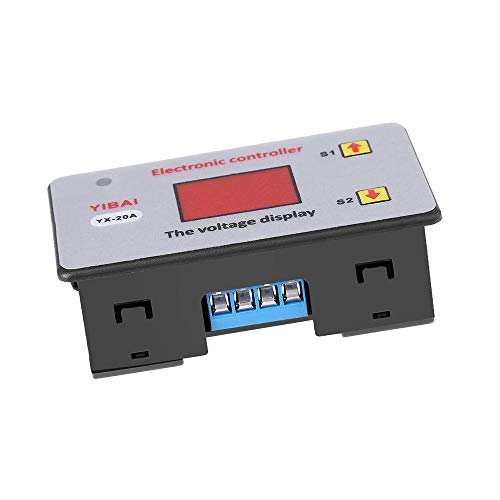
This under-voltage switch controller turns off the load when the voltage drops below a preset value. When voltage recovers, it automatically restores power. The device protects batteries from over-discharge and can help extend life. Both cut-off and re-energize voltages are adjustable via simple button presses, and it is compatible with 12V–48V storage and lithium battery discharge protection modules.
IS Digital Low Voltage Protector For 12V Systems

This protector uses a relay to turn the output on or off; it acts as a protective switch rather than changing voltage. It emphasizes over-discharge protection with configurable parameters to disconnect at preset voltages. A memory function preserves settings after power loss, ensuring consistent operation in remote or variable environments.
Cywhrvzsf 12-36V Low Voltage Module (Pack of 2)

This dual-pack unit provides programmable low-voltage disconnection for DC 12–36V lead-acid or lithium-ion batteries. Features include a 0.1V control accuracy, up to 20A current before tripping, and non-volatile memory to retain settings after power loss. It is compact, with a small PCB and a micro-relay designed for compact installations, though care should be taken with higher currents.
EPLZON 2 Pack 12V-36V Digital Voltage Protectors

These protectors guard electrical equipment from low-voltage conditions. Users can set parameters to automatically disconnect the battery at a preset voltage. They are compact, with a 57 x 42 x 19mm footprint, supporting DC 12–36V and currents up to 20A, though recommended operational current remains below 8A for relay longevity. A memory feature preserves settings during power loss.
Onyehn 2-Pack DC Voltage Protection Modules

The Onyehn modules cover 12–36V DC protection with a 0.1V control accuracy and <1.5W power consumption. They support up to 20A instantaneous current, with practical use recommended under 8A per the compact relay design. They’re suitable for protecting lead-acid and lithium-ion batteries, including solar applications, though not intended for battery packs directly.
Buying Guide: Key Considerations For Low Voltage Control Panels
When selecting a low voltage control panel for battery protection, consider the following factors to ensure safe, reliable operation across different configurations:
- Voltage range compatibility: Verify the device supports your system’s nominal voltage (12V, 24V, 36V, or 48V) and can handle lithium as well as lead-acid chemistries.
- Disconnection and reconnection thresholds: Look for adjustable cut-off and restart voltages, plus hysteresis to avoid rapid on/off cycling in fluctuating conditions.
- Current rating and relay type: Check the maximum current before tripping and whether the relay is suitable for your load. For sensitive electronics, stay well within the relay’s duty rating to prevent premature wear.
- Memory and resilience: A memory function helps preserve settings after a power loss, which is important for remote or unattended installations.
- Protection scope: Some units provide only disconnect functionality, while others offer additional protections like surge tolerance or anti-reset features. Match these to your application needs.
- Installation size and wiring: Consider the physical footprint and terminal layout. Smaller boards are common, but ensure there is adequate room for wiring and heat dissipation.
- Battery chemistry and life impact: Boards that prevent deep discharge can extend battery life, particularly for lithium and sealed lead-acid packs used in solar or backup systems.
- Documentation and support: Clear parameter ranges, setup steps, and customer support can reduce misconfiguration risks in the field.
Design Options And Performance Perspectives
Low voltage control panels come in different design philosophies. Some emphasize simple on/off switching with precise voltage triggers, while others offer more advanced parameter customization and memory retention. In practice, users should balance ease of use with protection sophistication. For compact solar cages or portable systems, small footprint modules with non-volatile memory and safe current ratings are often the best fit. For larger installations, panels supporting higher currents and robust relays may better withstand load surges without nuisance disconnections.
Installation Best Practices
To maximize protection and reliability, follow these best practices: ensure correct wiring polarity, verify voltage thresholds before connecting batteries, and test under load with a controlled supply. Always consult the device’s manual for recommended mounting heights and installation clearances. Periodic checks can confirm that settings remain intact after power outages or system maintenance.