For reliable livestock containment, choose a low impedance electric fence charger. These energizers maintain shock strength through vegetation and deliver consistent performance across different fence types. The following selections are well-suited for ranchers, farmers, and hobby farms seeking durable, weed-tolerant operation and versatile mounting options.
The table below summarizes five top options and who they’re best for. Use it as a quick reference when comparing features such as miles of coverage, power source, and mounting compatibility.
| Product | Best For | Power Source | Coverage (Ideal / Weeds) | Key Benefit |
|---|---|---|---|---|
| Zareba 10 Mile AC Low Impedance | Small to medium farms; mixed livestock | AC Plug-In | Up to 10 miles ideal / 1 mile heavy weeds | Maintains performance in weeds |
| Zareba 25 Mile AC Low Impedance | Mid-sized operations; larger fields | AC Plug-In | Up to 25 miles ideal / 6 miles heavy weeds | High coverage with weed tolerance |
| Zareba Solar ESP5M-Z | Remote sites; post-mounted setups | Solar | Up to 5 miles ideal | Sun-powered with 360° rotation |
| Zareba Solar ESP10M-Z | Remote fencing; larger solar layouts | Solar | Up to 10 miles ideal / 5 miles light weeds | Versatile mounting and robust solar power |
| Parmak Magnum MAG12-SP | Battery-backed, off-grid operation | Battery + Solar-ready | Up to 30 miles; 3.1+ joules | High energy for long runs |
Zareba 10 Mile AC Low Impedance Electric Fence Charger

This charger energizes up to 10 miles in ideal conditions and up to 1 mile in heavy weed conditions. It delivers 0.5 joules and can reach up to 10,500 volts, which is effective for cattle, horses, pigs, and goats. The low impedance design helps maintain fence performance when vegetation touches the wire. Suitable for all fence types, including high tensile, polywire, and polytape. Best for small to mid-size farms needing reliable weed-tolerance in a plug-in unit.
Best for: farmers who want a straightforward, plug-in solution with solid weed tolerance and broad compatibility. Caution: performance declines with dense weed growth, so regular fence maintenance improves results.
Zareba 25 Mile AC Low Impedance Electric Fence Charger

This model handles large properties, energizing up to 25 miles in ideal conditions and up to 6 miles in heavy weeds. It supports all fence types and remains effective where weed growth is a concern. Best for mid-to-large farms with variable vegetation and the need for substantial containment around cattle, horses, or exotic livestock. Caution: higher power and longer runs require robust grounding and setup to maximize efficiency.
Zareba Solar ESP5M-Z Electric Fence Charger

This solar-powered charger energizes up to 5 miles under ideal conditions and features a rotating mounting bracket for optimal sun exposure. It’s suitable for remote locations where AC power isn’t available and works well with T-posts, Y-posts, or round-wood posts. Best for remote, solar-reliant deployments where sustainability and reduced maintenance are priorities. Limitation: solar performance depends on weather and sun exposure; cloudy periods reduce output.
Zareba Solar Powered ESP10M-Z
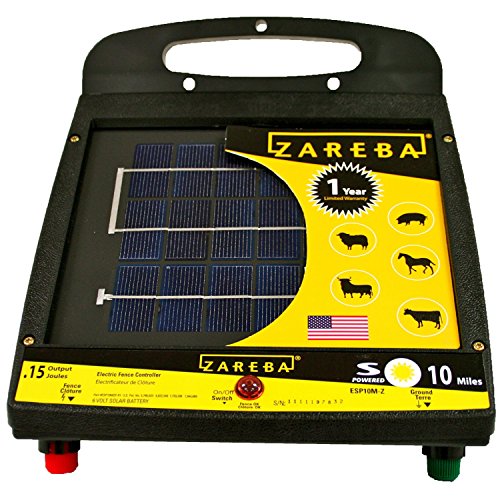
Operate up to 10 miles of electric fence in ideal conditions with solar power and an internal battery that lasts through cloudy weather. It supports up to 10 miles in optimal circumstances and 5 miles in light weeds, with mounting options suitable for various fence configurations. Best for larger remote sites needing more elongated coverage with solar independence. Caution: ensure regular charging cycles to keep the internal battery ready for duty during extended cloudy periods.
Zareba 50 Mile AC-Powered Low Impedance Electric Fence Charger

This charger offers high coverage, energizing up to 50 miles in ideal conditions and up to 12 miles in heavy weeds. It is compatible with all fence types and is designed to perform in challenging weed conditions. Best for large farms needing robust, long-distance containment and predator deterrence. Limitation: installation and grounding become more complex at scale; proper electrical safety practices are essential.
Parmak Magnum MAG12-SP Solar-Pak 12V Battery Charged

Combines solar charging with a 12V battery power source for off-grid operation. It charges up to 30 miles of fence and delivers 3.1 joules or more, suitable for demanding containment needs. Best for farms requiring strong energy with backup battery support. Better for longer runs where a reliable energy reservoir is advantageous; caution: heavier energy output may require more secure grounding and secure mounting to withstand wind and weather.
Buying Guide
Key considerations when choosing a low impedance electric fence charger:
- Power source: Choose AC plug-in for reliability and simplicity, solar for off-grid locations, or a battery-ready setup for maximum independence.
- Coverage needs: Estimate miles of fence and weed conditions. Higher mile ratings are best for large properties, while smaller operations can opt for lower-mile models with weed tolerance.
- Vegetation tolerance: Low impedance units maintain voltage under weed contact; this reduces voltage drops and keeps livestock contained.
- Fence type compatibility: Ensure the charger supports high tensile wire, polywire, and polytape used on the property.
- Mounting and deployment: Look for rotatable solar heads, post brackets, or ground mounting options that fit the farm’s fencing layout.
- Grounding requirements: Proper grounding improves performance; ensure clear instructions and safe installation practices are followed.
- Durability and weather resistance: Outdoor units should resist moisture, pests, and temperature fluctuations relevant to the farm location.
- Maintenance considerations: Solar units require sun exposure and occasional battery checks; AC units need regular power stability.
FAQ
- What is low impedance in an electric fence charger?
- Can I use different types of fences with a low impedance charger?
- How do I choose between AC and solar chargers?
- What maintenance is required for solar-powered chargers?
- What should I consider for large properties?
- Are there safety considerations with these chargers?
Low impedance means the charger maintains fence voltage better when weeds or vegetation contact the wire, ensuring a consistent shock that helps contain livestock.
Yes. Most low impedance chargers are compatible with high tensile wire, polywire, and polytape, making them versatile for various fencing configurations.
AC is reliable where electricity is available and often simpler to install. Solar is ideal for remote sites or locations without easy power access.
Regularly inspect mounting, clean solar panels, and check battery health or charging status, especially after long periods without sun.
For large properties, select a charger with higher mile ratings and robust weed tolerance, and plan for proper grounding and fence routing to maximize coverage.
Yes. Follow all manufacturer instructions, maintain safe distances from water sources, and ensure electrical components are installed by someone knowledgeable about farm electrical systems.