Discover a curated selection of low force load cells designed for compact spaces, high accuracy, and reliable performance. From tiny 10 kg sensors to versatile 500 kg and 5-ton options, these devices serve laboratories, automation lines, and industrial benches where space is at a premium but precision is non-negotiable. This guide highlights practical choices, key specs, and practical considerations to help you compare options quickly.
| Product | Capacity | Key Feature | Brand |
|---|---|---|---|
| DYMH-103 10kg Mini Load Cell | 0-10 kg | High accuracy, stainless steel | CALT |
| DYMH-103 100kg Mini Load Cell | 0-100 kg | Small footprint, stainless steel | CALT |
| QILICHUANGAN Load Cell with Indicator | 0-5T | Bellows design, peak hold | QILICHUANGAN |
| DEFY 1K S-Type Load Cell | 0-1000 lb | High sensitivity, low deflection | KELI |
| ATO 500kg Pancake Load Cell | 0-500 kg | Low height, sealed, high precision | ATO |
DYMH-103 10kg Mini Load Cell

The DYMH-103 10kg mini tension and compression load cell is designed for small spaces. It features a high-accuracy stainless steel body and a sensitivity range of 1.0-1.5 mV/V, allowing precise force measurements in tight installations. Suitable for bench-scale testing, lab setups, and compact automation tasks, this sensor provides reliable performance with a simple inline form factor.
DYMH-103 300kg Mini Load Cell

This 300 kg version extends the compact, high-accuracy design to higher force ranges while maintaining a small footprint. Built from stainless steel, it shares the same 1.0-1.5 mV/V sensitivity and stability benefits, making it suitable for scale-down industrial tests, material checks, and automation lines with limited space.
QILICHUANGAN Load Cell With Indicator
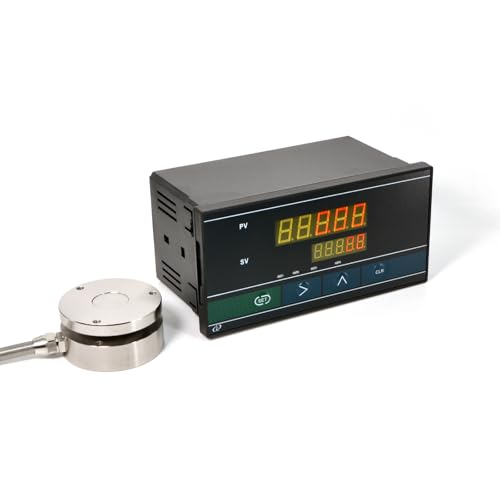
This compression load cell pair features a bellows-based sensing element, a five-digit high-brightness LED indicator, and a peak hold function. It suits industrial weighing, process control, and applications where peak data capture and clear readouts are critical. The device supports scalable capacity with robust stability for long-term operation.
DEFY 1K S-Type Load Cell

The DEFY 1K S-Type load cell delivers a compact, high-sensitivity profile with low deflection, suitable for material testing, automation, and precise force measurement. Constructed from stainless steel in many variants, it provides reliability in challenging environments and is commonly used in research and industrial settings that demand accurate force data.
ATO 500kg Pancake Load Cell

The 500 kg pancake load cell is a low-height, sealed solution with good anti-eccentric load performance and a 0.05% F.S. accuracy rating. Its compact profile and robust construction make it ideal for industrial weighing, material testing, and force measurement tasks where space efficiency matters and high precision is required.
ATO 10ton Tension and Compression Load Cell
Note: This option is listed for broader context of ATO’s line. It covers high-capacity needs with the same pancake, low-profile concept that benefits compact installations, combined with precision strain-gauge technology and a wide supply range for tension and compression measurements.
Buying Guide
Key considerations when choosing a low force load cell include capacity range, form factor, accuracy, sensitivity, and environmental durability. For small-space applications, prioritizing a compact footprint (inline or pancake style), stainless steel construction, and a sensitivity in the 1.0-1.5 mV/V range helps ensure stable readings. If peak data is important, look for models with peak hold or data logging features. For process control, a bellows or diaphragm design can reduce bias drift, while a sealed, corrosion-resistant option is preferable in harsh environments.
Performance perspectives:
- Low-range sensors (10 kg, 100 kg) excel in bench-top experiments and precision testing but keep an eye on mounting compatibility and adhesive or thread connections.
- Mid-range pancake and bellows designs offer robust anti-eccentric loading and quick integration into automation lines, often with easy readouts via integrated indicators.
- Industrial-grade versions (500 kg and above) emphasize reliability, sealed housings, and long-term stability, suitable for production lines and quality control.
Integration tips:
- Confirm input and output voltage ranges for compatibility with your data acquisition system or indicators.
- Check mounting hardware and thread sizes to ensure proper fit within existing fixtures.
- Assess environmental exposure (dust, moisture, temperature) to select a sealed unit if needed.