Answering your search for reliable line level isolation transformers, this guide compares top options for audio engineers, studio setups, and equipment racks. Each pick targets a different use case—from professional audio isolation to medical-grade power protection. Best for studio pros needing hum-free signals, home theater enthusiasts seeking clean lines, and technicians requiring robust surge control. Below is a quick summary of five strong picks and who they’re best for.
| Product | Brand | Best For | Key Benefit |
|---|---|---|---|
| Whirlwind ISOXL Line-Level Isolation Transformer | Whirlwind | Live stage and studio line-level signals | Reliable XLR isolation for mic/line paths |
| Hammond Isolation Transformer, 237V / 290W | HAMMOND | High-power, voltage-isolated equipment | High power with dual voltages |
| Isolation Transformer, 3RS7005-1FW00 | OWMEAKNKZR | Custom input/output configurations | Flexible input 24–240V with multi-output options |
| Isolation Transformer / Ground Loop Isolator | MCM | RF/Coaxial isolation in tight setups | RF isolation to minimize hum in coax paths |
| Radial Twin-Iso Bundle | Liquid Audio | Two-channel isolation for pro audio | Transformer-based isolation and buzz reduction |
Whirlwind ISOXL Line-Level Isolation Transformer
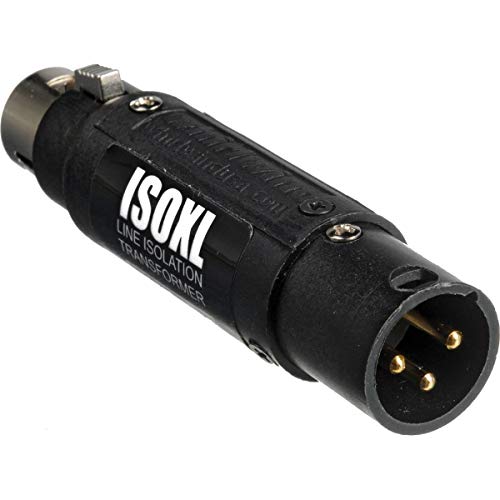
The Whirlwind ISOXL offers a compact line-level isolation path using 3-pin XLR connections. Best for stage or studio setups needing clean, hum-free signals between balanced sources and destinations. This unit suits performers, engineers, or broadcast environments that rely on dependable XLR isolation. A potential limitation is feature simplicity; it provides essential isolation without extra multi-output options.
Hammond Isolation Transformer, 237V / 290W

Hammond’s isolation transformer provides a higher power rating with dual secondary voltages (237V and 6.6V). It’s best for equipment racks or installations requiring stronger isolation and multiple voltage rails. Consider this option if you need to power devices with different voltage needs from a single source. A caveat is the lack of detailed plug type information in the listing, which can affect compatibility planning.
Isolation Transformer, 3RS7005-1FW00

Model 3RS7005-1FW00 emphasizes flexibility with UC 24-240V input and multiple output options, including 0-10V and 0/4-20mA interfaces. It’s well-suited for control systems, analog signal paths, and instrumentation where variable outputs matter. Best for technicians needing configurable input/output ranges, though the product may require careful wiring knowledge to maximize its multi-volt capability.
Isolation Transformer / Ground Loop Isolator
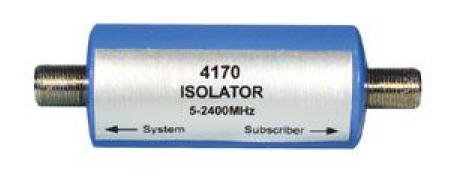
This MCM isolator targets RF environments, with an operational range spanning 5–2400MHz, including LTE bands. It is designed to isolate coaxial paths and reduce AC hum by maintaining common electrical potential across connected devices. It should be used on devices powered from the same outlet or power strip to be effective. A limitation is that it does not provide a path for AC or DC voltages through the device, limiting its use to specific RF isolation tasks.
Radial Twin-Iso Two Channel Isolator Bundle

The Radial Twin-Iso bundle combines two-channel isolation with a premium XLR cable and polishing cloth. It is designed to eliminate hum and buzz by providing solid transformer-based isolation between pro audio devices. Best for studios, live rigs, or broadcast setups needing robust channel-to-channel isolation. A limitation is the bundled alongside gear, which may be more suitable for users seeking a complete isolation solution rather than a single module.
Buying Guide: Key Considerations For Choosing Line Level Isolation Transformers
What level of isolation do you need? For most pro audio tasks, transformer-based isolation improves signal integrity by decoupling ground paths and reducing hum. If you handle high-power equipment or multiple voltages, look for a unit with higher wattage and dual secondary outputs. Compatibility matters: verify connector types (XLR, 3-pin) and input/output voltages.
- Application scope: on-stage, studio, or RF/coax environments? Choose accordingly.
- Power rating and voltage: ensure the transformer can handle peak loads without overheating.
- Number and type of outputs: one-channel vs two-channel, and voltage flexibility.
- Ground loop reduction: transformer quality and shield design influence hum elimination.
- Size and mounting options: rack-mountable units are ideal for studios; compact units for field use.
FAQ
- What is a line level isolation transformer? It electrically isolates two signal paths to reduce hum and ground loops in audio or control signals.
- When should I use an isolation transformer? Use it between audio sources and processors, or between floor-stage equipment, to prevent noise transfer and protect equipment.
- Do isolation transformers affect sound quality? They can improve clarity by removing hum, but some devices may require careful integration to avoid impedance changes.
- Can I use a general power transformer for audio isolation? No, dedicated line-level isolation transformers are designed to preserve signal integrity and provide correct impedance matching.
- Are there safety considerations? Ensure proper grounding and avoid overloading the transformer’s rated wattage to prevent overheating.
- What’s the difference between RF grounding isolators and audio isolation? RF isolators target hum and interference on coax/antenna paths, while audio isolators focus on preventing ground loops in audio gear.