LiFePO4 (lithium iron phosphate) batteries are a common choice for solar, RV, off-grid, and marine applications in the United States. This guide highlights five high-quality models that suit a range of uses—from emergency backup lighting to recreational vehicle systems and boat power. Each option emphasizes long cycle life, safety protections, and scalable configurations. Below is a concise summary of the selected products to help you compare at a glance.
| Product | Capacity | Key Benefit | BMS Features |
|---|---|---|---|
| NERMAK 12V 10Ah | 12V, 10Ah | High cycle life; versatile small form factor | Built-in 10A BMS |
| SEFEPODER 12V 20Ah | 12V, 20Ah | Strong 4000+ cycle life; series/parallel capable | Built-in 40A BMS |
| DR.PREPARE 12V 20Ah | 12V, 20Ah | Grade A+ cells; robust safety protections | Built-in 20A BMS |
| GRENERPOWER 12V 100Ah | 12V, 100Ah | High capacity for RVs and home storage | 100A BMS |
| MARSENERGY 12V 200Ah | 12V, 200Ah | Bluetooth monitoring; deep cycle durability | Built-in 200A smart BMS |
The five products below illustrate a spectrum of LiFePO4 battery capabilities, from small-scale backup lighting to large-scale energy storage. Each section includes a direct link to the Amazon product page, a visual, and a concise feature-derived overview to help you compare real-world performance and compatibility.
NERMAK 12V 10Ah LiFePO4 Battery

NERMAK’s 12V 10Ah LiFePO4 battery is designed for light-duty, flexible power needs across camping, small electronics, and kids’ ride-on toys. Its built-in BMS provides protection against overcharge, over-discharge, over-current, and short circuits, helping maintain safety and longevity in varied environments. With an estimated 2000+ deep cycles, it outlasts traditional lead-acid options and reduces maintenance. The unit’s broad 12V platform supports emergency lighting, small routers, and compact UPS systems, making it a practical choice for portable power kits and small solar projects.
The compact footprint and extended cycle life make this model appealing for users prioritizing reliability in compact setups. It is not intended as a motorcycle starter battery, so it aligns better with stationary or semi-mobile applications such as RVs, boats, or off-grid shelves. Users should ensure compatible charging gear and regulators are in place to maximize performance and safety.
SEFEPODER 12V 20Ah LiFePO4 Battery

SEFEPODER’s 12V 20Ah LiFePO4 model emphasizes long life and modularity. With a robust 4000+ cycle capacity, it is well-suited for lighting systems, power wheels, fish finders, and other low-to-mid power needs. The battery supports series and parallel configurations (up to four in series) and provides a continuous discharge rating up to 20A, with 10A fast charging. The built-in 40A BMS protects against common fault conditions and contributes to safer operation in diverse environments, including outdoor setups and high-heat conditions.
Users can leverage Seres/parallel stacking to scale capacity for larger systems. The product’s weight and size are balanced for RVs, boats, and backup packs, while the BMS safeguards enhance reliability in variable charging sources. As with all LiFePO4 packs, proper charging equipment that matches the BMS’s limits is essential to maintain longevity and performance.
DR.PREPARE 12V 20Ah LiFePO4 Battery

DR.PREPARE offers a 12V 20Ah LiFePO4 battery featuring Grade A+ cells with a built-in 20A BMS. The unit emphasizes durability in challenging environments with IP56-rated water and dust resistance. Its six-protection safeguards guard against high temperature, overcharge, over-discharge, overcurrent, short circuit, and auto balance, contributing to longevity across various weather conditions. The battery is designed for series and parallel connections, enabling scalable systems from 12V backups to larger 24V or 36V configurations as needed.
With a focus on long lifespan—advertised as over 4,000 cycles—this model provides a compelling option for budget-conscious users seeking high cycle life without frequent replacements. The environmental advantages of LiFePO4 chemistry extend beyond lifecycle cost, reducing the environmental footprint of power storage. For integrators, planned attention to charge sources and series/parallel configurations helps ensure consistent performance.
GRENERPOWER 12V 100Ah LiFePO4 Battery

GRENERPOWER’s 12V 100Ah LiFePO4 battery targets higher-capacity needs for RVs, home energy storage, off-grid setups, or trolling motor systems. It features an upgraded cylindrical A-grade cell design and a generous 100A BMS, enabling substantial power delivery with enhanced heat dissipation. The pack is lightweight for its capacity and claims deep-cycle longevity with up to 15,000 cycles, presenting a compelling option for users who require more energy storage in a compact footprint. The Group 24 form factor aligns with many RV and marine battery compartments.
Note that this unit is designed for energy storage rather than engine starting. Its quick charging and reliable protection system support multi-battery configurations for larger installations. For users upgrading from lead-acid, GRENERPOWER offers a straightforward replacement path with fewer maintenance intervals and a longer service life, provided that charging equipment and depth of discharge strategies are properly managed.
MARSENERGY 12V 200Ah LiFePO4 Battery
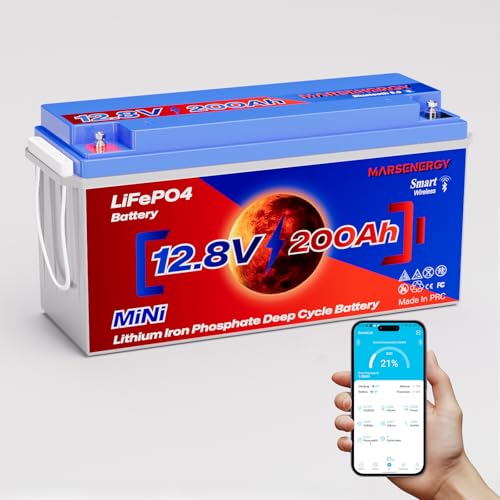
MARSENERGY presents a 12V 200Ah LiFePO4 option with Bluetooth monitoring for real-time voltage, current, SOC, and temperature. The integrated Bluetooth app allows quick checks and operational tweaks, a valuable feature for remote systems and off-grid setups. The battery is rated for deep cycles with claims of a long lifespan, including substantial cycle life numbers. A low-temperature protection feature helps preserve performance in colder climates, while the sturdy build supports RVs, trolling motors, boats, solar panels, and camping scenarios.
Potential users should consider the Bluetooth monitoring ecosystem in their overall system design, ensuring compatible chargers and inverters. The high capacity supports more demanding loads, yet installation should account for space, weight, and battery management to maximize safety and longevity in a variety of environments.
YEAGULCH 12.8V 100Ah Mini LiFePO4 Battery

YEAGULCH’s 12.8V 100Ah mini LiFePO4 battery emphasizes a compact, scalable approach to energy storage. The package highlights a long lifespan—thousands of deep cycles at full or partial DoD—and expandable series/parallel connections to build multi-unit banks up to 48V, though operators should respect recommended limits. With up to 95% usable capacity and compatibility with solar, RV, marine, and off-grid workflows, this unit targets users seeking flexible, modular power in tight spaces.
The design caters to straightforward integration with common inverters and chargers, enabling smooth upgrades from lead-acid systems. As with all high-capacity LiFePO4 modules, planning for thermal management, connection wear, and BMS compatibility is essential for stable operation over many years.
Buying Guide: Choosing the Right LiFePO4 Battery
- Capacity and voltage: Align Ah rating and system voltage with your load profile. Higher Ah and proper voltage support longer runtimes for RVs, boats, and home backups.
- Cycle life and depth of discharge: LiFePO4 cells typically offer thousands of cycles. Consider systems that permit deep discharge without harming longevity.
- BMS protections: Look for smart BMS features such as overcharge, over-discharge, overcurrent, short circuit, and temperature protections. A balanced BMS helps prevent premature failures and enhances safety.
- Physical footprint and weight: Ensure the battery fits your compartment and that weight is compatible with mounting hardware and safety limits.
- Series/parallel expansion: If you anticipate scaling, verify that the battery supports safe stacking in series or parallel and identify any maximum limits.
- Remote monitoring: Bluetooth or app-based monitoring can simplify system maintenance, especially for off-grid or remote installations.
- Temperature management: Low-temperature cutoffs and thermal protections help maintain performance in cold or hot environments; confirm operating temperature ranges.
- Environmental and safety considerations: LiFePO4 is inherently safer than many chemistries, but proper charging, ventilation, and fuse protection remain important.
- System compatibility: Check with your inverter, solar controller, and charging gear to ensure compatible charging profiles and maximum discharge rates.
- For small applications or portable setups, consider 12V 10–20Ah options for lightweight devices and lighting.
- For medium-sized off-grid or RV systems, 100Ah units strike a balance between space, weight, and runtime.
- For home energy storage or marine use, larger packs (200Ah and above) provide robust capacity, especially when paired with smart monitoring and scalable bank configurations.
Overall, the best LiFePO4 battery choice depends on your intended use, the required scalability, the availability of compatible charging gear, and your tolerance for space and weight in the installation area. Safety protections and long cycle life are strong indicators of durable, reliable energy storage across diverse American power needs.