Answering the common buyer question, these LED panel lights are designed to replace traditional kitchen lighting with slim, energy-efficient, and color-adjustable options. They’re best for homeowners seeking even illumination, low maintenance, and tunable color temperatures to suit cooking, dining, or task areas. The top five picks below cover flush-mount and surface-mount styles, with a focus on brightness, color temperature options, durability, and dimming compatibility.
Summary of selected products
| Product | Best For | Key Benefit |
|---|---|---|
| Lithonia Lighting 1×4 LED Flat Panel Light | Small kitchens or closets needing flexible color temperature | Switchable CCT (3500K/4000K/5000K) and long life |
| Lithonia Lighting 2×4 LED Flat Panel Light | Medium to large kitchens or garages with uniform light | Same CCT options, higher lumen output for bigger spaces |
| AIKVSXER 6 Pack 1×4 LED Flat Panel Light Surface Mount | Value-focused installs or multiple rooms | High brightness, 3 CCTs, and dimming |
| GT-Lite 2’x4′ 5500 Lumen LED Panel | Home or office with 5 color temps | 5 CCTs, high CRI, robust construction |
| Lithonia Lighting 2×2 LED Flat Panel Light | Compact kitchen islands or hallways | Strong performance in a smaller footprint |
Lithonia Lighting 1×4 LED Flat Panel Light

Best for small kitchens or closet spaces that require flexible color temperature and reliable, long-lasting light. This 1×4 panel offers switchable color temperature options (3500K/4000K/5000K) for varied tasks—from food prep to evening dining. The high-efficiency driver supports energy savings and a long lifespan with dimming compatibility when used with a triac dimmer.
Who it’s best for: homeowners needing adjustable warmth in a compact ceiling panel without creating clutter. Why selected: it combines versatility with durable construction and flicker-free illumination. One limitation: dimming performance depends on a compatible dimmer switch.
Lithonia Lighting 2×4 LED Flat Panel Light
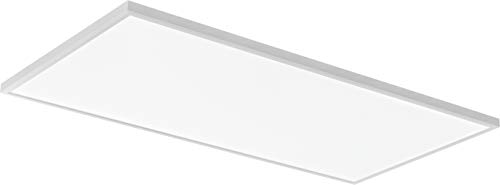
Best for larger kitchens or garages that need ample, uniform light. The 2×4 panel mirrors the 1×4’s advantages with switchable color temperature (3500K/4000K/5000K) and a high-efficiency LED driver for longevity. It’s well-suited for spaces demanding broad, even illumination and can support dimming with compatible switches.
Who it’s best for: rooms where brightness and range of color temperature matter more than size constraints. Why selected: higher lumen output supports multi-task zones; caution: installation may require additional ceiling space for the larger panel.
AIKVSXER 6 Pack 1×4 LED Flat Panel Light

Best for value-driven installations or multiple rooms needing quick, consistent lighting. This 1×4 panel offers 5500 lumens per unit and selectable 3000K/4000K/5000K colors, plus 10-100% triac dimming. The slim 0.98-inch design helps with low-profile ceilings and reduces glare. A caution: continuous-on usage with dimming requires a compatible dimmer and may not include a wall switch in all packages.
Who it’s best for: budget-conscious buyers planning several fixtures. Why selected: strong brightness-to-cost ratio and broad color options; limitation: wall switch compatibility must be verified for dimming control.
GT-Lite 2’x4′ 5500 Lumen LED Panel

Best for versatile spaces requiring five color temperatures and high CRI. The GT-Lite panel supports 2700K to 6500K, enabling precise mood and task lighting. Aluminum housing provides durable construction, and the sealed design minimizes shadows and dark spots even after long-term use.
Who it’s best for: offices or kitchens where color temperature flexibility is important. Why selected: 5 CCT options and robust build; caution: actual performance can vary with room brightness and reflection.
Lithonia Lighting 2×2 LED Flat Panel Light

Best for compact kitchen islands or hallways where space is tight but bright, even lighting is required. The 2×2 panel offers switchable color temperature (3500K/4000K/5000K) and triac dimming for energy savings with compatible dimmers. Long-life performance supports low maintenance in busy spaces.
Who it’s best for: small layouts needing reliable brightness. Why selected: compact footprint with strong universal usability; caution: ensure ceiling depth is sufficient for installation.
Buying Guide: Key Considerations When Choosing Kitchen LED Panel Lights
- Brightness and area coverage: larger spaces benefit from higher lumens; match panel size to room footprint.
- Color temperature options: 2700K-6500K range covers warm to daylight tones; consider tasks like cooking versus dining when selecting CCT.
- Dimming compatibility: confirm triac or driver-dimming compatibility with your existing switches or dimmers.
- Energy efficiency and life span: look for long-lifetime LEDs and certified drivers for reliability and lower maintenance.
- Mounting style: flush-mount panels are sleek for low ceilings; surface-mount options fit rooms with ceiling constraints.
- Build quality: consider aluminum housing and sealed or damp-location ratings for kitchens with humidity or steam.
- Installation considerations: ensure ceiling space, wiring access, and dimmer compatibility align with the fixture’s requirements.
Frequently Asked Questions
- What is the best color temperature for a kitchen?
Most kitchens benefit from a neutral to cool white (3500K-5000K) that provides true color rendering for food preparation and cooking tasks. - Can LED panel lights be used with existing dimmers?
Yes, if the panels are listed as dimmable and your dimmer is compatible (triac dimming). Check the product specs for dimming range. - Are larger panels better for bright rooms?
Generally yes, larger panels or higher-lumen fixtures provide more uniform illumination, reducing shadows in bigger kitchens. - Do LED panels require special installation?
Most can be installed in standard drop ceilings or ceilings with basic wiring; follow manufacturer guidelines and local electrical codes. - How long do LED flat panels last?
Many panels offer long life with low lumen depreciation, often described as 60,000 hours or more, depending on usage and environment.