Choosing the right inline bathroom exhaust fan involves balancing airflow, noise, and installation flexibility. This guide highlights five top performers, offering strong ventilation, low noise, and easy setup for American homes. Each option includes key features to help you compare effectively and pick the best fit for bathrooms, attics, kitchens, or laundry spaces.
| Product | Airflow (CFM) | Noise/Speed | Installation | Unique Benefit |
|---|---|---|---|---|
| ALORAIR 6 Inch Inline | 300 | Ultra Quiet | Ceiling or Hanging | High airflow with quiet operation |
| ALORAIR 4 Inch Inline | 170 | 60 dB | Ceiling or Hanging | Compact yet powerful for small spaces |
| LEOKV 2 Speeds 200 CFM | 200 | Low noise (centrifugal blower) | Flexible mounting | Two-speed balance of power and sound |
| MIDCVFRUN 2 Speed 200CFM | 200 | 1.2 – 1.5 Sonnes | Remote mount possible | Switchable speeds for comfort |
| GROWNEER 6 Inch 340 CFM | 340 | Silent with filtration | Multiple mounting options | Dual-mode with built-in filtration |
ALORAIR 6 Inch Inline – Ultra Quiet 300 CFM

The ALORAIR 6 Inch Inline Exhaust Fan delivers robust air movement with up to 300 CFM, designed for bathrooms, attics, kitchens, and garages. Its strong ventilation quickly reduces humidity, odors, and hot air, improving comfort and reducing condensation on walls. The unit is marketed as ultra-quiet, making it suitable for living spaces where noise is a concern. Installation is flexible, with a hanging kit and screws that support ceiling or suspended mounting. Maintenance is straightforward, and the fan is positioned to minimize disruption in busy households.
ALORAIR 4 Inch Inline – Ultra Quiet 170 CFM

The ALORAIR 4 Inch model provides 170 CFM of airflow with a focus on quiet operation, claiming around 60 dB performance in attic-mounted setups. It shares a similar design philosophy with the 6-inch version—strong ventilation paired with low noise. The kit typically includes mounting hardware for ceiling or hanging installation, making it adaptable to various attic layouts. This size suits smaller baths or multi-room ventilation projects where space constraints limit larger inline fans.
LEOKV 2 Speeds 200 CFM Inline Fan
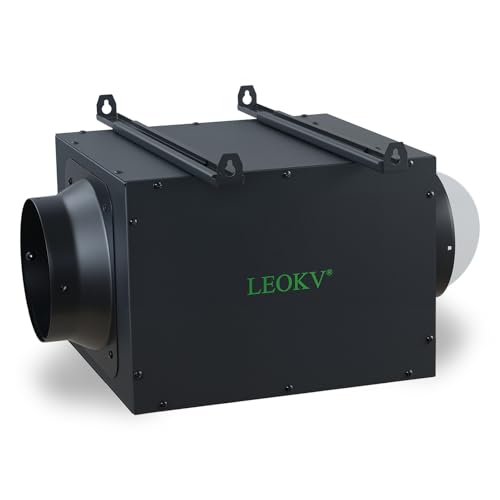
LEOKV’s 2-speed inline fan emphasizes balance between airflow and quiet operation. With 200 CFM, it is designed for attic or roof installations that serve multiple rooms, improving overall air quality while minimizing noise through a centrifugal blower. The unit ships with a mounting bracket and adapters that support flexible ceiling or hanging installation. The dual-speed feature helps tailor exhaust capacity to seasonal needs, potentially saving energy while avoiding unnecessary noise during low-traffic periods.
MIDCVFRUN 2 Speed 200CFM Inline Fan
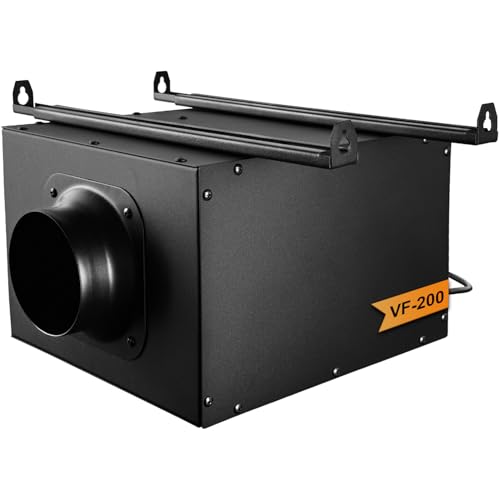
MIDCVFRUN’s 2-speed inline fan offers 200 CFM with selectable high/low settings, balancing air volume and noise. On high, it can move significant airflow at about 1.5 sones, while the low setting reduces output to 130 CFM at roughly 1.2 sones for quieter bathrooms or bedrooms nearby. It includes a damper to minimize backdrafts and is designed for remote mount configurations, making it adaptable for bathrooms, garages, attics, or kitchens where duct routing varies. The fan emphasizes ease of installation and maintenance, with a setup that fits many spaces.
GROWNEER 6 Inch Inline With Filter

The GROWNEER inline fan combines high airflow with filtration options. In the 340 CFM range, it’s designed for rapid moisture and odor removal, particularly in bathrooms, attics, or garages. It features a dual-mode setup: a powerful exhaust mode for quick venting and an air purification mode that includes a triple-stage filtration system (pre-filter, activated carbon, and HEPA) to reduce dust, pollen, odors, and formaldehyde. The unit supports multiple mounting methods, including wire rope hoisting or beam mounting, and its extendable frame accommodates spaces with varying clearance. Maintenance is simplified by a downward-facing filter door for easy access.
Buying Guide: Key Purchase Considerations
Airflow needs depend on room size, ceiling height, and whether the fan will serve a single bathroom or multiple spaces. Higher CFM generally means faster moisture removal but can require more powerful ducting and potentially more noise if not well designed. Look for models with centrifugal blowers or engineered quiet bearings to reduce sound at higher speeds.
Noise is a common concern in living areas. Adjustable-speed options help tailor performance to comfort, with many units offering a low-noise setting that still maintains adequate ventilation. Attic or remote mounting can also reduce perceived noise inside living spaces, making installation choice an important factor.
Installation flexibility matters when duct routes are constrained. Fans that support ceiling or hanging installation, as well as multiple mounting brackets, provide resilience in older homes or complex attic layouts. Duct diameter compatibility (4 inch vs 6 inch) can influence both airflow and noise, so match the fan to existing ductwork when possible.
Filtration and purification features add value in homes with pets, heavy cooking, or smoke exposure. Models with multi-stage filtration or optional filters can improve indoor air quality beyond simple moisture removal. For spaces with formaldehyde concerns or strong odors, a fan with an activated carbon filter or HEPA filtration provides an extra layer of filtration.
Maintenance access is another practical factor. Downdraft or downward-facing access doors simplify filter changes and cleaning, reducing maintenance time. Regular inspection of housings, motors, and dampers helps maintain performance and prolongs lifespan.
Cost of ownership includes energy usage and potential electricity savings from providing proper ventilation. Two-speed or variable-speed models can lower energy use by enabling lower continuous operation while still meeting moisture control needs. Always verify that the duct length and bends align with the fan’s maximum performance rating to avoid efficiency loss.
Finally, consult local building codes or an HVAC professional if you’re upgrading an existing system or venting to the outdoors. Proper venting prevents condensation elsewhere in the home and ensures safe, effective operation.