Electric tankless water heaters deliver hot water on demand, saving space and energy by heating water only when needed. This guide highlights five top options, spanning compact under-sink models to higher-capacity units suitable for whole-home use. Each review lists core features, performance notes, and installation considerations to help you choose the right model for American homes seeking efficient, reliable hot water without a bulky storage tank.
| Product | Brand | Key Benefit |
|---|---|---|
| EcoSmart ECO 11 | EcoSmart | Compact, energy-efficient, wall-mountable |
| ECOTOUCH ECOTOUCH 14kW | ECOTOUCH | Smart self-modulating with solid flow control |
| Rheem RTEX-24 | Rheem | High output, reliable performance, adjustable temp |
| Westinghouse APOLO-14kW | Westinghouse | Smart WiFi control, steady on-demand hot water |
| DOYXC 110V 3000W | DOYXC | Under-sink, portable, compact with digital display |
EcoSmart ECO 11: Compact Tankless Heater With Self-Modulating Tech

The EcoSmart ECO 11 offers on-demand hot water with a compact footprint. It uses patented self-modulating technology to adjust energy use based on flow, delivering consistent temperature within one degree of the set point. With a 13 kW rating at 240 volts, it draws up to 54 amps. The unit is roughly 11.5 x 8 x 3.75 inches, making it suitable for installation on a wall or at points of use. It’s designed to be 99% energy efficient, heating water only when needed. This model is ideal for small homes or single-outlet installations.
Key considerations: ensure your electrical panel and wiring can handle 54 A at 240 V, and verify that your hot water demands can be met with a single unit or whether multiple devices are needed for simultaneous usage.
ECOTOUCH 14kW Tankless Electric Water Heater

The ECOTOUCH ECOTOUCH 14kW unit provides instant hot water with a max flow of about 3.38 GPM, suitable for 2–3 sinks or a single shower. It operates on 240V and can draw up to 58 A, so installation requires a 60A double-pole breaker and appropriately gauge wiring (6 AWG with grounding). Self-modulating control and smart chip monitoring help stabilize temperature and energy use. The appliance includes ETL and UL qualifications for safety and reliability. It’s a strong choice for households demanding higher flow at multiple points of use.
Important installation notes: confirm electrical capacity, gas-free requirements, and space for venting and pipe connections. Consulting a licensed electrician is recommended to ensure code compliance and safe operation.
Rheem RTEX-24: High-Capacity Electric Tankless Unit
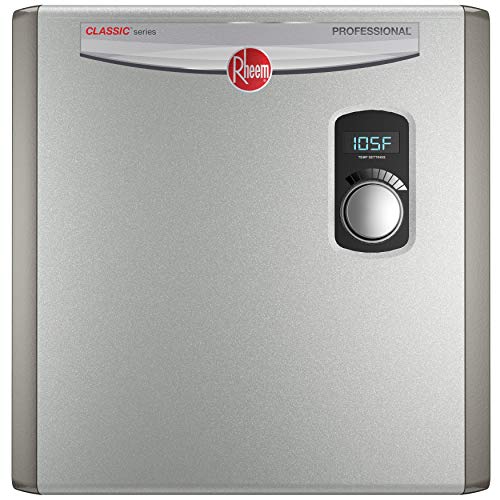
Rheem’s RTEX-24 is designed for higher-demand scenarios with 24 kW at 240V. It requires robust electrical support: three 40-amp double-pole breakers and a typical 200-amp service. The model supports continuous hot water with a rating of up to 4.4 GPM, depending on inlet water temperature. Temperature is adjustable in 1-degree increments via a dial and digital display, allowing precise control across a range of climates and household needs. It’s well-suited for whole-home use in larger residences where multiple fixtures rely on hot water.
Installation considerations include ensuring panel space is available, adequate heat dissipation, and proper plumbing connections. The unit is field-serviceable, which can simplify maintenance over time.
Rheem 18kW 240V Tankless Electric Water Heater
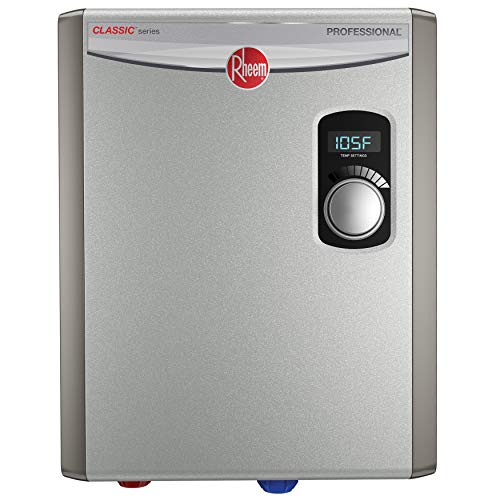
This Rheem unit delivers strong performance at 18 kW and 240V, featuring an external digital thermostatic control with LED display for precise temperature management. It uses durable copper immersion elements and offers self-modulating power to adapt to hot water demand. Flow rates can approach 4.4 GPM, making it a fit for modest whole-house usage or shared fixtures. The design emphasizes durability and serviceability in typical residential installations.
When planning, verify electrical service capacity and compatibility with local electrical codes. The advanced self-modulation helps optimize energy usage, but it still requires a dedicated circuit arrangement and proper venting where applicable.
Westinghouse APOLO-14kW Smart Tankless Water Heater
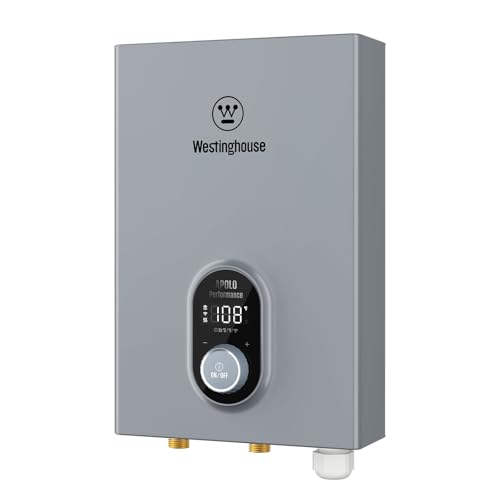
The Westinghouse APOLO-14kW is a smart, WiFi-enabled tankless heater that supports voice control via Alexa and Google Home. With a maximum flow of about 3.38 GPM and operation at 59 A, it’s designed for steady hot water in homes with a typical 60A breaker and 6 AWG wiring. It includes a real-time LED readout and app-based temperature adjustments in 1-degree increments. This model emphasizes remote monitoring and ease of integration into smart home setups, alongside reliable on-demand performance.
Smart features add convenience but require a solid home network. Ensure the electrical panel and breaker capacities align with the unit’s 59A draw and that local codes permit WiFi-enabled appliances in your installation area.
DOYXC 110V Under-Sink Tankless Water Heater
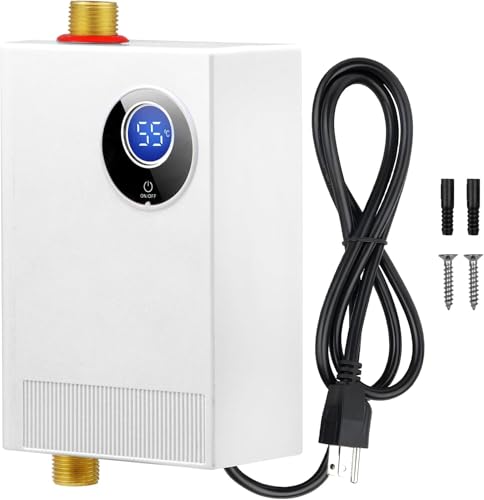
The DOYXC 110V unit brings compact, under-sink hot water at 3000W. It heats water instantly to 82°F (0.3 GPM) up to 131°F (0.5 GPM), with a digital display for straightforward temperature management. It is designed for wall-mounting and portability, suitable for kitchens, RVs, and small spaces. The unit emphasizes safety with IPX4 waterproofing, leakage protection, dry-heat protection, and automatic shutoff in non-working conditions. While not ideal for showers due to lower GPM, it’s a practical point-of-use solution for dedicated sinks or compact setups.
Note the lower flow rate; plan hot water usage accordingly. The compact form factor makes it easy to install in tight spaces and travel-friendly scenarios, though it may not replace a full-home system in larger households.
Buying Guide: Key Purchase Considerations For Electric Tankless Water Heaters
- Flow rate vs. temperature rise: Determine the maximum gallons per minute (GPM) you need at your coldest inlet water temperature. Higher GPM requires more wattage and a larger electrical service.
- Electrical capacity and wiring: Most higher-capacity units require 3x40A or 60A breakers and 6 AWG wiring. Verify panel space and aging wiring; consult an electrician to ensure code compliance and safety.
- Temperature stability: Self-modulating designs adjust power to maintain set temperature efficiently. Consider units with digital displays or app control for precise dosing.
- Installation footprint: Tankless heaters are wall-mountable and compact, but plumbing clearances and venting (where applicable) matter. Under-sink models suit small spaces; whole-home units fit larger residences.
- Safety features: Look for leakage protection, over-temperature protection, dry-fire protection, and UL/ETL approvals. These minimize risk and maintenance concerns over time.
- Smart features and integration: WiFi or app-enabled models offer remote monitoring and control, but require a reliable home network. Ensure compatibility with your ecosystem (Alexa, Google Home).
- Maintenance and serviceability: Field-serviceable elements and accessible components reduce downtime. Check warranty terms and local service availability.
- Climate considerations: In colder climates, inlet water is colder, reducing effective flow. Factor this into your selection to avoid undersized units.
Across the models listed, users should balance maximum hot water needs with electrical infrastructure. For small apartments or single-sink setups, compact units like EcoSmart ECO 11 or DOYXC provide reliable on-demand heat with ease of install. For households requiring simultaneous multiple fixtures, higher-capacity Rheem RTEX-24 or Westinghouse APOLO-14kW systems offer stronger performance and smart features. Always confirm local electrical codes and obtain professional installation if you are unsure about wiring and safety requirements.