Hot water on demand is a key feature in modern homes, especially in busy households where showers, dishwashing, and laundry run simultaneously. This article highlights five gas-powered tankless water heaters that deliver reliable on-demand hot water, explain how they differ, and help you choose the right model for your needs. Each option supports multiple outlets and emphasizes efficiency, safety, and performance. Use the quick comparison below to identify top choices, then read detailed product sections for deeper insights.
| Product | BTU | Type | Key Benefit | |
|---|---|---|---|---|
| Ranein Indoor 4.3 GPM | 4.3 | 100,000 | Indoor Tankless | Strong daily performance for a compact unit |
| FOGATTI Outdoor 8.1 GPM | 8.1 | 180,000 | Outdoor Tankless | High flow for multiple outlets, robust outdoors design |
| Rheem RTG-70XLN-3 Outdoor | 7.0 | 160,000 | Outdoor Tankless | High efficiency, external mounting suitability |
| Rheem RTG-70DVLN-3 Indoor | 7.0 | 160,000 | Indoor Tankless | Indoor-friendly compact design |
| APUS Propane 4.42 GPM | 4.42 | 95,000 | Indoor Tankless | Smart display with precise temperature control |
Ranein Natural Gas Tankless Water Heater (Indoor) 4.3 GPM

The Ranein unit offers a 100,000 BTU heating capacity with a 4.3 GPM flow, capable of supporting hot water for essential daily tasks across a bathroom, kitchen, and small living area. It eliminates the waiting period inherent in tanked systems, providing continuous hot water on demand. Seasonal adjustments are built in with a Four Seasons Function that automatically tweaks temperature output, while the Kitchen and Bathtub modes tailor output to common domestic scenarios. This model emphasizes compact installation without sacrificing reliability for typical household needs.
Key features include automatic temperature adjustments, a default kitchen-friendly 100°F output, and an adjustable bathtub mode. The unit is designed for indoor installation and focuses on reducing cold snaps with on-demand efficiency. This is an ideal option for smaller homes or apartments that require steady, immediate hot water for daily routines without the bulk of a storage tank.
Forimo Propane Tankless Water Heater (Indoor) 4.74 GPM

The Forimo unit delivers 4.74 GPM at up to 167°F, with a maximum 81,888 BTU/hour output. It is designed to supply hot water to 2–3 points of use simultaneously, making it suitable for two showers plus a sink or similar combos. Safety protections include flame failure, anti-freeze, and overheating safeguards, alongside a digital display for precise temperature control. The system uses propane (LPG) and is built to minimize gas consumption while maintaining consistent water temperatures under varying loads.
Users can expect precise temperature regulation through smart sensors and CPU technology, reducing hot–cold shocks. The device emphasizes energy efficiency with advanced combustion design and a modern LED display for easy operation. It is a practical choice for households that want reliable on-demand hot water with clear visibility into temperature settings and system status.
FOGATTI Natural Gas Tankless Outdoor Water Heater (180S Series)

FOGATTI offers a robust outdoor option with up to 8.1 GPM and 180,000 BTU. This model is designed for outdoor installation and includes a remote control panel for indoor operation, plus a bottom-mounted fan to improve safety and durability. The four-stage combustion system and temperature sensors maintain a tight ±1°F difference, providing reliable comfort across seasons. This unit is well-suited for homes with multiple simultaneous hot water demands, such as larger households or homes with several bathrooms and kitchen needs running at once.
Durability and weather resistance are emphasized in its outdoor design, with emphasis on reliable ignition, stable combustion, and consistent water temperature control. While it requires more space and outdoor installation, the high flow rate makes it a strong candidate for households with higher hot water needs or limited time to manage hot water usage across several outlets.
Rheem RTG-70XLN-3 Outdoor Tankless Natural Gas Water Heater
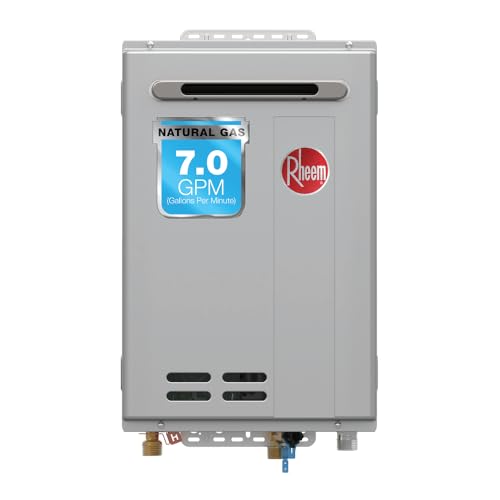
This high-efficiency outdoor model provides up to 7.0 GPM with 160,000 BTUs, designed for outdoor installation and robust daily use. Its metal cabinet supports durable outdoor operation and straightforward wall mounting by a qualified installer. With a focus on reliability and continuous hot water across multiple taps, this Rheem unit is a common choice for larger homes or properties with more complex hot water patterns. Its outdoor build trades off some interior space for high-output performance.
Rheem’s outdoor line emphasizes strong performance under peak demand, with a straightforward installation process for exterior walls. It is a practical pick for homeowners who prefer an outdoor system that can handle two to three bathrooms simultaneously, delivering consistent temperatures and rapid hot water delivery when needed.
Rheem RTG-70DVLN-3 Indoor Tankless Natural Gas Water Heater

This indoor 7.0 GPM model from Rheem provides 160,000 BTUs in a compact cabinet suitable for indoor installation. It’s built for wall mounting by a qualified installer and is designed to deliver fast, reliable hot water even during peak household demand. The unit balances performance, space efficiency, and ease of integration into existing plumbing, making it a convenient upgrade for homes where indoor installation is preferred or required by local codes.
With a focus on durability and consistent temperature, the RTG-70DVLN-3 remains a solid choice for two to three bathroom homes. It emphasizes ease of service and long-term reliability, which appeals to buyers who want a dependable system that blends with interior decor and space constraints.
Buying Guide: Key Considerations For Gas Tankless Water Heaters
- Flow rate and peak demand: Determine how many outlets you need to serve simultaneously. A higher GPM supports multiple showers, sinks, and appliances, but you’ll require a higher BTU rating and correct gas supply sizing.
- Gas type and venting: Decide between natural gas and propane models. Venting requirements differ by model and installation location (indoor vs. outdoor). Ensure you have proper venting and clearance per code.
- Vent pipe and exhaust safety: Tankless units generate high heat and require appropriate venting to avoid backdrafts and CO risks. Professional installation is often essential.
- Temperature control: Look for precise digital displays and responsive sensors. In households with sensitive users (children or elderly), consider models with multiple preset modes or programmable temperatures.
- Efficiency and emissions: Gas tankless heaters vary in efficiency (often expressed as a percentage) and environmental impact. Higher efficiency reduces gas consumption and operating costs over time.
- Indoor vs. outdoor installation: Indoor models save exterior space but require proper venting and air clearance. Outdoor units need weather protection and may have higher installation costs but offer flexible placement.
- Durability and materials: Stainless steel heat exchangers and corrosion-resistant components extend lifespan and reduce maintenance. Oxygen-free copper tanks can lower heat loss for better efficiency.
- Maintenance and service: Check service accessibility, warranty terms, and the availability of local technicians. A durable unit with easy access to components minimizes downtime.
- Sizing and local codes: Always match unit capacity to your climate, household size, and local building codes. Oversizing can waste fuel; undersizing leads to inadequate hot water.
- Installation considerations: Some units require professional installation, gas line upgrades, and venting modifications. Budget for professional fees as part of the total investment.
Choosing the right gas tankless water heater involves balancing flow needs, installation constraints, and long-term operating costs. For households with higher simultaneous demands, outdoor or high-GPM indoor models provide the most flexibility. If space is limited or indoor installation is necessary, compact indoor units with reliable temperature control are appealing. Regardless of choice, prioritize models with robust safety protections, precise temperature management, and durable construction to ensure consistent hot water and reliable performance over time.