Looking for reliable hot water solutions that pair well with home heating or air systems? This guide highlights five practical options. Each product is chosen for clear performance benefits, ease of use, and suitability for different buyer needs—whether you want easy sediment removal, portable heat, or under-sink efficiency. The selections cover maintenance tools, sediment removal aids, and compact electric heaters suitable for apartments, cabins, or small homes. Use this overview to compare features and pick the best fit for your specific scenario.
Summary table of chosen products:
| Product | |||
|---|---|---|---|
| Sediment Buster UL Verified V699054 Water Heater Flushing Tool | Maintenance-focused buyers who want safety-backed flushing | Requires proper instructions for use | |
| Sediment Gone Water Heater Sediment Removal Tool | DIY flushes with active agitation for stubborn sediment | Effectiveness depends on sediment buildup | |
| 2000W Immersion Water Heater (NiaoChao) | Quick heat for small volumes, travel, or temporary setups | Not a fixed kitchen/bathroom heater for continuous use | |
| Tankless Water Heater Electric 110V (AIYEZIDT) | Instant hot water at point of use | Limited to low to moderate hot water demand | |
| VEVOR 12 Gallon Tank Water Heater | Small apartments or remote outlets with steady supply | Storage capacity may limit simultaneous uses |
Sediment Buster UL Verified V699054 Water Heater Flushing Tool

The Sediment Buster tool is designed for safe, high-temperature flushing of water heaters. It carries UL verification for heat and pressure, signaling safety and reliability under demanding conditions. This tool is best for buyers who want clear instructions and video-guided setup to extend the life of water heaters and connected plumbing.
Best for: Homeowners who perform regular maintenance and prefer a verifiable, guided flushing process. It’s particularly suited for households aiming to reduce sediment-related inefficiencies.
Limitations: Proper use relies on following included instructions and videos. Inexperienced users should watch tutorials to avoid improper flushing techniques.
Sediment Gone Water Heater Sediment Removal Tool

The Sediment Gone tool actively stirs, loosens, and flushes stubborn sediment using a thread-on drain valve connection and a standard garden hose for controlled draining. Short bursts of air create internal agitation that breaks up compacted sediment during draining, enhancing sediment removal.
Best for: DIY applicants who want a proactive approach to flush out settled sediment and improve heating efficiency without professional service.
Limitations: Effectiveness varies with the degree of sediment buildup; heavy clogs may require additional steps or professional service.
2000W Immersion Water Heater (NiaoChao)

This portable immersion heater delivers rapid heating of up to 5 gallons of water in minutes, with a 304 stainless steel guard and an LCD thermometer for quick temperature checks. It is designed for safe use and is ideal for camping, temporary setups, or quick hot-water needs in a bucket or container.
Best for: Users needing fast, portable hot water for short tasks or outdoor use where fixed water heaters aren’t practical.
Limitation: Not intended as a primary home water heater; use within electrical safety guidelines and avoid long-term continuous operation.
Tankless Water Heater Electric 110V (AIYEZIDT)
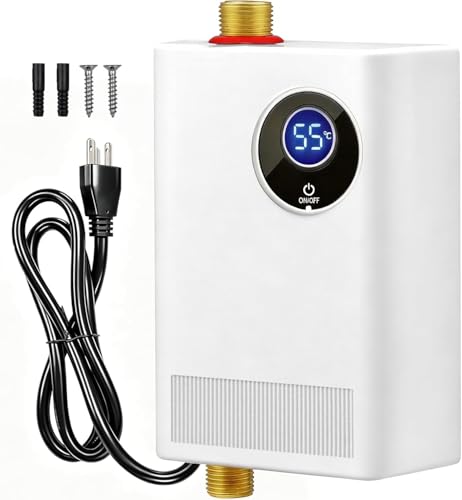
An under-sink tankless unit provides instant hot water at the point of use. It features safety protections, an IPX4 waterproof rating, and an LCD display to monitor status. It is best for small spaces needing quick, on-demand hot water for tasks like handwashing, dishes, or preparation in compact kitchens or bathrooms.
Best for: Buyers seeking on-demand hot water in tight spaces, without a large storage tank. Choose this if you want immediate hot water at a single outlet.
Limitation: Suited for low-to-moderate demand; multiple outlets may reduce available flow unless sized appropriately.
VEVOR 12 Gallon Tank Water Heater

This 12-gallon storage heater targets small apartments or remote outlets, offering a steady hot water supply for showers, washing, and general domestic use. It includes 20 mm thick foam insulation to minimize heat loss and keep water temperature steadier longer.
Best for: Individuals or couples in compact living spaces who prefer a storage solution with basic protections and reliable performance.
Limitation: Storage capacity may limit simultaneous use; plan around peak hot-water needs to avoid shortfalls.
Buying Guide: How to Choose the Right Hot Water Solution
- Demand assessment: Determine daily hot-water needs. Are you prioritizing instant hot water at a sink, or a steady supply for showers and laundry?
- Space and installation: If space is tight, under-sink or portable options offer flexibility. For broader use, a small storage tank can serve multiple outlets.
- Maintenance vs. simplicity: Maintenance tools help extend life but require some hands-on work. For minimal effort, consider plug-and-play immersion or tankless units with clear safety features.
- Safety features: Look for IPX4 waterproofing, dry-fire protection, over-temperature protections, and clear temperature displays to prevent scalding.
- Compatibility and installation: Ensure your electrical capacity supports 110V or higher models. Check drainage connections and compatibility with existing plumbing valves.
Frequently Asked Questions
- What is the best option for quick hot water at a single sink?
– A tankless under-sink unit (like AIYEZIDT) provides instant hot water at the point of use with compact installation. - Can sediment removal tools extend my water heater’s life?
– Yes. Regular flushing and sediment removal can improve efficiency and reduce clog-related issues. - Are portable immersion heaters safe for everyday use?
– They are suitable for temporary or travel use when used as directed and with water immersion only in appropriate containers. - Is a storage tank better than a tankless unit for small apartments?
– It depends on demand. A storage tank can support multiple uses but takes more space and can run out of hot water; a tankless unit saves space and provides on-demand water. - What maintenance should I perform regularly with these tools?
– Follow manufacturer instructions, inspect for leaks, and flush or remove sediment as needed to maintain efficiency.