The right Group 27 marine starting battery blends starting power with deep-cycle capability for boats, RVs, and other marine applications. This guide highlights five strong options, including traditional AGM and lithium models, to help you balance cranking power, depth of discharge, space, and maintenance. Each entry includes practical features to consider for starting engines, running accessory electronics, and enduring rough marine conditions.
| Product | Type | Capacity (Ah) | CCA | |
|---|---|---|---|---|
| Weize Dual Purpose AGM Battery BCI Group 27M | AGM Deep Cycle/Starting | 92 | 580 | Dual-purpose, quick charge, dual terminals |
| UPLUS BCI Group 27M Dual Purpose | AGM Deep Cycle/Starting | 92 | 800 | High starting power, vibration resistance |
| Redodo 12V 100Ah Bluetooth Dual-Purpose | LiFePO4 Deep Cycle/Starting | 100 | 900 | Smart Bluetooth monitoring, OTA updates |
| Interstate Marine Deep Cycle Battery 12V 100Ah | AGM Deep Cycle | 100 | 925 | Long life, thick plates for repeated cycles |
| Banshee BCI Group 27M Dual Purpose | AGM Deep Cycle/Starting | 90 | 600 | 2-year warranty, sealed design |
Weize Dual Purpose AGM Battery BCI Group 27M

The Weize BCI Group 27M is a dual-purpose AGM battery designed for both starting power and deep cycle duty. It features low internal resistance and high output to provide reliable performance with a long cycle life—claimed as up to twice the cycle life of traditional flooded batteries. The battery uses sealed AGM technology, which helps reduce maintenance and resist leakage. It lists a left-positive/right-negative terminal configuration and supports relatively quick charging. The included data suggests a 14.4±0.1V charging window with a current limit of 18.4A to reach a stable state in 2–3 hours, not exceeding 24 hours of charge time.
Key considerations for this model include its dual-purpose design, which suits boats requiring both engine cranking and essential auxiliary power. The 92 Ah capacity provides a balance between cranking and powering electronics during trips. Potential users should verify fitment in their battery tray and ensure compatible charging equipment is used to meet the specified voltage and current recommendations. As an AGM option, it should perform well in vibration-prone marine environments.
UPLUS BCI Group 27M Dual Purpose Marine Battery
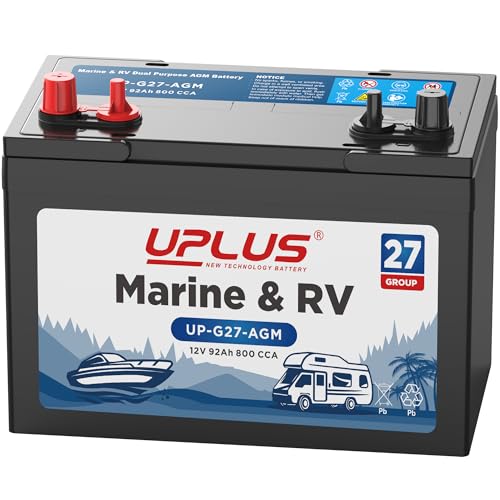
The UPLUS battery is positioned as a dual-purpose AGM unit with 92 Ah capacity and 800 CCA, designed for engines up to 350 HP. It emphasizes a space-saving design by combining starting and deep-cycle functions in a single unit, which helps streamline boat electrical systems. The battery touts extreme vibration resistance, making it suitable for rough waters and trailer transport. Its climate-ready construction includes sealed AGM technology to minimize maintenance and prevent leaks.
In practice, this battery targets boaters who want a single, compact solution without sacrificing cranking power or depth of discharge. The 800 CCA rating ensures robust engine starts, while the deep-cycle capability supports lights, navigation gear, and accessories during longer voyages. Prospective buyers should confirm their battery compartment dimensions and mounting orientation to ensure a proper fit, and they should follow manufacturer charging guidelines to optimize longevity.
Redodo 12V 100Ah Bluetooth Dual-Purpose Battery

Redodo offers a 12V 100Ah dual-purpose marine battery with 900 CCA and 1000 MCA, indicating strong starting power and solid deep-cycle performance. The lithium-based design implies higher energy density and lighter weight than many AGM equivalents, which can be advantageous for boats seeking weight reductions. A notable feature is Bluetooth 5.0 connectivity, enabling real-time status monitoring via a mobile app and energy reserve management. OTA (over-the-air) updates allow remote feature enhancements, a modern edge for marine electrical systems.
Key considerations for this lithium option include understanding that lithium chemistries require appropriate charging strategies and BMS protections. The Bluetooth and app ecosystem adds value for monitoring and safety. However, lithium batteries can have different charging and protection requirements compared with AGM models. Ensure compatible chargers and inverters are used and that the boat’s electrical system supports lithium operation. The 100Ah capacity, combined with high currents, suits boats with energy-hungry electronics and motors while offering longer cycle life.
Interstate Batteries Marine Deep Cycle Battery 12V 100Ah
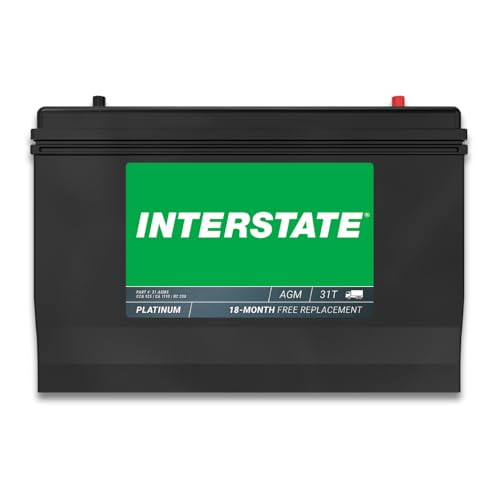
Interstate’s 12V 100Ah AGM deep-cycle battery emphasizes a robust design for marine use, with a focus on long service life. The product highlights thick plates intended to withstand repeated discharges and recharges, a common need for boats powering trolling motors, electronics, and other accessories. The 925 CCA figure indicates reliable engine starting capability, which is critical during cold starts or high-load conditions. The branding positions this model as a tough, commercial-grade option for demanding marine environments.
When evaluating, consider the balance between high cranking current and deep-cycle endurance. The AGM construction reduces maintenance and resists leaks, a practical choice for damp and saline conditions. Ensure the battery tray space, terminal orientation, and charging system meet manufacturer guidelines to maximize cycle life and performance. This option is well-suited for boats that require dependable starts and substantial auxiliary power across longer outings.
Banshee BCI Group 27M Dual Purpose

The Banshee BCI Group 27M is a sealed AGM deep-cycle battery designed to function as both a starter and a deep-cycle unit. It lists 90 Ah capacity and 600 CCA, offering moderate starting power with reliable deep cycling. The 2-year warranty adds a degree of assurance for buyers seeking durability and a straightforward replacement policy. The compact dimensions align with typical Group 27M trays, and the sealed design reduces maintenance needs and corrosion risk in marine environments.
As with any dual-purpose AGM, assess whether the 90Ah capacity meets your typical load profile. A balance between engine starting reliability and long-term power to accessories is essential for weekend boaters and occasional voyagers. Confirm tray fitment and terminal placements to ensure compatibility with your boat’s electrical layout. Warranty terms and service support are practical considerations for ongoing reliability on the water.
Buying Guide: Key Purchase Considerations For Group 27 Marine Batteries
- Battery chemistry: AGM vs lithium. AGM groups are maintenance-free and robust in vibration, while lithium options (like LiFePO4) offer higher energy density and longer cycle life but require compatible charging equipment and BMS management.
- Starting vs deep-cycle balance: Many group 27M batteries are dual-purpose, but some prioritize starting power (CCA) or deep cycling (Ah). Match the battery to your boat’s demand profile, including engine type and accessory load.
- Capacity and current: Higher Ah and CCA values improve starting reliability and available power, especially in cold climates or larger engines. Ensure the battery’s amperage aligns with engine start requirements and the lifespan of your electronics.
- Physical fit and terminals: Check dimensions, mounting orientation, and terminal arrangement (left vs right positive/negative). Ensure connectors and tray spaces align with the chosen model.
- Charging compatibility: Confirm charger output, voltage, and charging strategies (e.g., 14.4V for AGM, lithium-specific profiles). Improper charging can reduce life or damage the battery.
- Maintenance and seals: AGM batteries are sealed and maintenance-free, reducing corrosion risk. Lithium options also benefit from sealed designs but require battery management features for safety.
- Vibration and marine endurance: Look for rugged construction and vibration resistance if you operate in rough sea conditions or on trailer-towed boats.
- Warranty and support: A longer warranty reduces risk for high-use marine applications. Check what coverage includes and where service is available.
- Weight considerations: Lithium options typically weigh less than AGM equivalents for the same capacity, affecting trailer handling and boat performance.
- Cost of ownership: Lithium batteries may have higher upfront costs but longer cycles; AGM options often offer lower initial cost but shorter cycle life. Consider total cost of ownership over several seasons.
These considerations help align battery choice with vessel type, cruising patterns, and electrical requirements. When selecting a Group 27 battery, prioritize compatibility with your charging system, the expected load, and the environmental conditions typical to your boating experiences. The right balance of reliability, duration, and space efficiency will support consistent performance on the water without frequent replacements.