Answering the search for energy efficient, quiet cooling, these tower fans are designed to deliver strong airflow without a big energy bill or a noisy background hum. They’re ideal for bedrooms, home offices, and living spaces where comfort matters as much as efficiency. The top picks here suit different buyers: sleepers who need near-silent operation, tech lovers seeking smart sensors, and those who want powerful airflow without bulky units. Below, you’ll find a quick product summary and a buying guide to help you compare features side by side.
| Product | Best For | Key Benefit |
|---|---|---|
| DREO Tower Fan for Bedroom (Upgraded DC Motor) | Quiet sleepers and small offices | Ultra-quiet operation with strong airflow |
| LEVOIT Tower Fan for Bedroom | Large rooms and smart cooling | Smart sensors and broad coverage |
| DREO Tower Fan (4 Speeds, 3 Modes) | Versatile living spaces | Balanced cooling with timer options |
| DREO Tower Fan (9 Speeds, 4 Modes, Bladeless) | Large spaces and power users | High wind speeds with quiet performance |
| LEVOIT Tower Fan (Portable Desk Model) | Small desks and portable cooling | Compact, quiet, easy to move |
DREO Tower Fan for Bedroom With Upgraded DC Motor

Best for bedrooms and workspaces needing quiet, reliable airflow. This model uses an upgraded DC motor with TurboWind technology to deliver speeds up to 28 ft/s and coverage up to 34 ft. Its 20 dB quiet operation is enhanced by a Coanda-inspired impeller design, making it suitable for late-night work or sleep. The remote and touch controls simplify adjustments, with 8 speeds and 4 modes (Normal, Natural, Sleep, Auto) to tailor comfort. A potential caveat: like many high‑speed fans, peak settings may produce more noticeable airflow than lower modes.
LEVOIT Tower Fan for Bedroom With 28dB Quiet Operation

Designed for large spaces and quiet performance, this Levoit model emphasizes an aerodynamic airflow design and wide oscillation. It offers 25 ft/s wind speed, 1044 CFM, and 90° coverage, making it well-suited for living rooms or open-plan offices. Smart temperature sensing adds a responsive element to airflow, helping avoid overheating while preserving energy efficiency. Best for: rooms where steady, broad coverage and minimal noise are priorities. Limitation: some users may prefer more aggressive raw wind in extreme heat.
DREO Tower Fan for Bedroom, 90° Oscillating, 4 Modes

Best for larger interiors like living rooms and offices where a broad sweep is needed. This fan delivers up to 26 ft/s airspeed with a 90° oscillation and 28 dB quiet operation, built for long hours of use. It includes a remote, 8 speeds, and 3 modes to tune airflow. A caution: higher speed levels consume more energy, so use mid-to-low settings for continuous comfort.
DREO Tower Fan With 5 Speeds and 4 Modes
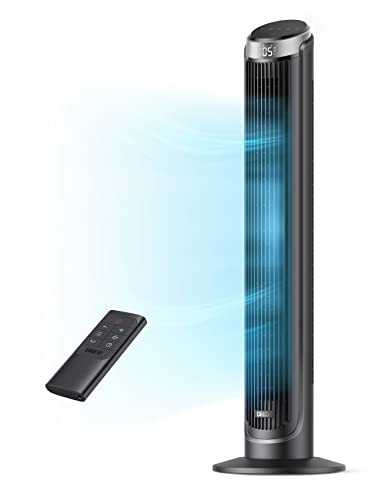
Best for bedrooms requiring ultra-quiet operation and practical timer control. This model runs at 28 dB in sleep-oriented modes, with 26 ft/s airflow and a 12-hour timer. The 90° oscillation helps distribute air evenly. Choose this if you value low noise and a straightforward control setup over maximum wind speed. Limitation: wind speed is strong but may be less adjustable at extreme settings for very large rooms.
DREO Tower Fan With Upgraded 9 Speeds and 4 Modes

Best for energy-conscious users who want broad control and high-speed airflow. The motor and aerodynamic design deliver up to 28 ft/s with 1397 CFM, ideal for rapid cooling of larger rooms. It emphasizes quiet operation at 20 dB and offers 9 speeds and 4 modes accessible via panel or remote. Limitation: high-performance settings can increase energy use, so balance speed with comfort to maximize efficiency.
Buying Guide: How to Choose an Energy Efficient Tower Fan
- Noise vs. power: If sleep is the priority, look for models rated around 20–28 dB in Sleep or Quiet modes. Some fans drop the display after a short period for complete silence.
- Airflow and coverage: Consider room size and desired reach. Fans with 90° oscillation and higher CFM cover larger spaces more evenly.
- Speed and modes: More speeds (6–9) plus modes like Natural, Sleep, Auto, and Turbo offer fine-grained comfort. For energy efficiency, avoid running the fan at full power longer than needed.
- Controls and convenience: Remote controls increase ease of use, especially for bedroom setup. A timer helps prevent overnight running and saves energy.
- Size and installability: Bladeless or bladeless-looking designs often blend better with decor and can be lighter to move between rooms. Ensure your space can accommodate the base footprint and height for effective airflow.
- Smart features: Some models include temperature sensors or auto-adjust features. These can improve comfort and reduce unnecessary running time.
Frequently Asked Questions
- What is the quietest energy efficient tower fan?
Look for models with 20 dB to 28 dB in Sleep or Quiet modes; many DREO and LEVOIT options in this list fit that range.
- Do tower fans use a lot of electricity?
Tower fans are generally energy efficient compared to central AC and window units, especially at lower speeds and with timers.
- Which features improve energy efficiency?
Automatic sensors, smart timers, and selecting Natural or Sleep modes can reduce unnecessary energy use.
- Should I choose a bladeless model?
Bladeless or bladeless-appearing designs offer clean aesthetics and can be lighter; airflow performance depends on motor and design, not just blades.
- Is 90° oscillation important?
Yes, for larger rooms where you want air to reach corners; it helps distribute breeze evenly.
- How do I maximize efficiency with a tower fan?
Set a comfortable speed, enable a timer, and close doors to maintain airflow within a space rather than mixing air between rooms.