Choosing an electric panel monitoring system helps you see real-time energy use, identify wastage, and optimize solar and net-metering setups. This guide reviews five top options, highlighting safety, compatibility, data access, and ease of installation. Each option includes a UL or ETL certification where applicable and works with common home panel configurations. Use the buying guide to compare sensor counts, integration with smart home platforms, and historical data capabilities to fit your needs.
| Product | Brand | Key Feature |
|---|---|---|
| Emporia Vue 3 Home Energy Monitor (UL Certified) | EMPORIA | UL Listed, panel installation, solar monitoring |
| Refoss Smart Home Energy Monitor | Refoss | ETL Certified, 2 main circuits, 16 branch sensors |
| SIEMENS Inhab Smart Home Energy Monitor | SIEMENS | 16-50A sensor range, real-time panel and circuit monitoring |
| Sense Energy Monitor | Sense | Real-time usage, time-of-use support, remote access |
| Fusion Energy Smart Home Monitor | Fusion Energy | 16 sensors, 50A per sensor, seamless home assistant compatibility |
Emporia Vue 3 Home Energy Monitor – UL Certified, Real-Time Usage

The Emporia Vue 3 is designed for residential energy management, installing in the circuit panel with clamp-on sensors. It supports single-phase and multi-wire configurations, with 3-phase options available using an extra 200A sensor (sold separately). The system is UL Listed for safety, providing reliable monitoring of solar production and net metering. It enables continuous energy management and can help automate power usage to lower costs. A one-year warranty offers additional protection against component failures.
Emporia Vue 3 Home Energy Monitor – Second UL-Certified Model

This version mirrors the first Emporia Vue 3 listing, emphasizing UL safety and broad installation support. It excels in 24/7 energy management, enabling real-time monitoring of main power and solar output. The system integrates with Net Metering and provides ongoing insight into consumption patterns. An included warranty adds assurance for long-term use in homes with evolving energy needs.
Refoss Smart Home Energy Monitor with 16 Sensors

The Refoss monitor offers ETL certification and supports a total of 16 branch sensors plus two main sensors (up to 200A each). It installs in most home panels and supports various configurations, including single-phase and three-phase systems. Its app delivers around-the-clock energy tracking, showing power, voltage, current, and power factor. The system emphasizes data accessibility and has a two-year warranty for extended protection.
SIEMENS Inhab Smart Home Energy Monitor

The SIEMENS Inhab monitor focuses on direct panel measurement with real-time data access via a dedicated mobile app. It supports whole-home and circuit-level monitoring, designed to alert users to abnormal consumption and opportunities for energy savings. It can be installed in new or existing panels and is tailored for homes needing precise, localized energy insight for up to 16 circuits.
Sense Energy Monitor
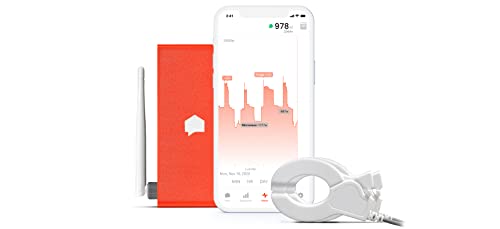
Sense offers real-time energy tracking with a focus on user insights and automation potential. It supports time-of-use rate plans in some regions and enables remote monitoring via iOS, Android, and web apps. The system emphasizes pattern recognition to help users identify usage trends, appliance activity, and opportunities to reduce consumption, with robust safety and ETL/Intertek compliance.
Fusion Energy Monitor With 16 Sensors

The Fusion Energy monitor ships with 16 50A sensors and supports single-phase up to 240VAC and three-phase up to 415Y/240VAC. It is designed to automatically adapt to different phases, offering broad compatibility in diverse panel configurations. It includes real-time monitoring, solar/net metering support, and a one-year warranty, making it suitable for households pursuing detailed, scalable energy tracking.
Buying Guide
Key purchase considerations help tailor a monitor to your home and goals. Consider the following perspectives:
- Safety and certification: UL or ETL listings indicate compliance with electrical safety standards, reducing risk during installation and operation.
- Panel compatibility: Confirm panel type (single-phase, split-phase, 3-phase) and sensor counts to ensure full coverage of circuits you want tracked.
- Data access and analytics: Look for real-time dashboards, historical trends, and export options to analyze energy usage over time.
- Solar and net metering integration: If you have solar panels, verify how well the monitor tracks solar production and net metering credits.
- Smart home integrations: Check compatibility with Home Assistant, Alexa, Google Home, or other ecosystems if you rely on automations and voice control.
- Installation and warranty: Consider installation difficulty and the length of warranty, as these affect long-term maintenance and peace of mind.
- Data security and privacy: Review how cloud data is stored and protected, since energy data can reveal household patterns.
- Historical data depth: Some models offer months to years of history, which is valuable for long-term energy optimization.
For households planning solar expansion or seeking precise, circuit-level visibility, a model with a robust sensor array, broad compatibility, and strong software would be advantageous. In multi-circuit homes, prioritizing products with more sensors and clear integration pathways often yields clearer insights and easier automation.