Answering common buyer questions, these belt-drive motors fit a wide range of HVAC and blower applications. The top picks suit different needs: the 1/4 HP models are ideal for compact furnaces or air handlers; the 1/2 HP options handle larger airflow demands; and reversible-rotation units offer flexible installation. Use this guide to compare fit, compatibility, and practical limits for each motor.
| Product | Frame | Horsepower | Voltage | Rotation | Best For |
|---|---|---|---|---|---|
| GF2026 Fan & Blower Motor (Zynovate) | 48 | 1/4 HP | 115V | Reversible | Compact furnaces, air handlers, or ventilation in smaller systems |
| GF2054 Blower Motor (Zynovate) | 48 | 1/2 HP | 115V | Reversible | Larger airflows in mid-size HVAC units |
| GF2026 1/4 HP Belt Drive Motor (Pellethead) | 48 | 1/4 HP | 115V | Reversible | Replacements for common AO Smith/Century and similar models |
| CHIOWO GF2026 Electric Fan Motor | 48 | 1/4 HP | 115V | Reversible | Replacement in standard belt-driven HVAC blowers |
| Packard 1/2 Hp 45012 Belt Drive Blower Motor | 56 | 1/2 HP | 115V | Electrically reversible | Open drip-proof, continuous-duty blower applications |
GF2026 Fan & Blower Motor 1/4 HP
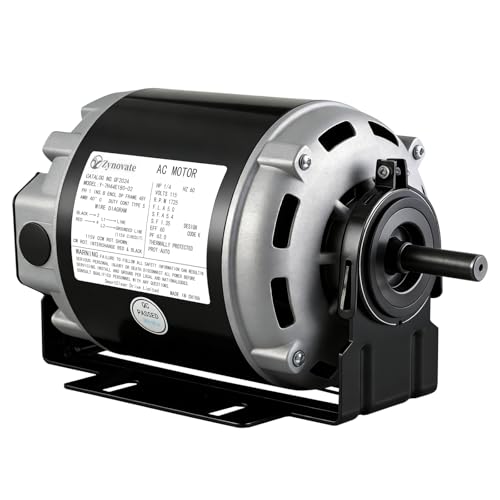
Best for compact HVAC sections requiring a smaller motor footprint. This 1/4 HP model runs at 1725 RPM and 115V, with a 1/2″ shaft and a 48 frame. Reversible rotation provides flexible airflow direction. Suitable for furnaces, air handlers, or compact ventilation setups. Caution: ensure shaft diameter and mounting holes align with your blower housing; some older assemblies may need adapters.
GF2054 Blower Motor 1/2 HP

Best for mid-range airflow needs in larger furnaces or air handlers. The 1/2 HP motor provides 1725 RPM at 115V and 7.2 Amps, with a 48 frame and reversible rotation. It’s compatible with common replacements like AO Smith GF2054 and Emerson 8200 variants. Limitation: higher current draw requires adequate wiring and electrical supply sizing.
GF2026 1/4 HP Belt Drive Motor (Pellethead)

Best for direct replacements in popular models like Packard 45014 and Emerson 8000. This 1/4 HP, 115V, 1725 RPM motor features a 48 frame and reversible rotation. It advertises a top-tier self-cooled HVAC replacement design. Caution: verify the exact model compatibility if your system uses a non-standard frame.
CHIOWO GF2026 Electric Fan Motor

Best for standard belt-drive blower replacements in residential HVAC. This 1/4 HP motor operates at 115V, 1725 RPM, with a 48 frame and reversible rotation. Includes ball bearings for smoother operation. Caution: installation should ensure shaft alignment to prevent belt wear or misalignment in older equipment.
Packard 1/2 Hp 45012 Belt Drive Blower Motor

Best for continuous-duty blower applications with robust belt-drive performance. The 1/2 HP, 1725 RPM motor runs at 115V and includes a 5/8″ shaft adapter with a base that accommodates 48 and 56 frame mounting holes. It is designed for open drip-proof enclosures and full service factor. Limitation: verify compatibility with your drive pulley and housing to avoid clearance issues.
Buying Guide
Key considerations when choosing a belt-drive motor for HVAC or DIY projects:
- Horsepower and airflow: Match HP to the required airflow and the size of the blower housing.
- Voltage and amperage: Ensure electrical supply can safely support the motor’s current draw.
- Frame size and shaft: Confirm 48 or 56 frame, 1/2″ shaft, and mounting holes align with your blower assembly.
- Rotation direction: Reversible motors offer installation flexibility; verify rotation aligns with ductwork and fan blades.
- Thermal protection and insulation: Class B insulation and thermal protection support reliability in HVAC environments.
- Replacement compatibility: Some models directly replace AO Smith/Century, Packard, Emerson, GE, Baldor, and Universal units. Check exact model numbers to confirm fit.
- Maintenance needs: Ball bearings and self-cooled designs can reduce service interruptions in continuous-use applications.
FAQ
What is a belt-drive motor used for in HVAC?
A belt-drive motor powers blowers and fans by transferring rotational energy through a belt to the blower wheel, enabling controlled airflow in furnaces and air handlers.
Is a reversible rotation motor important?
Yes. Reversible rotation allows you to adjust airflow direction to suit different duct layouts and installations.
How do I choose between 1/4 HP and 1/2 HP motors?
Choose 1/4 HP for smaller, less demanding blowers and compact furnaces; choose 1/2 HP for higher airflow or larger air handlers requiring more torque.
What should I check before buying?
Check frame size, shaft diameter, mounting hole pattern, voltage, rotation, and compatibility with your existing drive components.
Can these motors handle continuous operation?
Many are designed for continuous-duty use with Class B insulation and thermal protection, but confirm the duty rating for your specific system.