Electric fencing with a reliable solar panel is a practical solution for livestock, gardens, and remote properties. This guide highlights top solar-powered fence chargers that deliver steady energy, even in low light or no-sun conditions. Each selection includes key features, performance notes, and practical considerations to help you choose the right model for your fencing needs.
| Product | Brand | Output (J) | Radius / Range | Solar Panel Type |
|---|---|---|---|---|
| ANDMON 10 Miles Solar Fence Charger with Day/Night Mode | ANDMON | 0.11 | Up to 2 miles (per description) | Built-in solar panel |
| 24 Hour Solar Electric Fence Charger | Epoify | 0.18 | Up to 10 miles | Rechargeable solar panel |
| Andmon MINI400 20 Miles Solar Fence Charger | ANDMON | 0.3 | Up to 20 miles | Solar panel included |
| Andmon MINI250 Solar Electric Fence Charger | ANDMON | 0.18 | Up to 2 miles | Day/Night solar |
| MorningRo 10 Miles Solar Fence Charger | MorningRo | 0.2 | Up to 10 miles | Rechargeable solar panel |
ANDMON 10 Miles Solar Fence Charger with Day/Night Mode

Compact and portable, this solar fence charger is designed for strip grazing and quick relocation. It energizes up to 2 miles of fencing and uses a built-in solar panel with an internal GEL battery. Its Day/Night mode enhances reliability in varying light conditions, delivering continuous power to a fence system for 24 hours on a routine cycle. It is suitable for farm setups requiring mobile, weather-resilient energizers with straightforward installation. Consider its coverage limits and post types to ensure proper fence effectiveness in your environment.
24 Hour Solar Electric Fence Charger
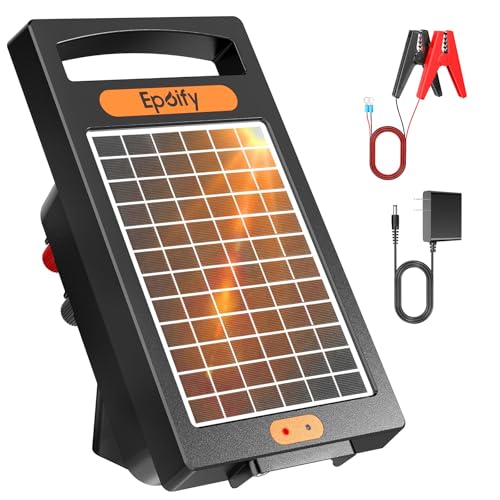
This lightweight, portable energizer supports up to 10 miles of fencing with 24-hour continuous operation powered by a rechargeable solar panel. It delivers a robust energy output to guard livestock and crops across larger areas, performing reliably in diverse weather. The design emphasizes all-day performance, even on days with limited sun, and is well-suited for larger pastures or remote sites where constant power is a priority.
Andmon MINI400 20 Miles Solar Electric Fence Charger

With a 0.3 joule output and a robust 18.5V/3W solar panel, this energizer covers up to 20 miles. It uses a 12V/4.5Ah sealed lead-acid battery to stretch operation up to 14 days without sun, making it a strong choice for extended periods of limited daylight. The model is built for reliability in extreme conditions (-20 to 80°C) and supports flexible installation on various post types. Users should assess pasture size and fencing layout to gauge whether this capacity best matches their needs.
MorningRo 10 Miles Solar Electric Fence Charger

MorningRo offers a comprehensive all-in-one solar kit with 10 miles of coverage and a 0.2 joule output. The included components—insulators, wire, ground rod, and battery clamps—simplify setup for livestock control. It operates for up to 14 days without sunlight when fully charged and supports AC or DC inputs, accommodating various power sources. The system emphasizes safe pulse technology to protect livestock while deterring wild animals, and its dual-terminal design supports a separate ground system for reliable operation.
Andmon MINI250 Solar Electric Fence Charger
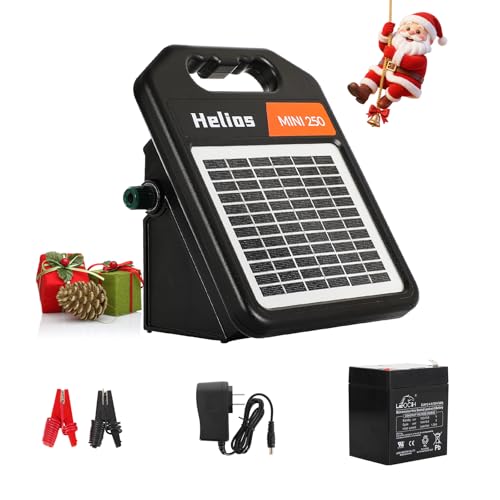
This compact unit delivers up to 0.18 joules and energizes up to 2 miles of fencing. It uses a durable solar panel and GEL battery to ensure power persistence across low-light conditions, maintaining performance for 24 hours across a long cycle. A 360-degree rotation feature on a T-post helps maximize sun exposure, and a one-year warranty adds a layer of assurance for buyers considering routine mobility and reliability in a small-fence operation.
Zhangmengge 10 Miles Solar Fence Charger

Note: This product expands coverage up to 10 miles with a 0.18 joule output and an integrated solar panel. It is designed for portability and year-round performance, relying on a rechargeable system to sustain fence energy through diverse weather. Prospective buyers should compare this model’s weight, battery type, and mounting options against other compact chargers to ensure it aligns with their fencing scale and installation environment.
Buying Guide: Key Considerations for Solar Electric Fence Chargers
- Output and coverage: Joule rating and mileage determine how many miles of fence you can energize. Higher joules are more effective against predators and in harsh conditions, but real-world performance depends on fencing quality, soil, and vegetation.
- Solar panel and battery: A larger, efficient solar panel plus a reliable battery extends operation during cloudy days. Look for models with built-in panels or easily serviceable batteries and check charge duration without sun.
- Durability and temperature tolerance: Outdoor fencing units should withstand temperature extremes and weather. Materials + IP ratings and tested ranges (e.g., -20°C to 80°C) indicate resilience in rural climates.
- Portability vs. fixed installation: Portable chargers are ideal for temporary fencing or rotating pasture use, while fixed units suit long-term perimeter protection. Consider mounting options and post compatibility.
- Alerts and safety features: Automatic fault alarms, protection from shorts, and easy troubleshooting help maintain fence effectiveness. Some models offer night/day modes for consistent energy delivery.
- Ease of installation: Bundled kits with wires, insulators, and ground rods reduce setup time. If you’re new to electric fencing, a complete kit may save time and ensure a proper start.
- Maintenance and warranties: Check warranty terms and the ease of replacing batteries or panels. A longer warranty typically indicates robust build quality and better long-term value.
These considerations help compare models for your specific application, whether small-scale garden protection or larger livestock operations. Evaluate the fencing length, terrain, and sun exposure to select a charger that provides reliable, continuous energy with minimal maintenance.