As electrical panels become smarter, din rail mounted energy meters and analyzers offer compact, accurate monitoring for homes, labs, and small businesses. This article highlights five reliable options, covering multi‑function power meters, single‑phase and three‑phase models, built‑in current transformers, and remote‑control capabilities. Each product is evaluated on range, accuracy, installation, and data features to help you choose the right device for energy management, demand reduction, and monitoring reliability.
| Product | Brand | Key Feature |
|---|---|---|
| Digital Electric Meter DIN Rail Mount, 3 Phase | Jectse | 3‑phase, 4‑wire, 50/60 Hz, 80 A, LCD display |
| KETOTEK Single Phase Energy Meter | KETOTEK | 6‑in‑1 measurement: V, A, P, kWh, Hz, PF |
| DWEII 2Pack Single Phase Energy Meter | DWEII | DIN rail, built‑in CT, 40‑300V, 100 A |
| MORNING GROUP 50‑300V Meter | MORNING GROUP | Wide LCD, high accuracy, built‑in CT |
| Din Rail 18mm Voltage Current HZ Meter | TAXNELE | 80‑500V, 1% accuracy, LED display |
Digital Electric Meter DIN Rail Mount, 3 Phase 4 Wire

The Jectse Digital Electric Meter is a three‑phase, four‑wire energy monitor designed for DIN rail installation. It adheres to GB/T17215.321‑2008 and IEC 62053 standards, providing reliable active energy measurement. The compact unit features a 6+2 digit LCD display to show total power consumption, and its 35 mm DIN rail mounting ensures secure panel integration. This model is suitable for commercial electrical panels needing accurate three‑phase monitoring and easy retrofits in existing systems.
KETOTEK Single Phase Energy Meter
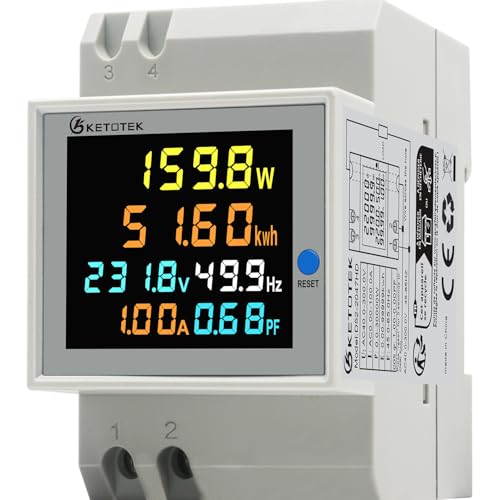
The KETOTEK meter offers a compact single‑phase solution with a 6‑in‑1 measurement set: voltage (AC 40‑300 V), current (0‑100 A), active power (0‑30,000 W), energy (0‑99,999 kWh), frequency (45‑65 Hz), and power factor (0.00‑1.00 PF). It stores data when power is off and can be reset with a 5‑second button hold. Its robust ABS housing provides flame resistance, making it a solid option for panel boards needing affordable, precise energy tracking in a single‑phase configuration.
DWEII 2Pack Single Phase Energy Meter

The DWEII two‑pack provides a DIN rail mounted single‑phase meter with 40‑300 V range and 0‑100 A current capability. It features built‑in CT wiring for streamlined installation, and its measurement capabilities include voltage, current, active power, energy, frequency, and power factor. The units are suitable for homes, workshops, or small commercial spaces seeking a dependable, space‑efficient energy monitoring solution, with clear data display in a compact form factor.
AC 50-300V 100A Multi Function Meter

The MORNING GROUP multi‑function meter integrates voltage, current, active power, energy, and other metrics on a single LCD display. With a 50–300 V voltage range and 0–100 A current range, it promises ±1% accuracy. The device uses a built‑in CT for easier wiring and safe operation, and its wide viewing LCD supports real‑time monitoring in indoor settings, making it suitable for households, workshops, and small commercial installations requiring an all‑in‑one monitoring device.
Din Rail 18mm Voltage Current HZ Meter
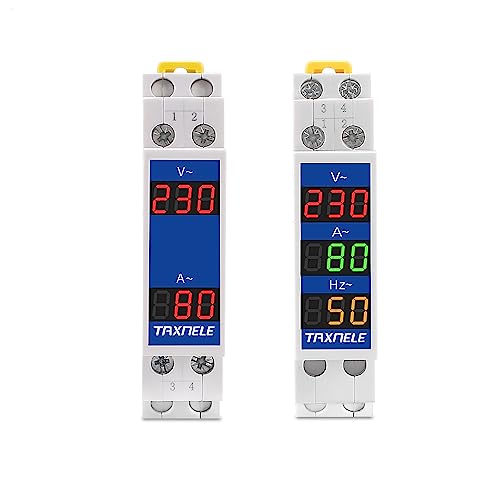
Taxnele’s 18mm din rail meter covers voltage (AC 80‑500 V), current (1‑100 A), and Hz (0‑99 Hz) with an emphasis on compact, modular installation. It delivers high accuracy (around 1%) and a clear LED display for quick readings. The unit is designed for easy DIN rail mounting, making it a practical choice for electricians and technicians who need a small, precise monitor within control panels or distribution boards.
Digital Single Phase Energy Meter Tester

The EARUMZDQ tester offers a digital, multi‑parameter display with 6 readouts: voltage, current, power, energy, frequency, and power factor. Its 178° viewing angle with backlight supports visibility in various lighting conditions, while the reset function enables convenient maintenance. This tool acts as both a monitoring meter and a testing device for routine electrical checks in single‑phase systems, making it useful for technicians performing energy audits or panel verification.
Buying Guide
Key considerations when selecting a din rail energy meter or analyzer:
- Number of phases and wiring: Choose three‑phase meters for larger panels or single‑phase meters for small setups. Ensure the device supports your system’s wiring (4‑wire, CT types, etc.).
- Voltage and current range: Match the meter’s range to your supply voltage (commonly 40–300 V or 80–500 V) and current (up to 100 A or higher) to avoid measurement clipping.
- Measurement list and accuracy: Verify which parameters a meter displays (voltage, current, active power, energy, frequency, PF). Check the stated accuracy (often around ±1%).
- Data retention and reset: Some meters store data during power loss or offer reset options. Consider meters with non‑volatile memory if outage resilience matters.
- Connectivity and integration: If remote monitoring is desired, look for models with local display only or those that support remote access via Wi‑Fi or apps. Note that some listings emphasize onboard CT and wiring simplicity without network features.
- Installation and safety: Confirm 35 mm DIN rail compatibility and flame‑resistant housings where relevant. For high‑power environments, verify insulation and safety standards compliance.
- Scalability and pack options: If you need multiple meters, check for multi‑meter bundles or modular units that fit your panel space and labor budget.
- Display usability: LCD vs. color screens, backlighting, and viewing angles affect readability in different lighting. A wide viewing angle reduces blind spots during inspections.
- Brand support and certifications: National standards and international certifications ensure reliability and compatibility with local electrical codes.
When comparing options, balance cost against features such as multi‑parameter display, built‑in CTs, and ease of DIN rail integration. For educational labs or DIY projects, a single‑phase model with a clear LCD may suffice. For commercial panels, a robust three‑phase meter with data logging and easier maintenance can improve energy management and fault diagnosis.