If you need to extend or bridge fiber optic networks to copper Ethernet, these fiber-to-Ethernet converters offer reliable, plug-and-play solutions. This guide highlights top options suited for small offices, data centers, or home setups. Best for: small businesses needing immediate compatibility, home labs testing 1 Gbps links, and outdoor or rugged environments. The table below compares the five selected models for quick reference.
| Product | Type | Best For |
|---|---|---|
| TP-Link MC220L | 1 Gbps Fiber to Copper | General purpose, versatile compatibility |
| BMKZAYR 1.25G/s | 1.25 Gbps Fiber to RJ45 | Simple plug-and-play, auto-negotiation |
| H!Fiber BiDi Gigabit | BiDi SMF to RJ45 | Long-distance single-fiber links, mixed duplex |
| ipolex MMF LC | 10/100/1000Base-T to 1000Base-SX | Cost-effective MMF extension, easy setup |
| 10Gtek MMF SFP+ / RJ45 | Multi-Mode, SFP+ and RJ45 | Higher speeds, dual-role flexibility |
Introduction quick answer: These converters let you connect fiber networks with copper Ethernet devices, supporting common speeds like 1 Gbps and beyond. They are best for network professionals seeking immediate compatibility, straightforward deployment, and robust metal housings for indoor use. Consider distance, fiber type (MMF vs SMF), and required speed when choosing. The following sections detail each option and its ideal use cases.
TP-Link MC220L: Gigabit Fiber To RJ45 Converter
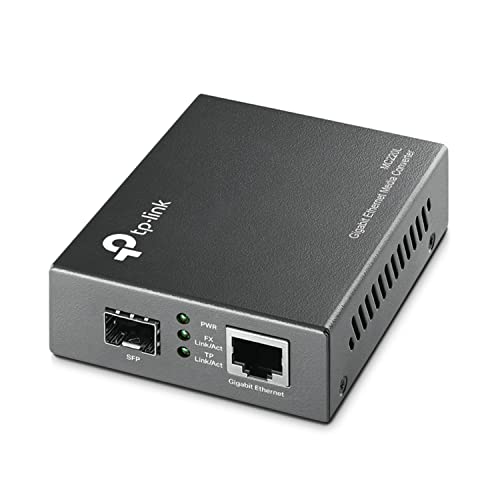
The TP-Link MC220L is designed to convert 1000BASE-SX/LX fiber to 1000Base-T copper ethernet. It supports both single-mode and multi-mode fiber SFP modules and is fully compatible with 10/100/1000 Base-T. It is plug-and-play with no software installation required. Best for: small offices or labs needing a durable, versatile converter that works with existing copper devices and a wide range of SFPs. Limitation: relies on the appropriate SFP module to match fiber type and distance.
BMKZAYR 1.25G/s Gigabit SFP To RJ45 Converter
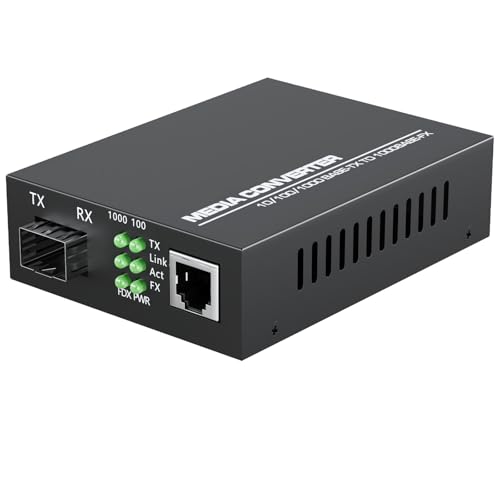
The BMKZAYR unit is a 1.25 Gbps fiber-to-Ethernet transceiver with auto-negotiation and plug-and-play setup. It supports Half-Duplex/Full-Duplex modes and auto-MDI/MDIX for easy deployment. Best for: users seeking a straightforward, auto-negotiation option that matches typical 1 Gbps Ethernet devices. Caution: ensure compatibility with your specific fiber module and cable type for full performance.
H!Fiber BiDi Gigabit Single Mode SC To RJ45

BiDi (bidirectional) design provides 1 Gbps fiber-to-copper conversion with a single SMF fiber pair. It includes two external power supplies and a built-in 1000 Mbps SC fiber module, supporting up to 20 km. Best for: longer fiber runs where fiber type is SMF and cost-effective, robust operation is needed. Caution: ensure correct BiDi wavelengths and SFP compatibility for your link distance.
XMSJSIY Fiber Ethernet Media Converter
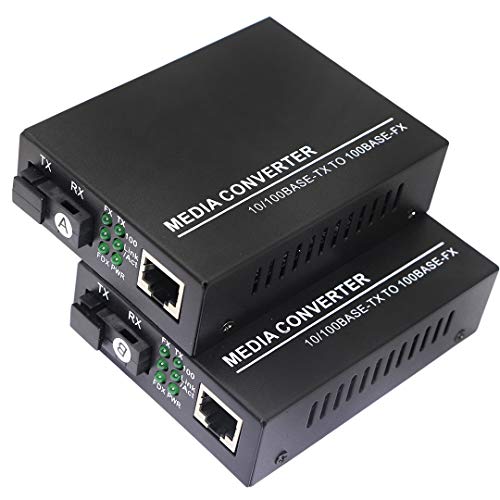
The XMSJSIY converter provides a cost-effective path for 10/100Base-TX to 100Base-FX fiber with a single SC port. It supports MMF 550 m distances, metal housing for durability, and plug-and-play operation without software. Best for: environments needing a stable, metal-cased copper-to-fiber solution with indoor/outdoor suitability. Limitation: limited to single-fiber direction per unit, so plan two-way links if bidirectional traffic is required.
10Gtek Gigabit Ethernet Media Converter

The 10Gtek converter package includes a 550-meter MMF SFP transceiver (850 nm) and supports 1 Gbps through 1000 Mbps Ethernet on RJ-45. It handles auto-negotiation and auto-crossover for full/half duplex. Best for: setups needing 2-pack redundancy and longer reach within MMF networks. Caution: ensure your RJ45 device supports the same duplex mode for optimal performance.
Buying Guide
Key considerations when selecting a fiber-to-RJ45 converter:
- Distance and fiber type: Choose SMF for long-range links (BiDi or single-mode options) and MMF for shorter hops (SX/FX modules).
- Speed requirements: Pick devices that match your network speed (1 Gbps vs 10 Gbps/SFP+ capable).
- Module compatibility: Verify SFP/SFP+ compatibility with your fiber module and host equipment.
- Power and enclosure: Look for metal housings and dual power options for reliability in demanding environments.
- Plug-and-play vs configuration: Preference for auto-negotiation and auto-MDI/MDIX to simplify setup.
Frequently Asked Questions
- What is a fibre to RJ45 converter used for?
It converts fiber optic signals to copper Ethernet signals, enabling devices with RJ45 ports to communicate over fiber networks.
- Do these converters require drivers?
Most are plug-and-play and do not require software installation, though some modules may need compatible SFP accessories.
- Can I mix single-mode and multimode fibers with these converters?
Yes, but you must use the appropriate SFP module and consider distance limitations for the chosen mode.
- Is a BiDi converter recommended for long distances?
BiDi can extend distance over a single fiber strand, but ensure the wavelengths and compatibility suit your link.
- What should I consider for indoor vs outdoor use?
Check enclosure durability and power supply options; select a unit with robust housing for tougher environments.