Answering the buyer’s need for an all-in-one off-grid power solution, this guide highlights five complete solar panel kits with batteries and inverters. These setups are ideal for RV adventures, cabins, small homes, and portable off-grid needs. Each product is evaluated for who it’s best for, why it stands out, and any notable limitations. The summary table below helps compare key specs at a glance.
| Product | Battery Capacity | Inverter Size | Daily Output (approx.) | |
|---|---|---|---|---|
| ECO-WORTHY 200W Complete RV Kit | 100 Ah (Li) | 1100 W | ~800 Wh | RV trips and beginners wanting a simple install |
| ECO-WORTHY 200W RV Kit (50Ah Li) | 50 Ah LiFePO4 | 600 W | ~800 Wh | Lightweight, budget-friendly RV setups |
| ECO-WORTHY 7.168KWH 800W RV Kit | 2 x 12.8V 280 Ah Li Batteries | 800 W | ~3.2 kWh (with 4h sun) | More power for full RV appliances |
| ECO-WORTHY 10KW Home Kit | 2 x 48V 100Ah Li Batteries | 10 kW | ~16 kWh storage | Home backup and off-grid living |
| ECO-WORTHY 5KW Off-Grid System | 48V 100Ah Li battery | 5 kW | Varies with sun | Whole-house off-grid readiness |
ECO-WORTHY 200W Complete RV Kit With Battery And Inverter
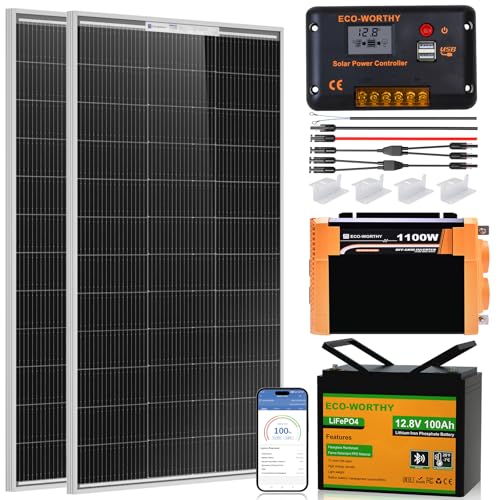
This all-in-one package includes 2x100W solar panels, a 100Ah lithium battery, an 1100W inverter, and a 30A PWM charge controller. It delivers an approximate daily output of 800Wh and stores around 1.28kWh, making it a robust starter kit for RV users who want plug-and-play solar without extra purchases. Best for RV owners who value simplicity and fast setup, with a novice-friendly four-step installation. Caution: ensure your vehicle’s electrical system and inverter wiring are compatible with the included components.
ECO-WORTHY 200W RV Kit With 50Ah Lithium Battery

This beginner-friendly solar kit provides 200W of solar panels with a 50Ah LiFePO4 battery and a 600W inverter. It targets RVs, campers, boats, and cabins where compact, manageable power is key. Best for light-use off-grid setups and short trips. It includes enough accessories for straightforward connection and expects ~800Wh daily output under adequate sun. Limitation: battery capacity is smaller than higher-end kits, affecting longer daily running times without recharging.
ECO-WORTHY 7.168KWH 800W RV Complete System

This kit includes four 200W bifacial solar panels, a 12V 3000W inverter charger, and two 12.8V 280Ah Li batteries. It’s designed to power most RV appliances and supports a UPS-style two-source energy flow. Best for RVs needing higher power and faster runtime; better for longer trips or more demanding devices. Caution: larger system requires more installation space and a more involved setup, including proper mounting and wiring between components.
ECO-WORTHY 10KW Home Off-Grid Kit

Designed for home backup and off-grid living, this kit uses 18×590W solar panels and dual 48V 314Ah LiFePO4 batteries, delivering up to 16.1kWh of stored energy and a 10kW inverter. It supports parallel expansion and WiFi monitoring. Best for homeowners seeking scalable, high-capacity solar with integrated monitoring. Limitation: higher upfront cost and installation complexity; professional help is often advisable for optimal configuration and safety.
ECO-WORTHY 5KW Off-Grid System Kit

This all-in-one off-grid kit combines 12x195W N-Type panels, a 5kW split-phase inverter, and a 48V 100Ah battery option, supporting expansion in parallel. Best for users who want a robust, home-like off-grid system with straightforward expansion. Caution: the system’s all-in-one approach can complicate future upgrades; ensure cabin or property space and electrical standards are compatible with the configuration.
Buying Guide: Key Considerations For Your Complete Solar Kit
- Power needs: Calculate daily energy use (in watt-hours). Choose a kit whose battery capacity and inverter can cover peak loads without frequent recharges.
- Battery chemistry: LiFePO4 offers longer life and safety, but at a higher upfront cost. Match battery capacity to expected sun hours and appliance wattage.
- System expansion: If you expect to scale, select a kit with parallel-ready inverters and modular batteries to avoid replacement later.
- Portability vs. stationary use: RV and camping kits prioritize compactness and lighter weight; home systems weigh more but deliver higher energy reserves.
- Installation complexity: All-in-one kits with guided installation reduce DIY risk but verify mounting space, wiring routes, and venting requirements for the inverter.
- Monitoring and connectivity: Bluetooth, WiFi, or app-based monitoring helps track performance and alerts for maintenance.
- Regulatory and safety: Ensure batteries and inverters meet local safety standards and that cables and breakers are appropriately rated.
Frequently Asked Questions
- What makes a “complete” solar kit stand out for RVs?
It should include solar panels, a charge controller, a battery bank, an inverter, and all necessary cabling, plus guidance for simple, safe installation. - Is LiFePO4 better than lead-acid for RV kits?
Yes, LiFePO4 generally offers higher energy density, longer life, and safer chemistry, though it costs more upfront. - Can I expand an all-in-one kit later?
Look for parallel-capable inverters and modular batteries; expansion is easier with systems designed for scalability. - How to estimate daily solar output?
Output depends on panel wattage, panel efficiency, sun hours, angle, and shading. Use manufacturer estimates as a baseline and adjust for your location. - What maintenance should I expect?
Regularly inspect connections, monitor battery state, and ensure vents and cooling are unobstructed for inverters and batteries. - Do these kits require professional installation?
Simple RV kits can be installed by confident DIYers; larger home or high-capacity systems may benefit from professional installation for safety and safety certifications.