Selecting reliable solar energy storage is essential for commercial installations, from backup power during outages to smoothing energy costs. This guide highlights five strong options that balance capacity, reliability, and value. Each entry links to Amazon for quick review and side-by-side comparisons, helping facilities managers, installers, and business owners make informed decisions based on real-world performance and features.
Summary of selected products
| Product | Brand | Key Capacity | Type | Amazon Link |
|---|---|---|---|---|
| BPS-10000W Solar Power System | BESTSUNSOLAR | 10,240Wh | Solar energy storage system with hybrid inverter | View |
| Deep Cycle AGM Solar Energy Storage 12V 55Ah | SigmasTek | 55Ah | Deep cycle AGM battery | View |
| Yorkenbe Solar Panel Storage Bag | Yorkenbe | 2 panels capacity | Portable panel storage bag | View |
| Speqerk Solar Panel Storage Bag | Speqerk | 2 panels capacity | Portable panel storage bag | View |
| HODRANT Solar Panel Storage Bag | HODRANT | 2 panels capacity | Portable panel storage bag | View |
BPS-10000W Solar Power System With Hybrid Inverter
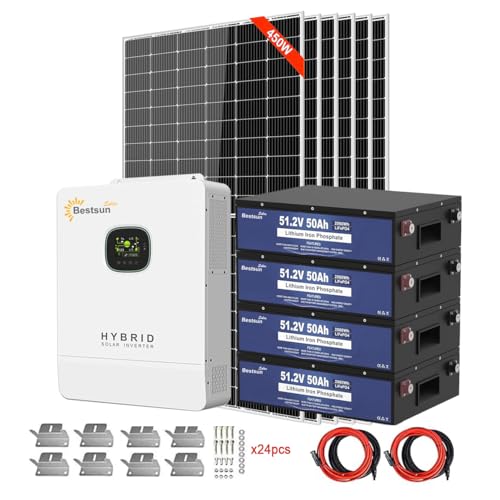
The BPS-10000W system from BESTSUNSOLAR combines high-capacity solar panels with a LiFePO4 battery module and a 10 kW hybrid inverter. The 2700W solar array is designed to deliver substantial daily energy generation under typical commercial sun exposure, estimated at 16.2–21.6 kWh with 6–8 hours of sunlight. The 51.2V 200Ah LiFePO4 battery provides 10,240Wh of storage, supporting long-term backup and daytime energy management for larger facilities. The 120/240V hybrid inverter enables seamless grid-tied operation with the option for parallel connections to reach 240V output, balancing efficiency and reliability for commercial setups.
Key considerations: capacity alignment with building loads, space requirements for the battery bank, and integration with existing electrical infrastructure. This system supports commercial-scale energy storage needs and can be scaled through parallel inverter configurations to match larger facility demands.
Deep Cycle AGM Solar Energy Storage 12V 55Ah

The SigmasTek 12V 55Ah AGM deep-cycle battery is designed for resilience in solar storage applications, offering maintenance-free operation with a sturdy ABS flame-resistant casing. Its sealed lead-acid-based AGM technology supports reliable recharge and discharge across varied temperatures, making it suitable for commercial backup power banks, off-grid implementations, and energy storage systems that require robust, long-life performance. The unit is mountable in multiple orientations and emphasizes minimal maintenance while delivering steady output for critical loads.
Considerations include temperature performance, recharge efficiency, and compatibility with other battery chemistries in a hybrid storage array. AGM batteries are a cost-effective option for moderation-level commercial storage needs and can serve as a foundational module in a broader solar energy system.
Yorkenbe Solar Panel Storage Bag

The Yorkenbe storage bag is designed for transporting and protecting solar panels in commercial or field deployments. It accommodates multiple foldable panels up to 27 by 23 inches, with a waterproof exterior and padded interior to shield panels from weather and impacts. The bag features a double-zip main compartment and several pockets for cables and accessories, aiding rapid site setup and transport for maintenance crews and installers working on larger solar projects.
Key considerations: panel compatibility, ruggedness for daily transport, and the ease of accessing stored panels and cables on site. This accessory supports efficient deployment and protection of solar assets in commercial settings.
Speqerk Solar Panel Storage Bag

Speqerk’s bag emphasizes compatibility with a broad range of 100W–200W panels, including Jackery SolarSaga and EcoFlow lines. Its dimensions are crafted to fit two panels, with two front pockets for cords and adapters and a durable exterior designed to withstand outdoor use. The bag’s design aims to streamline field deployments for small commercial teams or remote installations where quick setup and protection are crucial.
Buying considerations include confirming panel models, ensuring internal padding, and the bag’s weight tolerance for recurrent transport during maintenance cycles.
HODRANT Solar Panel Storage Bag

HODRANT’s storage bag is tailored for Jackery SolarSaga series and similar 100W–200W panels, with a padded, double-layer interior to protect two panels from impacts. It includes a shoulder strap for portability and reinforced exterior materials that resist water, tears, and wear. This option is suitable for service technicians and on-site technicians who need reliable protection during transport and storage of portable solar arrays.
Considerations include fit for specific panel models, padding effectiveness, and the convenience of carrying two panels and associated accessories on crowded job sites or during staged deployments.
Buying Guide: Key Considerations for Commercial Solar Energy Storage
Capacity and scale: Match battery and inverter capacity to the facility’s peak load, critical-load requirements, and desired backup duration. For larger buildings, consider modular systems that can scale by adding more batteries or parallel inverters.
Chemistry and longevity: LiFePO4 chemistries offer long cycle life and thermal stability, reducing replacement frequency. AGM batteries are a cost-effective option for mid-range storage needs but may require more frequent maintenance checks and temperature management.
Inverter and grid integration: A hybrid inverter enables seamless switching between solar, battery, and grid power. Ensure compatibility with existing electrical panels and metering, and verify compliance with local grid interconnection standards.
Temperature tolerance and resilience: Commercial environments vary in temperature. Storage solutions should operate efficiently across the site’s climate range and include protection against thermal extremes to extend life and performance.
Physical footprint and installation: Evaluate space requirements for batteries, inverters, and cabling. Modular designs can fit tighter spaces and simplify future expansion or relocation as facilities evolve.
Maintenance and reliability: Favor products with solid warranty terms, clear maintenance guidance, and robust safety features. Remote monitoring and diagnostic capabilities can help facilities teams optimize uptime and performance.
Protection and safety: Ensure proper enclosure ratings, fire suppression compatibility, and compliance with safety standards. For outdoor installations, weatherproof and ruggedized components reduce risk and downtime.
Accessories and portability: For sites with relocation needs or frequent servicing, protective storage bags and portable racking systems help safeguard panels and simplify logistics. Evaluate bag compatibility with the most commonly used panels in your fleet.
Overall, aligning storage capacity, equipment reliability, and installation practicality is essential for commercial solar projects. The options above cover a range of needs—from fixed-system storage with a high-capacity inverter to portable panel storage solutions—allowing facility managers to design a robust energy storage strategy that supports business continuity and energy resilience.