Combustible gas indicators (CGIs) are essential safety tools for detecting methane, propane, and other flammable gases. This guide highlights five reliable models ideal for home use, RVs, and small workplaces. Each product offers rapid detection, clear alarms, and practical features to help locate leaks quickly and safely.
| Product | Brand | Key Feature |
|---|---|---|
| AEGTEST 1223 Gas Leak Detector | AEGTEST | Dual-mode detection, 0-1000 ppm, built-in flashlight |
| Inficon 718-202-G1 | Inficon | Precision test instruments, USA-made |
| Aicevoos Natural Gas Detector | Aicevoos | Gas concentration display, 17″ flexible probe |
| D MODUN Gas Detector | D MODUN | LED display, 85dB alarm, plug-in design |
| Hembisen Natural Gas Detector | Hembisen | LCD display, plug-and-play, anti-false alarms |
Choosing the right CGI involves weighing detection speed, alarm reliability, and ease of use. The models below cover a range of scenarios—from quick spot checks in kitchens and RVs to more detailed leak tracing in home or light commercial settings.
AEGTEST 1223 Gas Leak Detector
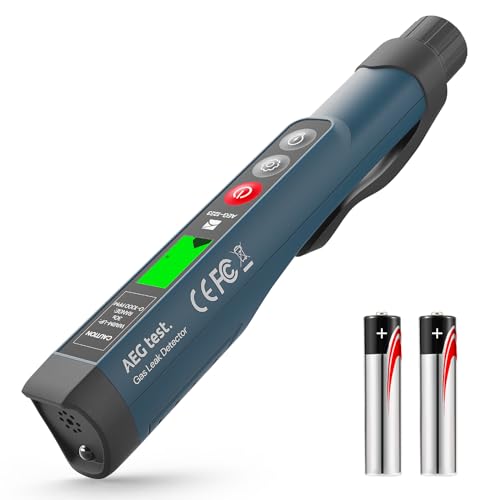
The AEGTEST 1223 gas detector provides dual-mode detection with high and low sensitivity, enabling rapid spotting of leaks in seconds. It supports a detection range of 0-1000 ppm and requires a 30-second warm-up prior to operation. A built-in flashlight aids in locating leaks in dark or confined spaces. Visual and audible alarms intensify as gas concentration rises, and the LCD screen turns red at high levels, delivering clear, immediate feedback.
Inficon-718-202-G1 Combustible Gas Detector

Inficon’s 718-202-G1 is a durable gas detector designed for reliability in professional settings. It emphasizes accurate sensing and is marketed as a test instrument with a United States manufacturing footprint. The product emphasizes build quality and precision, making it suitable for routine leak checks in home garages or RV setups where dependable readings are critical.
Aicevoos Natural Gas Detector

The Aicevoos detector combines a real-time LCD readout with a 17-inch flexible gooseneck, allowing access to hard-to-reach leak sources. It detects methane, propane, LPG, and other hydrocarbons, and provides a visual and audible alert that intensifies with increasing gas levels. A backlit screen enhances visibility in dim environments, supporting safer leak localization in kitchens, basements, or RV compartments.
D MODUN Gas Detector

D MODUN offers a plug-in detector focused on natural gas, LPG, and city coal gas with a 85dB alarm and LED display. It does not monitor CO or CO2, but it provides clear status indicators and a plug-and-play design for quick installation in kitchens, garages, or RV storage areas. The device is intended for straightforward, practical monitoring with audible and visual cues tied to gas concentration levels.
Hembisen Gas Detector
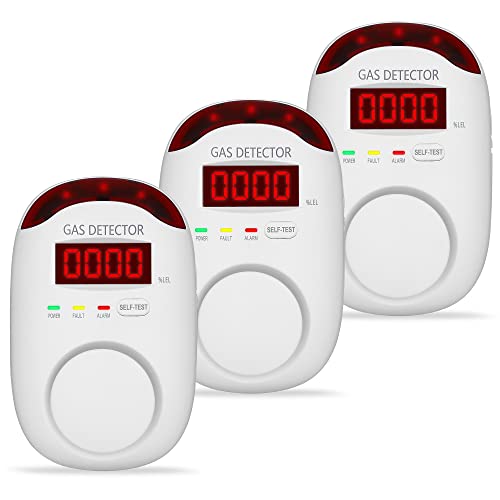
Hembisen’s three-pack option offers an upgraded detector with an LCD display and alarm system designed to reduce false alarms. It provides plug-and-play installation and emphasizes sensitive yet accurate detection of combustible gases, including methane and propane. This option is suitable for multi-room protection or RV setups requiring multiple localized sensors.
Buying Guide: Key Purchase Considerations
- Detection range and speed: Look for detectors with fast response times (seconds) and a suitable ppm or %LEL range for your typical environments (kitchens, garages, RV compartments).
- Alarm types: Favor devices with both audible alarms and visual indicators. LCD or backlit displays improve readability in low light, and alarms should intensify with higher gas levels.
- Warm-up time and ease of use: Some units require warm-up; ensure you can operate the device quickly when needed. Plug-and-play designs reduce setup friction for rental homes or temporary spaces.
- Sensor technology: Catalytic sensors are common for combustible gases but may require calibration. Be aware of potential false alarms in dusty or dirty environments and compare models with anti-false-alarm features.
- Portability vs. fixed installation: Handheld detectors are versatile for spot checks, while wall or fixed units offer continuous monitoring in kitchens, basements, or garages.
- Display and accessibility: A clear LCD display helps you quantify readings, and backlighting is beneficial for use in dark areas like RV compartments or utility closets.
- Power source and maintenance: Consider battery life, need for replacement cells, or plug-in power. Some units include multiple power options or indicators for low battery.
- Durability and safety certifications: Look for devices designed for home use with appropriate safety certifications, especially if used in kitchens, garages, or near mobile vehicles.
- Environment compatibility: Ensure the detector is suitable for indoor use, with consideration for environmental conditions (dust, humidity, temperature).
When selecting a combustible gas indicator, align features with your typical leak scenarios: quick pinpointing in confined spaces, reliability in RV setups, and the ability to monitor multiple locations simultaneously. The models highlighted here provide a spectrum of capabilities to fit various safety requirements while maintaining straightforward operation.